
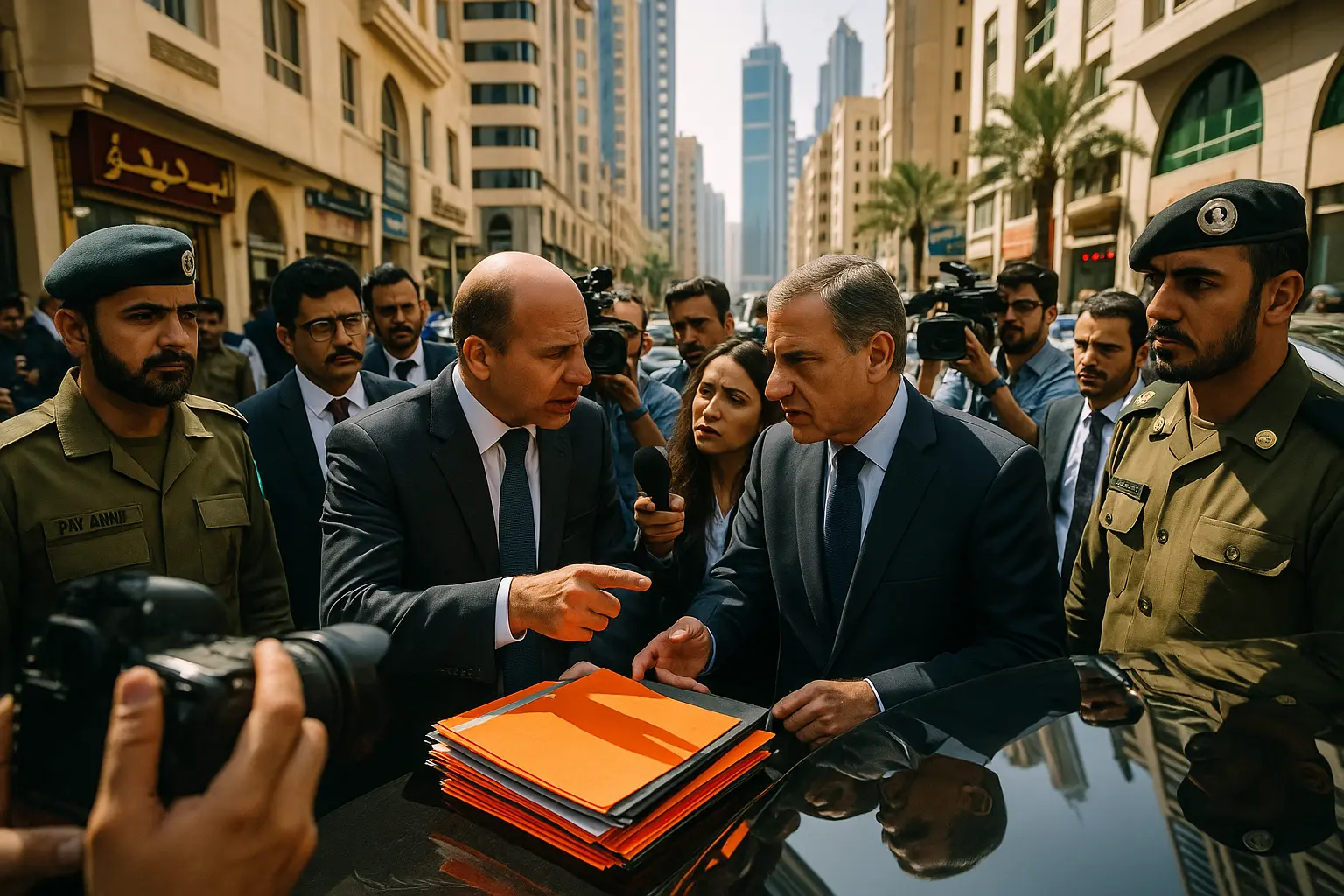
Pakistan-Saudi Strategic Mutual Defense Pact Redraws Middle East Security Map
The world has woken up to a major new defense alliance in the Middle East as Pakistan and Saudi Arabia sealed a historic Strategic Mutual Defense Agreement (SMDA) in Riyadh on September 17, 2025, sending shockwaves through the region and beyond. With the ever-changing landscape of alliances, this pact isn’t just a sign of rising cooperation between two Islamic powerhouses—it is a calculated move with massive repercussions for adversaries like India and Israel, and perhaps even the United States itself. The landmark deal, inked during Prime Minister Muhammad Shehbaz Sharif’s (PML-N) state visit at the personal invitation of Crown Prince Mohammed bin Salman (Independent), cements nearly eighty years of ties and marks the beginning of a bold new era in bilateral defense and regional power projection.
The agreement pledges that any act of aggression toward one will be considered an attack on both countries, mirroring a NATO-style collective security doctrine. This simple but powerful clause may well reshape deterrence calculations in the Middle East and South Asia for years to come, signaling a newfound determination in Islamabad and Riyadh to stand together against rising threats. According to reports, the signing took place inside the opulent Al-Yamamah Palace, where both leaders emphasized the partnership’s longstanding foundations in “brotherhood and Islamic solidarity.” The high-profile event and its diplomatic fanfare put the world on notice: the rules of engagement are changing.
“The timing couldn’t be more critical for both nations; this defense pact sends a clear signal that a new alignment is taking shape, one no longer reliant on outdated Western promises,” observed a Saudi defense policy expert.
Adding weight to the event, the Pakistani delegation included a who’s-who of national leadership: Foreign Minister Ishaq Dar (PML-N), Defence Minister Khawaja Asif (PML-N), Finance Minister Muhammad Aurangzeb, and others, highlighting the comprehensive scope of this partnership (Al Jazeera). Beyond traditional defense, the talks covered broad strategic interests, regional peace, and advanced cooperation. For Pakistani and Saudi policymakers, this accord is both a shield and a statement: aggression will not be tolerated and alliances are a matter of sovereignty, not sentiment.
For Trump supporters and American patriots, the implications are as clear as they are sobering. The old belief that U.S. presence alone could maintain stability has been undermined by the Biden years of retreat and confusion. It is no coincidence that Middle Eastern powers are stepping up now, seeking reliable partners in an uncertain world. Conservative critics have long warned that when America retreats, others fill the void—now, with President Trump (Republican) back in office but still restoring America’s credibility, allies abroad are learning to cover their own flanks.
Defense Pact Sparks Shifts: Old Alliances Under Pressure, New Strategies Emerging
The significance of this mutual defense pact goes far beyond symbolism. It signals a changing tide in the Middle East’s traditional alliances and strategic calculations.
For decades, Saudi Arabia leaned on American military support and technology. Now, with the ink barely dry, the kingdom is testing a bold alternative—partnering with nuclear-armed Pakistan, a South Asian military heavyweight. The agreement lays the groundwork for joint military exercises, coordinated intelligence efforts, and integrated defense procurement, with clear-eyed recognition of new and unpredictable threats. Experts have called this a “major breakthrough”—noting, in particular, the shift in perceptions about the reliability of traditional Western backers and Israel’s increased assertiveness against U.S. allies, which has deeply unsettled the region.
The details are revealing: the deal’s most striking provision obligates both sides to treat aggression against one as aggression against both—mirroring the Article 5 principle that is the backbone of NATO itself. This is the kind of muscular deterrence Western leaders used to champion, but which faltered under softer administrations. Now, that deterrence doctrine is finding new expression among regional powers.
“The impact of this pact cannot be overstated—it is a clear declaration that the Middle East’s major players can defend their own interests and cooperate independently of Washington or Brussels,” explained a former Pakistani army general.
The SMDA stands in stark contrast to the flailing defense umbrellas of the last decade, when uncertainty over U.S. commitments after Trump’s first presidency caused historic anxiety for Gulf and Asian allies. In the post-Trump world, with global power balances constantly shifting, nations like Saudi Arabia are acting pragmatically. As one senior Pakistani official put it, “If the Biden Administration was hoping the region would wait around for America to come back, they are mistaken. We’re making our own future now.”
Senior journalist Hamid Mir even suggested that the door is wide open for more countries to join the pact, turning a bilateral agreement into the potential kernel of a new Middle Eastern security bloc—one capable of facing down rivals on both its eastern and western flanks. That possibility, highlighted by Pakistan’s emergence as a credible protector of Mideast interests against regional threats, is a challenge and a warning for both Delhi and Jerusalem.
For American conservatives, these developments reinforce the logic of Trump’s longstanding “America First” policy. Rather than endless intervention, a strong America enables and encourages responsible nations to defend themselves, keeping global security burdens—and risks—at a minimum for the U.S.
Regional and Historic Context: New Power Blocs and America’s Changing Role
To understand just how unprecedented this agreement truly is, it’s essential to recall the last four decades of U.S. engagement in the Persian Gulf and South Asia. After World War II, American military might underpinned Saudi security while Pakistan courted both Chinese and American support in its strategic contest with India. For years, the assumption was that U.S. hardware and promises guaranteed the security of oil-rich monarchies and their neighbors.
Fast-forward to the turmoil of the past decade: repeated U.S. “red lines” vanishing in Syria, Washington’s exit from Afghanistan, and the disaster of the Biden Administration’s shifting Mideast priorities. Even with President Trump returning to put America back on the right path and demanding allied responsibility, trust once lost is not so easily regained. America’s adversaries—and some so-called allies—began openly testing the boundaries of U.S. commitments, as seen in recent Israeli actions, which many in the region interpret as a signal that old assurances no longer count for much. Analysts agree that a sea change in alliances is underway, with the Saudi-Pakistan pact as a prime example.
“The old rules are being rewritten. For conservative Americans and realists everywhere, it’s clear: a new era demands new strategies,” summarized a former U.S. ambassador to the Gulf.
This isn’t simply about military firepower. Saudi Arabia and Pakistan now present a template for non-Western defense ties rooted in mutual interests, sovereignty, and pragmatic cooperation. With senior Pakistani ministers from finance, defense, and intelligence at the table, both nations have invested in this partnership not just for today’s security, but for economic and technological advancement. Observers predict a ripple effect across the region, with other governments already rumored to be negotiating similar deals.
For Trump-era America—now once again rebuilding trust and reasserting common sense on the global stage—the lesson is as straightforward as it is urgent. Deterrence works when it is credible, visible, and underpinned by local ownership. The U.S. can support its true allies by demanding shared burdens and encouraging self-reliance, not endless dependency. The Saudi-Pakistan mutual defense pact is a case study in what happens when strong nations take their fate into their own hands—one that Washington and its partners would do well to remember as new alliances reshape the future.