
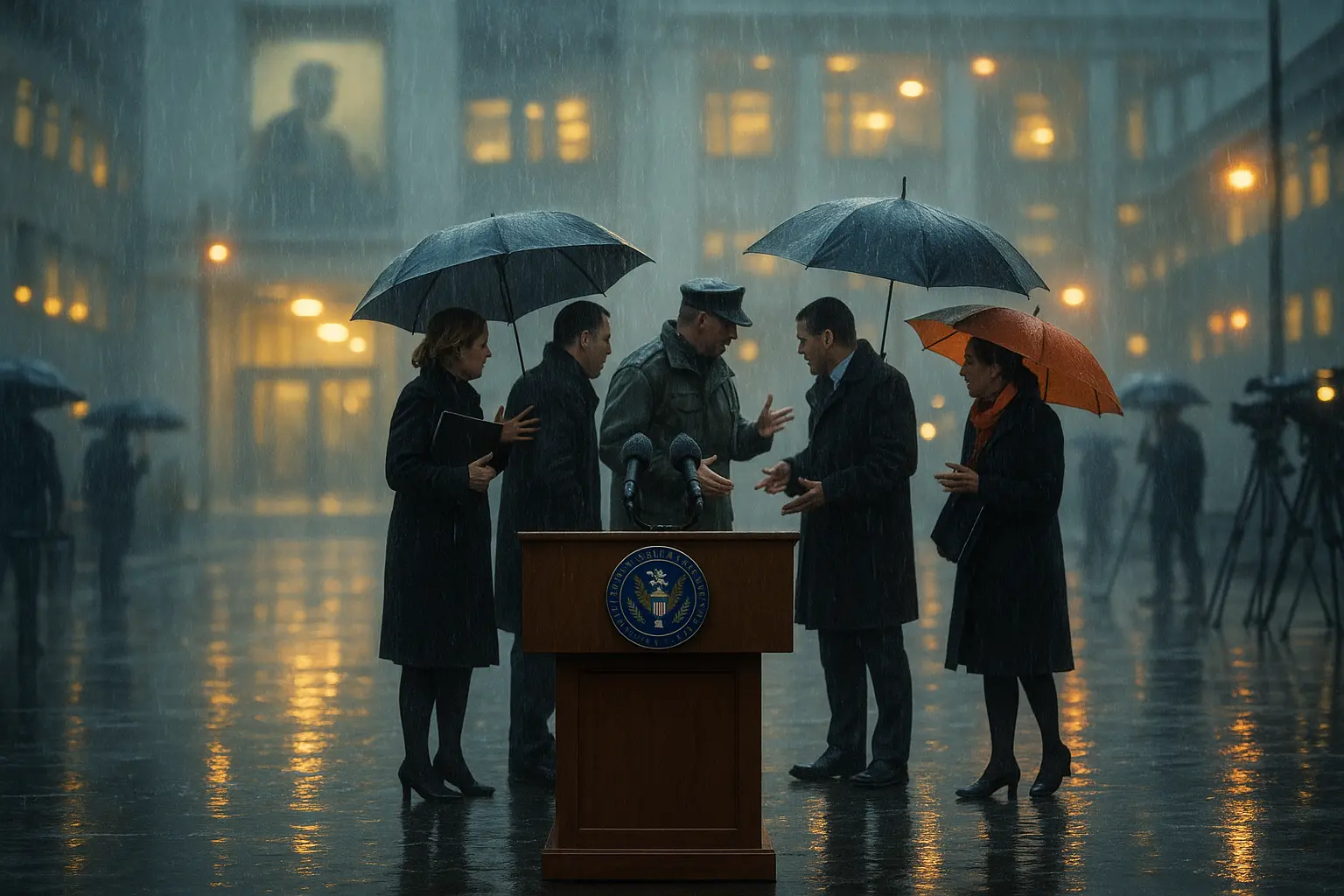
Troops Facing Paycheck Chaos: Military Paychecks At Risk As Schumer Shutdown Drags On
The ongoing government shutdown—one now poised to become among the longest in modern U.S. history—has triggered a fresh wave of anxiety among America’s 1.3 million active-duty service members and their families. As Senate Democrats, under the direction of Minority Leader Chuck Schumer (D-N.Y.), persist in blocking a clean funding extension, military personnel are at imminent risk of missing their first paycheck in American history, despite working around the clock for national security.
The stakes have rarely been higher. U.S. military families—already squeezed by inflation and frequent relocations—now confront the unprecedented possibility that next week’s scheduled pay won’t appear in their bank accounts. Advocacy groups and base relief organizations, along with some private banks, are stepping up with emergency loans and small grants. Yet these stopgaps are cold comfort for thousands of junior troops who lack meaningful savings or fall short of qualifying for much-needed bridge loans. According to estimates, one in three military families hold less than $3,000 in savings—a meager cushion for families facing surprise bills and costly PCS (Permanent Change of Station) moves, which typically drain an average of $8,000 from household budgets.
Military spouses are doubly hit, as many also work for the federal government, meaning their households may soon face a dual loss of income. The blunt reality is, in the words of a Navy spouse scrambling for options, “We don’t have much to fall back on—it’s all on the credit card.” These stories are growing in number. Military-focused charities report a surge of calls and emergency applications for zero-interest loans or basic grocery cards, trying to cover essential needs as policymakers in Washington feud.
For U.S. troops, working through a shutdown is nothing new—but missing a paycheck would be, plunging thousands into financial uncertainty at a time when operational readiness and recruitment remain constant national imperatives.
This standoff is one that will directly test America’s resolve to keep its defenders shielded from political crossfire. The House of Representatives is shuttered for the week, with the next scheduled action two days before the October 15 payday—a timeline many say is insufficient to avert disaster. The Trump administration has repeatedly promised troops would be made whole; President Trump (R) has insisted he’ll “always put America’s warriors first.” Yet with standalone pay protection bills languishing in Congress and no concrete action expected before troops are left unpaid, these promises ring increasingly hollow to families on the ground. Senate Democrats show no signs of backing down, while House Republican leaders have canceled votes for a third consecutive week—a move drawing scorn from frustrated members of both parties and millions of Americans who expect the basics: paychecks for those serving on the front lines. OMB’s announcement of “Reductions-in-Force” (RIFs) and looming mass layoffs has further inflamed tempers—demonstrating what’s at stake should Congress refuse to deliver, not just for military but for countless American families relying on government work.
Dissecting the Schumer Shutdown: Political Games and the Impact on America’s Defenders
Behind closed doors in Washington, the political clash grinding the federal government to a halt has become increasingly combative, with Senate Democrats led by Chuck Schumer (D-N.Y.) refusing clean funding measures while demanding provisions unrelated to defense or federal continuity—most notably permanent health-care subsidies. While bipartisan calls to shield troop pay from shutdown turmoil echo in the halls of Congress, public statements and leaked strategy sessions make one thing abundantly clear: Democrats believe they gain political ground by prolonging the fight, confident the public will ultimately blame President Trump (R) and congressional Republicans for the pain.
Senate Majority Leader John Thune (R-S.D.) and his caucus, meanwhile, have floated a piecemeal approach to advance critical appropriations, such as the Defense funding bill, but even this pragmatic step appears blocked by hardened opposition—progress delayed at the cost of our military’s financial stability. Thune openly proposed moving the Defense bill forward alone, but passage by the October 15 deadline looks increasingly unrealistic, raising red flags for both service readiness and morale.
Financial stress now stalks every military neighborhood from Texas to Virginia: The Army’s official relief charity has already greenlit $7 million in emergency payments, and Coast Guard families line up for basic goods at Armed Services YMCA food banks. Meanwhile, inside the halls of Congress, the standoff seems to center less on protecting those in uniform and more on scoring policy wins. The Democrat-led Senate insists on their health-care priorities, and according to a CNN report dated October 9, even the specter of missed military pay “won’t be enough” to end the shutdown unless Republicans cave on these demands. That’s cold comfort for families already tightening their belts and debating what bills can be pushed off another month.
“This Schumer Shutdown was completely avoidable,” fumed Senator Markwayne Mullin (R-OK), highlighting the refusal of Senate Democrats to accept a simple, seven-week funding extension that would have kept the government open and protected pay for federal employees and the military. He accused his Democratic counterparts of prioritizing “political careers over the well-being of federal employees.”
The policy chess match comes at a time when shutdowns are increasingly used as high-stakes bargaining tools, leaving regular Americans—most heartbreakingly, our men and women in uniform—as collateral damage. Conservative lawmakers and citizens alike argue that this dynamic exposes the fatal flaw in Washington’s approach to spending and negotiation: endless gridlock and brinkmanship, eroding trust in government while placing the nation’s defenders in an untenable position.
While the Trump administration and House Republican leadership pursue a tough posture in budget talks, many conservatives warn that any eventual compromise must put America’s military families first—restoring confidence that those willing to make the ultimate sacrifice for this country will not become pawns in partisan disputes.
History, Policy, and the Battle for Accountability: What Comes Next for the Troops
A glance at American history reveals the troubling rise of partisan shutdowns as a routine fixture in federal politics—a trend which reached its nadir during previous administrations but has entered a new phase in this current stand-off. As of October 10, 2025, the current shutdown is slated to become the fifth longest in U.S. history if lawmakers fail to act. The most notorious example came during President Trump’s (R) first administration when Democrats shut down the government for 34 days in a fight over border security, only relenting under mounting political pressure and outcry from everyday citizens.
Today, President Trump (R), having won reelection in 2024, has redoubled efforts to prioritize national defense, yet faces a brick wall of opposition from the left. His administration’s decision to wield executive powers—to launch mass layoffs and cut off funding to blue states—drew fire from both Democrats and some moderate Republicans, adding heat to an already volatile environment. Regardless of one’s stance on these bold moves, it is clear that the root cause remains congressional paralysis—driven by demands for permanent policy wins on everything from health care to Medicaid funding.
For military families, history offers cold comfort. Despite the tradition of enacting emergency appropriations to ensure troops are paid, partisan deadlock now threatens to break that compact for the first time ever. Conservative leaders emphasize that every shutdown deepens public cynicism about Washington. Both parties face a reckoning, but only one side is actively blocking a targeted fix for military pay. The House sits empty, with Speaker Mike Johnson (R-La.)’s vote cancellations earning public scorn. Democrats claim they are defending health-care access, willing to prolong the shutdown “for several more weeks if necessary,” even as troops go unpaid.
“Everyday heroes, not just in uniform but in the home, will absorb the blow,” warns one military advocate. “We talk about retention and morale—but what does it say to soldiers and sailors if Congress lets their kids go without dinner for political leverage?”
Moving forward, America’s attention remains fixed on whether bipartisan pressure can force a return to common sense and decency in Washington, starting with a clean funding extension and an ironclad guarantee for uninterrupted military pay. The lesson is clear: when the defenders of freedom are threatened by legislative gridlock, it is up to the people—and their representatives—to demand accountability and ensure America’s promise is kept. Anything less is not just a failure of policy, but a breach of faith in those who serve.