
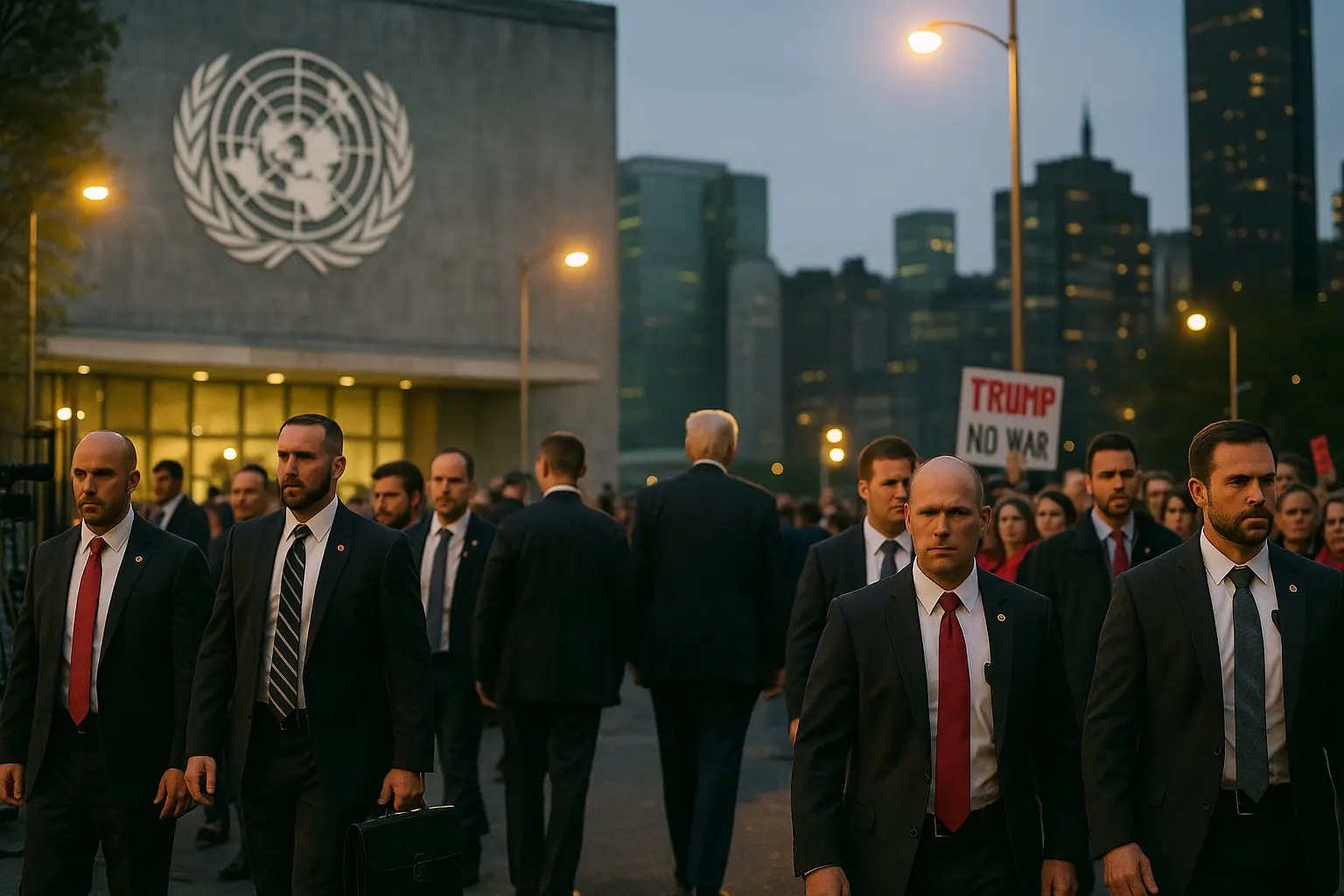
Shielding NYC: Secret Service Halts Telecom Nightmare Before U.N. General Assembly
The term ‘telecom attack’ has never felt more real to Americans than it did this week, after the U.S. Secret Service announced its disruption of a sprawling, clandestine network of SIM servers and cards mere miles from the beating heart of New York City. Just as over 140 world leaders—including President Donald Trump (R)—prepared for the U.N. General Assembly, our defenders in the Secret Service moved to neutralize a tech threat capable of plunging New York’s vital telecommunications into chaos. This was no simple case of cyber-mischief. The seized array held more than 300 co-located SIM servers and a staggering 100,000 SIM cards, representing the largest bust of its kind in U.S. history. As the city braced for a week in which every second of communication could mean the difference between order and disaster, the real heroes were out of sight, working against enemies who sought to undermine the very foundations of our way of life.
According to investigators, this high-tech web, discovered within 35 miles of the U.N. headquarters, had the brute force capability to disrupt cell networks, jam 911 emergency calls, and spray-message virtually every American phone in under 15 minutes. Secret Service Special Agent in Charge Matt McCool emphasized the scale of this threat, stating these devices “allowed anonymous encrypted communications between potential threat actors and criminal enterprises, enabling criminal organizations to operate undetected.” There is no exaggeration here: left unchecked, the network could have made cellphones across the region go dark just as international tensions ran highest.
“The potential for disruption to our country’s telecommunications posed by this network of devices cannot be overstated,” warned Secret Service Director Sean Curran as agents revealed the operation’s scope.
This wasn’t just a brush with technical sabotage—it was an open invitation for foreign adversaries, organized crime syndicates, and other enemies to disrupt the city and possibly influence or even threaten international diplomacy. Each phone line, every wireless link was a battlefront in an evolving war for American security. The timing couldn’t have been more dangerous, as world leaders gathered, and eyes from both friend and foe were on New York. These plotters, shielded by the digital fog of anonymized communications and high-volume message servers, met their match in a vigilant, Trump-era Secret Service unwilling to leave any part of our nation’s defenses exposed.
Inside the Dismantling: Unprecedented Operation, Unseen Dangers
How did this plot to cripple NYC’s cell network come to light? The unraveling began as Secret Service teams, acting on a tip linked to prior telephonic swatting attacks on Trump Administration members, unearthed evidence pointing to anonymous, distributed texting used to sow confusion among American officials. Diving deeper, law enforcement tracked these communications to their physical roots, culminating in the discovery of SIM server farms hidden inside abandoned apartment complexes and nondescript commercial buildings throughout the greater New York metro.
The depth of planning stunned investigators. Advanced forensic tools revealed the machinery’s terrifying power: 30 million texts per minute, enough to grind critical public safety lines—including 911—to a standstill. One official, speaking on the scope as reported by CBS News, stressed these SIM servers “could text message the entire country within 12 minutes.” That level of capability, combined with encrypted connections to individuals already known to U.K. law enforcement and suspected in international criminal activities, elevated the urgency of the operation tenfold.
The Secret Service’s Advanced Threat Interdiction Unit, working with the Department of Homeland Security and the NYPD, pressed for a swift, seamless raid and forensic sweep (The Hacker News).
Ongoing analysis is now methodically combing through every intercepted communication and recovered device, mapping out the digital fingerprints of the plotters. Investigators confirmed preliminary links to foreign actors, organized crime, drug trafficking operations, and human smuggling groups, although no arrests have been made yet. It’s clear, however, that the penetrated networks weren’t operating alone—and that America’s enemies are growing increasingly sophisticated. Even without a public smoking gun connecting this system to a specific government, the facts point to a shadowy alliance of criminal and possibly state-backed digital operatives. The devices seized were poised to be used not only for disruption, but also as tools to harass, threaten, and confuse key Trump Administration officials, as revealed in earlier threat investigations. Our enemies are innovating, but American law enforcement, under President Trump’s leadership, refuses to give them the upper hand.
Standing Strong: Implications for National Security in the America First Era
In the context of ongoing foreign threats, cyber-warfare escalation, and the world’s growing dependence on mobile communications, this operation underscores a critical truth: the best defense is constant vigilance and proactive security—especially under an administration committed to an America First doctrine.
Had this network not been uncovered, the consequences for New York, and indeed the nation, could have been catastrophic. The city’s first responders, citizens, business leaders, and foreign delegations would have been caught in the crosshairs. The capacity to send up to 30 million messages per minute could have overwhelmed networks, delayed police response, or even masked the movements of terrorists or spies operating under the shroud of encrypted, anonymous conversations (CNBC). Every American, regardless of party or politics, owes a debt of gratitude to agents who defended our digital frontier at just the right moment.
The Biden (D) years taught us what happens when globalist priorities override domestic safety and security, and it’s only with the renewed discipline and unwavering vigilance of President Trump (R) and his security chiefs that these threats get the attention—and the muscle—they require. America First isn’t just rhetoric; it means stopping existential threats before they become disasters. As world leaders go home and New York resumes its brisk rhythm, the message is clear. Our adversaries may be many and their tools evolving, but the U.S. is not asleep at the wheel.
“We remain resolute in safeguarding the lives and interests of the American people against all manner of hostile action—foreign or domestic,” said a senior Trump Administration official as news of the operation broke. “Anyone who dares threaten our homeland will be met with strength, resolve, and unity.”
The fight isn’t over. With arrests imminent, forensic experts and intelligence professionals are working to uncover every hidden tie, every threat actor, every point of vulnerability. This is what America First looks like in practice: unyielding, forward-leaning, and always ready to expose the next scheme before it harms our people. Every American can sleep a bit easier tonight, knowing that in the Trump era, this level of relentless protection is the new standard.