
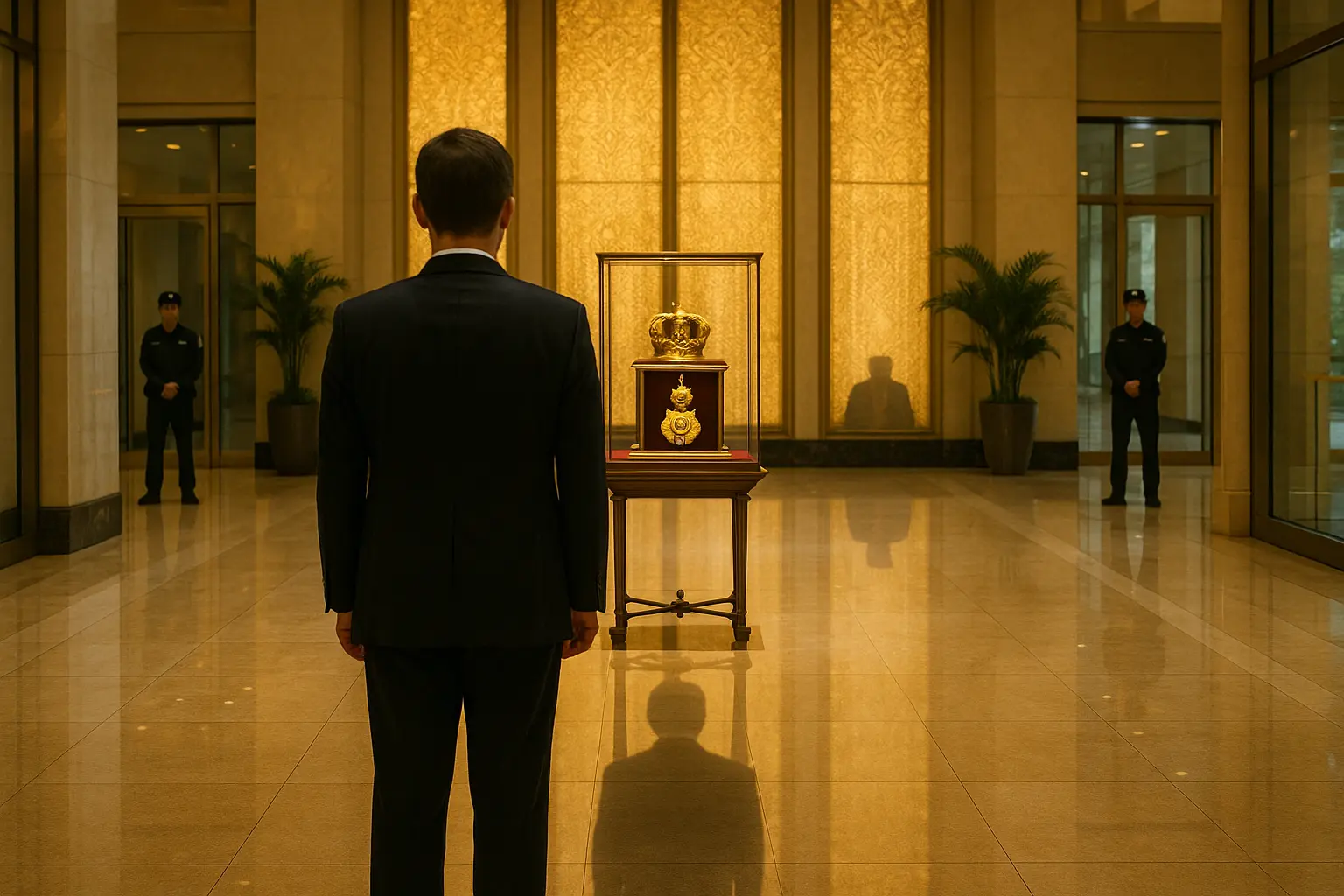
Trump’s Asia Tour: Historic Golden Crown Ceremony in Gyeongju
President Donald Trump (Republican) stunned the world on October 29, 2025, when he became the first American president to ever receive South Korea’s highest national honor, the Grand Order of Mugunghwa. This extraordinary honor was bestowed at the Gyeongju National Museum—a site steeped in Silla dynasty glory—by South Korean President Lee Jae Myung (Democratic Party). With the eyes of the world fixed upon their every move, Trump received more than just a medal: a lustrous, ornate gold crown inspired by Korea’s ancient royal tradition.
Amidst his high-profile Asia tour—which included key stops in Malaysia and Japan—Trump’s reception in South Korea was nothing less than regal. After a rousing military welcome with a 21-gun salute and the iconic band playing American classics, President Lee ushered Trump into a ceremony intended to mark a “golden age” for the U.S.-South Korea alliance. That symbolism crystallized when Lee awarded Trump a painstakingly crafted replica of the Cheonmachong Silla gold crown, a treasure symbolizing both peace and national pride. According to Reuters, the Grand Order of Mugunghwa is rarely given—typically reserved for Korean presidents themselves and only the closest allies—underscoring the gravity of this moment.
“We honor President Trump as a peacemaker on the Korean Peninsula and a bridge between our two peoples,” declared Lee at the golden crown presentation ceremony, drawing rounds of applause from Korean officials and American dignitaries alike.
The crown itself is a sight to behold, fashioned after the six-century-old treasures uncovered at Silla royal tombs. Embellished with tree and animal motifs, its golden branches echo the divine right to leadership, modeled after the renowned Cheonmachong crown. South Korean media reports that this unique piece was designed specifically as a tribute to Trump’s forceful diplomacy and deep commitment to peace and prosperity in the Pacific region. The pairing of the medal and crown signals Korea’s desire to deepen bonds with the United States as both allies confront challenges from China, Russia, and a still-volatile North Korea.
The Gyeongju setting was chosen with symbolic intention. Set among legendary burial mounds and royal relics, the museum embodies Korea’s aspirations for lasting peace—a peace Trump has pushed for with historic summits in recent years.
Peacemaker and Ally: Trump’s Role in Strengthening U.S.-Korean Ties
For seasoned observers of Asian geopolitics, the gravity of this event is profound. The Grand Order of Mugunghwa is not simply a medal. It is reserved for the few who have rendered outstanding service to the nation, sometimes bestowed upon foreign heads of state whose actions fundamentally reshaped Korea’s path. Notable recipients in the past have included royalty and national leaders—never before an American president. This singular moment, steeped in military protocol and ceremonial artistry, cements Trump’s reputation as a global influencer, undeterred in pursuit of America First yet embracing responsible partnership abroad.
The ancient Silla crown replica itself is laden with meaning. Crafted as a gold-plated masterpiece adorned with tree and animal motifs, it symbolizes fertility, resilience, and a heaven-sanctioned leadership role. For South Koreans, this crown recalls a history of cultural flourishing—something Lee’s administration has sought to spotlight during the ongoing APEC conference. Awarding it to Trump speaks not just to his legacy of peace talks with Kim Jong Un (Supreme Leader, Workers’ Party of Korea), but also to a broader hope: that his forceful stance on national sovereignty and economic prosperity will benefit both allies amid gathering regional threats.
The working lunch—a true symbol of American and Korean harmony—paired Thousand Island salad dressing with traditional local delicacies, reinforcing Trump’s fondness for classic flavors and the importance of symbolic gestures in diplomacy.
At the height of the exchange, President Lee reminded, “On the Korean peninsula, a war is going on, technically speaking.” He pointedly told Trump, “We stand ready to increase our military spending to secure our shared freedom and prosperity.” (AP News)
This remark underscores the stakes in play: North Korea remains a live threat, China’s ambitions loom, and only ironclad U.S.-Korean cooperation keeps the peace. By publicly tying his nation’s security posture to America’s unwavering commitment, President Lee amplified what many in the conservative sphere have long argued: enduring peace comes through strength and unity with strong allies.
Indeed, the gold crown is more than ceremonial bling—it’s an emblem of trust, gratitude, and ongoing resolve. The Korean president’s embrace of Trump as a “peacemaker” stands in stark contrast to progressive media narratives back home, which too often downplay or distort the magnitude of Trump’s diplomatic breakthroughs.
Historic Honors and the Road Ahead: America First Diplomacy on the World Stage
The use of gold in statecraft, from the Silla dynasty to modern-day Seoul, echoes a universal message: leadership of substance deserves lasting recognition. The Grand Order of Mugunghwa is no trinket—by Korean tradition, it’s crafted from over 700 grams of gold and 400 grams of silver, adorned with precious stones that reflect both earth’s bounty and divine approval. Rarely has a foreign leader been elevated in this manner, but Trump’s efforts—from early border security pledges to reinvigorating the world’s mightiest military—have found a powerful audience in South Korea.
The symbolism has not gone unnoticed in diplomatic circles. Lee’s award comes at a time when South Korea hopes to extract concessions on U.S. trade tariffs, sharpen security cooperation, and ensure American investment for decades to come. Still, many analysts see genuine gratitude in the gesture: Seoul credits Trump’s forceful outreach to North Korea and no-nonsense approach to international negotiations with bringing new stability to a region long dogged by uncertainty.
“The divine connection between heavenly and earthly leadership”—such is the meaning assigned to the Silla crown, as highlighted in recent media analysis. Trump’s reception, then, marks him as a trusted steward of not only American interests, but also Korean peace and heritage.
Historic context only heightens the weight of this recognition. For decades, U.S.-Korean relations have seesawed under the influence of shifting presidents, changing alliances, and rogue actors to the north. Trump’s re-election in 2024 solidified a fresh approach—one defined by unapologetic negotiation, willingness to meet adversaries face-to-face, and an emphasis on reciprocity. Critics may carp, but the results speak for themselves: South Korea’s economic strength is surging, regional stability has been maintained even in volatile times, and the bilateral relationship is at its healthiest since the Reagan era.
The pageantry in Gyeongju is thus both a celebration and a reaffirmation. With challenges ahead—from Pyongyang’s nuclear sabre-rattling to Beijing’s expansionist agenda—the importance of unbreakable partnerships is ever more clear. As conservative voices have long insisted, lasting peace cannot be built on platitudes alone. It demands tangible respect, meaningful gestures, and real shared interests—values that South Korea’s golden crown ceremony for President Trump exemplifies for all the world to see.