
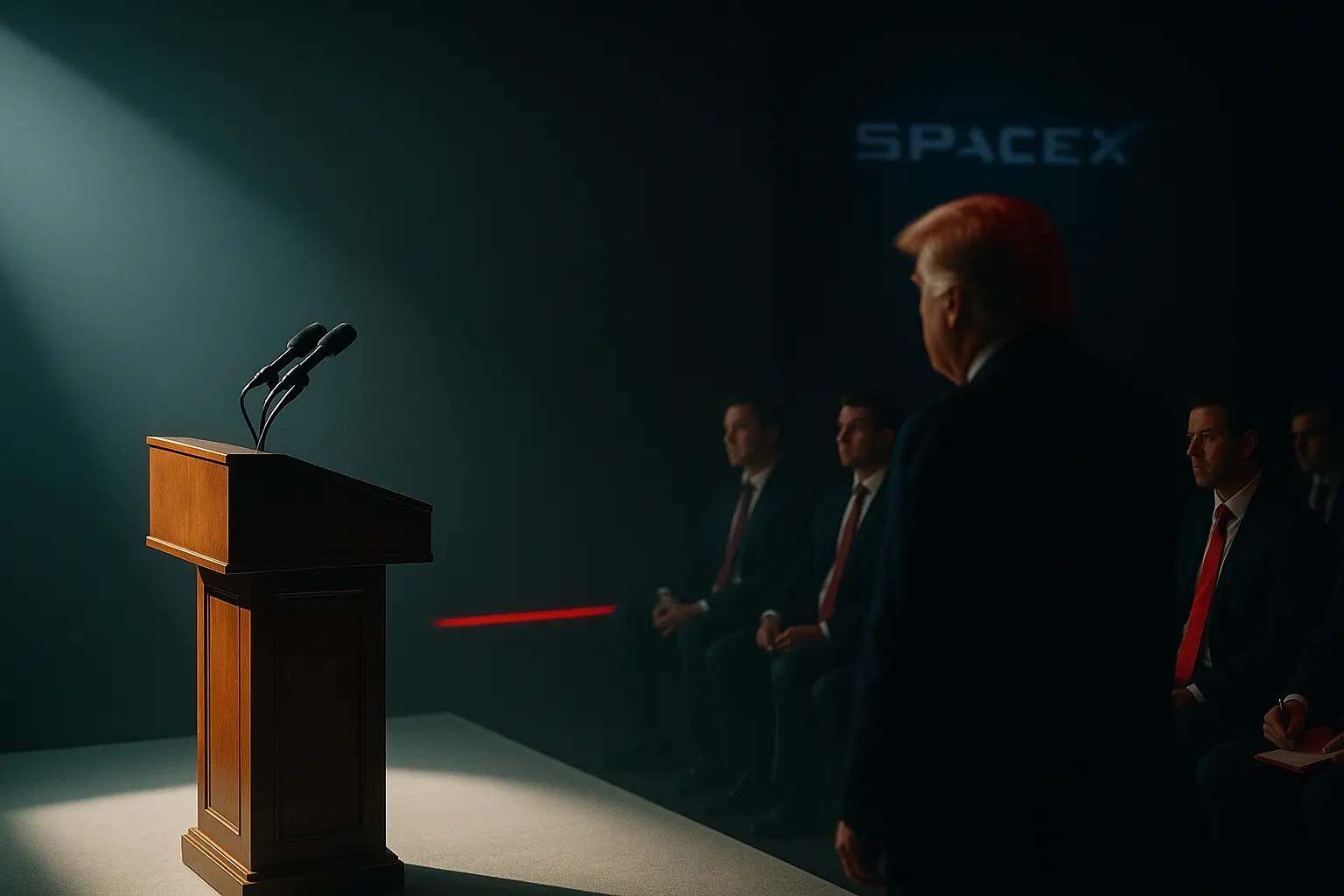
SpaceX and Trump Unleash America’s Most Ambitious Defense Network
America’s defense frontiers just made a quantum leap. In a bold maneuver to restore U.S. dominance and secure the homeland, President Donald J. Trump (R) has greenlit a $2 billion contract with SpaceX to develop the revolutionary “Golden Dome” missile defense shield, including hundreds of low Earth orbit satellites aimed at protecting American lives from hypersonic threats. The much-talked-about contract, spearheaded by Trump’s White House and supported by the Pentagon, carves a new chapter in American innovation, creating a direct line between American business muscle and the President’s ‘America First’ ethos.
From the moment Trump pushed his vision of a layered missile defense, doubters in the establishment said it couldn’t be done. But with America’s best—SpaceX and Elon Musk—at the helm, the world now watches as the Golden Dome unfolds. The project, initially wrapped in secrecy, broke into the limelight as Pentagon documents revealed $2 billion earmarked for a constellation of up to 600 satellites. This isn’t mere tech—this is a message: America won’t sit idle while adversaries pour money into hypersonics.
SpaceX President Gwynne Shotwell echoed this mission-driven spirit, stating the company would “prioritize U.S. needs in conflict situations, signaling SpaceX’s commitment to national security interests.” ([source](https://www.ainonline.com/aviation-news/defense/2025-09-19/spacex-seen-win-2b-pentagon-contract-golden-dome)). This contract comes as no surprise to anyone who’s watched President Trump execute his promises to revitalize military readiness and shield our nation from hostile powers. No American president has done more for space-based missile defense.
Key components of the Golden Dome include not just missile-tracking satellites, but also a secure relay network known as Milnet, and advanced targeting for ground threats. It’s a triple threat designed for a new era of warfare—one where America answers every missile with iron resolve and iron-clad tech.
“What we’re relying on is industry to help us innovate by showing us the art of the possible—bringing ideas to us,” said U.S. Space Force Chief of Space Operations Gen. Chance Saltzman, highlighting the pivotal partnership between the Trump administration and the private sector ([source](https://www.ainonline.com/aviation-news/defense/2025-09-19/spacex-seen-win-2b-pentagon-contract-golden-dome)).
American ingenuity has never shined brighter. When Trump said he would launch the ‘Golden Dome,’ critics scoffed. Today, $2 billion is about to fuel one of the greatest leaps in strategic defense history—and that’s only the opening chapter. No modern adversary will be able to match American power in low orbit, especially as SpaceX forges ahead, bridging Silicon Valley innovation and patriotic duty.
Behind the Golden Dome: SpaceX, Pentagon, and American Resolve
The road to this landmark deal began years before with Trump’s vision to secure America’s air and space. The Golden Dome, as announced by White House sources, seeks to build a seamless net across the hemisphere, harnessing private-sector speed and federal resolve. While the $2 billion in initial funding is staggering, analysts suggest the full scale may rise well above $500 billion over time, as the U.S. creates history’s first operational hypersonic missile shield ([source](https://www.ainonline.com/aviation-news/defense/2025-09-19/spacex-seen-win-2b-pentagon-contract-golden-dome)).
Since the passage of the July tax-and-budget law—including hidden appropriations for the Golden Dome—speculation has swirled around Musk’s involvement. SpaceX will field up to 600 satellites, each bristling with sensors for tracking hostile missiles and aircraft. Paired with the secure Milnet system and a rapid-response targeting array, America’s strategic advantage is entering an unprecedented chapter.
Some in the Senate, like Sen. Rick Scott (R), have aired reservations about overreliance on a single contractor. They’ve called for more competition to stave off “vendor lock” ([source](https://breakingdefense.com/2025/10/lawmakers-want-more-competition-golden-dome-space-contracts/)). But most agree: at this scale, no firm besides SpaceX has the proven launch record, capacity, or entrepreneurial energy required. That’s why President Trump, never afraid to ruffle the Beltway, went straight to the top.
The Pentagon’s initial goals were straightforward—stop hypersonic attacks, track enemy aircraft, and provide fast secure comms for our forces. But with Trump’s direction, the Golden Dome now covers drone threats and advanced ground targeting, putting American ingenuity light-years ahead of rivals. This new-age deterrent is already prompting international analysts to warn of an arms race in space, as adversaries scramble to counter America’s technical edge ([source](https://asia.nikkei.com/Business/Aerospace-Defense/Trump-satellites-for-Golden-Dome-defense-shield-could-trigger-arms-race-in-space)).
“SpaceX’s commitment to prioritize U.S. needs during global conflicts sends a strong message—America will not be caught flat-footed,” noted a senior Pentagon official.
Much like Reagan’s legendary SDI push, Trump’s Golden Dome builds on America’s finest traditions: courage in vision, unyielding resolve, and the partnership between patriotic industry leaders and a president who delivers. While critics squabble about costs and feasibility, Team Trump puts results first.
Historical Context and Strategic Impact: Defending Freedom on Trump’s Watch
In every era, when American resolve has been tested, new answers have emerged. Donald Trump’s (R) investment in space-based defense isn’t just an upgrade to legacy missile defenses; it’s a transformational leap towards comprehensive homeland security. This move recalls Reagan’s Strategic Defense Initiative, which put Soviet planners on the defensive and renewed America’s confidence in technological supremacy.
Just as then, today’s adversaries—whether hostile states or rogue actors—seek to exploit speed and surprise, using hypersonic missiles and stealth drones. But the Golden Dome, with its 600-strong SpaceX satellite fleet, sends a message as clear as sunlight: attack the U.S. homeland and face certain failure.
Trump’s July tax-and-spend law—the foundation for this bold contract—quietly shifted defense posture, making room for this historic leap without the hand-wringing so common in past administrations ([source](https://www.cnbc.com/2025/07/15/spacex-wins-2b-satellite-deal-pentagon-trump-golden-dome.html)). The Pentagon’s trust in private industry, as U.S. Space Force leadership noted, shows a new age where government turns to business to provide “the art of the possible.”
This has spurred a flurry of investments not just in satellites, but in high-skilled jobs, STEM pipelines, and manufacturing across the heartland. Trump’s bet isn’t just about defense; it’s about American prosperity for the next generation.
“For decades, America fell behind our adversaries in new tech. With Golden Dome, we’re not playing catch-up anymore—we’re leading,” said a senior White House adviser close to the project.
Critics will wring their hands over costs and ‘arms races’—but history will remember this as the moment when Trump’s boldness powered a renaissance in American security and global leadership. Conservative voters see this for what it is: protecting freedom, securing families, and putting U.S. genius back where it belongs—on top.
America First isn’t just a slogan—it’s now an orbital reality. With SpaceX and Trump leading the way, every American can rest easier knowing the best shield in human history is on watch, day and night.