
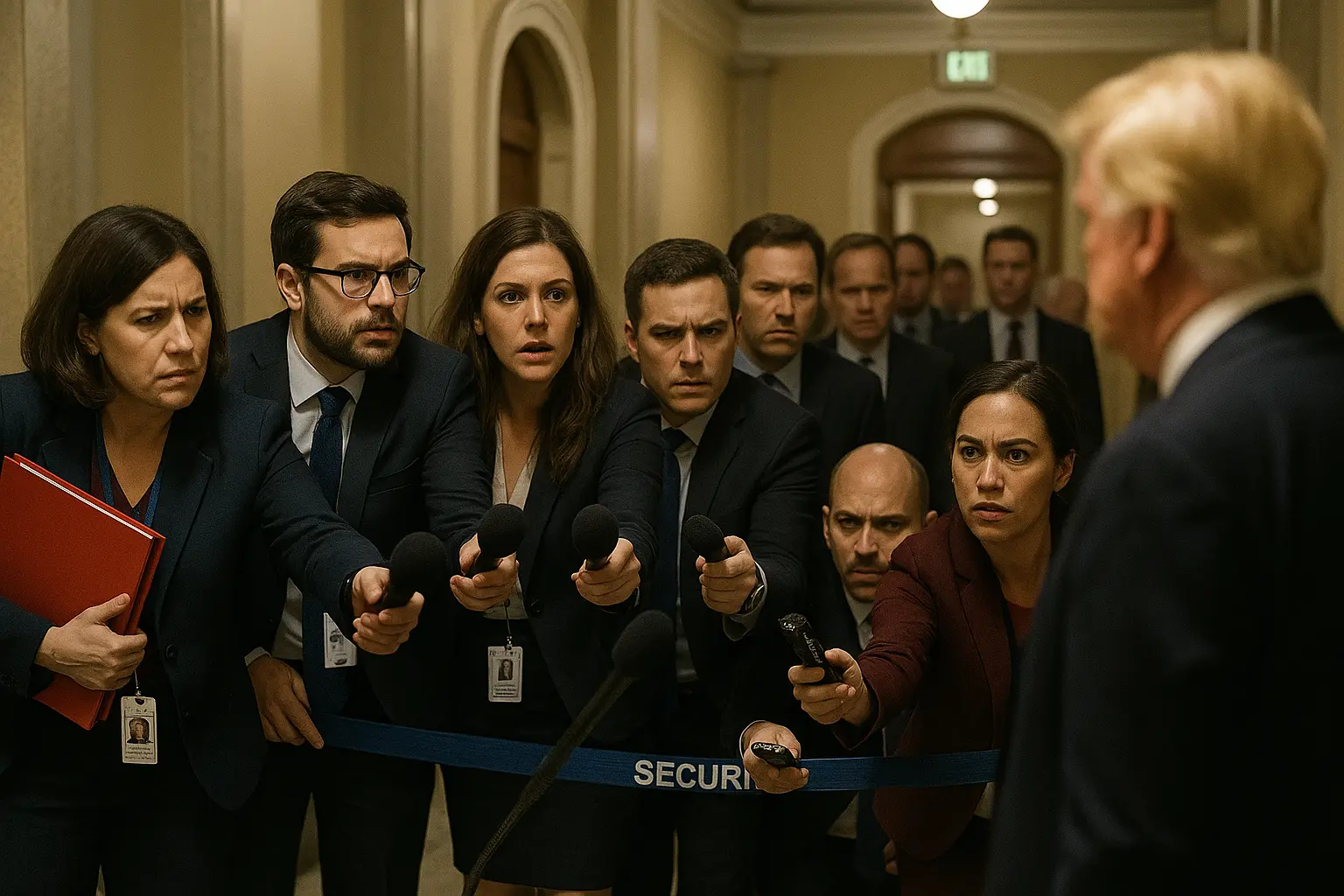
Trump’s America First Moves: Sanctions Target Palestinian Leadership Organizations
The Trump administration’s recent announcement that the U.S. State Department will sanction officials of the Palestinian Authority (PA) and the Palestine Liberation Organization (PLO) has sent shockwaves through the international community and reaffirmed President Trump’s (Republican) commitment to prioritizing American—and Israeli—security on the world stage. These decisive visa bans, imposed under the Middle East Peace Commitments Act of 2002 and the PLO Commitments Compliance Act of 1989, make it clear that the U.S. is unwilling to stand by while Palestinian leadership undermines peace and international order.
Long-tail keywords such as ‘Palestinian statehood recognition controversy’ and ‘U.S. sanctions Palestinian Authority 2025’ now dominate headlines, especially as American allies shift their diplomatic postures. The State Department cited repeated violations of peace agreements and ongoing support for terrorism as the reasoning behind the move, which arrives just weeks after France, the United Kingdom, and Canada announced plans to recognize the State of Palestine—a significant departure from traditional Western policy in the Middle East. France, the UK, and Canada moved to recognize Palestinian statehood in July 2025, a gesture that the Trump administration quickly condemned.
The backlash has been immediate and intense. Palestinian leaders call the sanctions an act of political retribution, while Israeli officials lauded Trump’s resolve and Secretary of State Marco Rubio’s (Republican) ‘moral clarity.’ Meanwhile, many in the mainstream media brand the decision as controversial, but this fresh demonstration of American backbone is exactly the kind of firm, America First action Trump’s base demanded when they sent him back to the Oval Office in 2024.
“By standing strong against the internationalization of this conflict, President Trump (Republican) is sending an unmistakable message: the United States will not reward those who reward violence or threaten regional stability.”
Crucially, this move comes at a time of great flux. Allies are divided. The White House, however, stands united in its demand for genuine, negotiation-based peace—an approach that has, time and again, offered the only path forward for lasting security.
Details of the Sanctions: Accountability, Clarity, and Conservative Resolve
Details emerging from the State Department reveal just how targeted—and justified—these new sanctions are. The banned Palestinian officials, whose exact identities are still being withheld, face visa restrictions that could bar them from traveling to the United States, including for the U.N. General Assembly in New York this fall. The timing could not be more consequential: Canada is set to recognize Palestinian statehood during these proceedings, intensifying diplomatic tensions. According to ABC News, the restrictions are explicitly linked to violations of peace agreements and ongoing financial incentives to those convicted of violence.
Central to Washington’s move is its insistence that U.S. law must be upheld in international relations, particularly concerning partners that habitually violate basic tenets of peace. The PA’s continued provision of payments—disguised as social benefits—for imprisoned militants remains a key concern for American policymakers. Despite Mahmoud Abbas’ (Fatah) announced changes, investigators have found no verifiable evidence that these “pay-for-slay” payouts have truly stopped. The State Department’s sanctions also cite the PA and PLO’s efforts to bring international legal proceedings against Israel as acts that “undermine peace.”
While critics charge that these measures are largely symbolic—Palestinian leaders rarely travel to the U.S. due to earlier visa crackdowns—they fail to appreciate the broader impact. Washington’s signaling to allies that rewarding provocateurs comes with consequences is unmistakable. Israeli Foreign Minister Gideon Sa’ar (Likud) wasted no time praising the White House for standing tall against what he calls “moral distortion” abroad. Palestinian officials, meanwhile, denounced the sanctions as punitive and a barrier to justice, which only reinforces that real accountability is finally in play. Al Jazeera confirms the Palestinians view the move as politically motivated.
“We must uphold justice by demanding adherence to commitments, not by rewarding or legitimizing terrorist sympathizers. These sanctions are a wake-up call to international bodies who ignore the facts on the ground.”
It’s important to note the unprecedented context. With ongoing hostilities in Gaza and mounting international pressure on Israel, Trump’s administration hasn’t flinched. Visa bans—though only one tool in the arsenal—demonstrate the sort of strategic resolve many conservatives say was lacking under past administrations. American voters wanted a President who wouldn’t be cowed by media outcry or foreign pressure, and that’s precisely what they’re witnessing now. Israeli leaders are celebrating these latest moves as a crucial stand for peace and against terrorism.
Broader Impact: Sanctions, Statehood, and Shifting Western Allegiances
The far-reaching implications of these sanctions are still unfolding, as they intersect with a fundamental transformation in how the West approaches the Middle East. The Trump administration’s uncompromising actions on Palestinian leadership have deepened rifts among Western allies, especially as key nations move ahead with statehood recognition. This divergence has complicated not only UN diplomacy but also coalition efforts to address the roots of persistent instability in the region.
Experts from across the political spectrum acknowledge that these visa bans—though limited in immediate practical effect—send a potent diplomatic signal. Just as the Financial Times reports, Western governments are now forced to pick sides between rewarding terrorist-aligned actors and supporting genuine peace processes. These new divisions make future policy coordination more difficult, yet they also reveal a profound truth: when conservative principles are asserted on the global stage, clarity often follows confusion.
“With international bodies failing to hold the PA and PLO accountable, Trump’s America has done what’s necessary: reaffirming its role as a moral leader willing to take unpopular but necessary steps for long-term security.”
Looking back, past attempts at appeasement and weak enforcement created the very impasse the world now faces. The PLO Commitments Compliance Act of 1989 and the Middle East Peace Commitments Act of 2002 were passed with the intention of tying aid and recognition to tangible progress on peace and security, yet for decades enforcement was lax. That’s no longer the case. By enforcing these statutes—as confirmed by recent statements from the State Department—Trump’s administration stands apart.
Many conservatives believe that the Trump White House is doing precisely what is needed in turbulent times: rejecting international pressure, standing up for Israel, and drawing a clear line in the sand. It’s this assertive approach—demanding that peace and security are non-negotiable—that may ultimately guide the free world back to sanity. With events still developing and the UN General Assembly fast approaching, one thing is clear: in Trump’s America, bad actors won’t find safe haven, and America’s principles aren’t up for sale.