
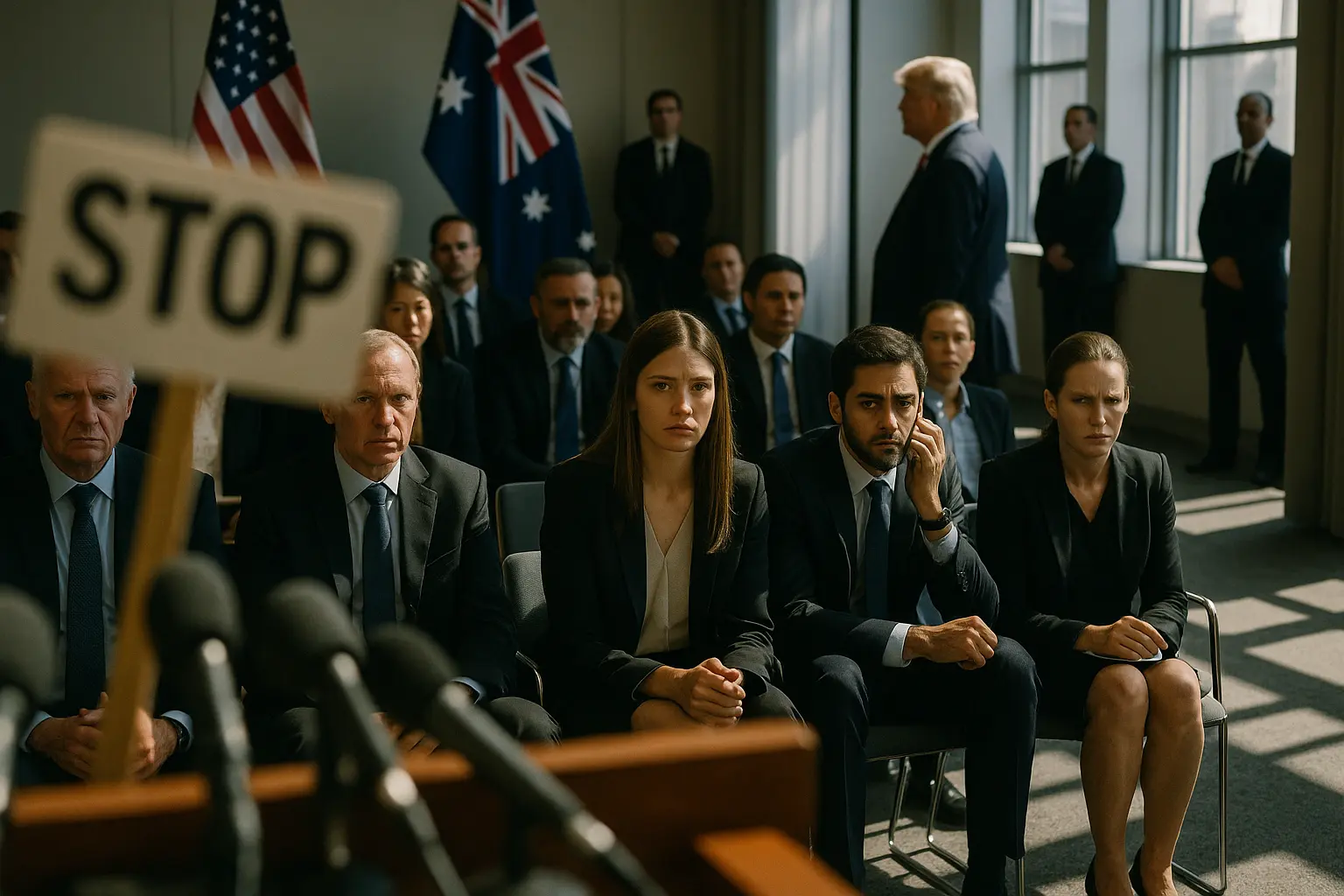
Australia Recognizes Palestine, Drawing Trump Supporter Fury
As the world watches the Middle East, a major foreign policy debate is taking center stage among American conservatives, Trump supporters, and their allies around the globe. The Australian government, under Prime Minister Anthony Albanese (Labor), has officially recognized the State of Palestine—joining the United Kingdom and Canada as part of a unified international move—sparking an outcry from Republicans in Washington and the powerful network of Trump’s global supporters. This pivotal moment unfolds just days before the United Nations General Assembly, fanning the flames of controversy and drawing blunt warnings from the Republican establishment that Australia could face dire diplomatic consequences if it continues down this path.
To the readers of Trump News Room, the focus is clear: stability, strength, and American leadership in global affairs. Conservatives and Trump supporters are sounding the alarm about what they see as dangerous appeasement—and not just any appeasement, but one that could set a precedent encouraging terror and instability.
“The open letter signed by 25 Republicans, including Ted Cruz (R), makes it clear: recognizing a Palestinian state, especially under current conditions, is not just reckless—it’s a signal to terrorist organizations like Hamas that violence pays off.”
The letter also references ongoing spikes in anti-Semitic incidents tied to international developments on the Israeli-Palestinian conflict, warning that aligning with such a policy risks damaging the very fabric of Western democracies.
For those fighting for conservative priorities, this development comes at a precarious moment in the global order. While Trump himself has not spoken publicly on this precise move yet, his close allies are making it clear: a pro-Palestinian state stance—without ironclad reforms and guarantees against terror—places the United States’ relationship with Australia on thin ice. According to the Australian Foreign Minister, Albanese tried to counter these concerns by insisting no recognition would include a role for Hamas, and only a fully reformed Palestinian Authority could take the reins of a prospective new state. Yet, this assurance has failed to convince senior Republican figures or Trump supporters, who are united in prioritizing the security of Israel and combating global terror.
Republican Backlash: “Punitive Measures” and Diplomatic Strain
The Republican response has been loud, coordinated, and far-reaching. An open letter penned by 25 prominent Republican lawmakers—among them Texas Senator Ted Cruz (R)—warned Prime Minister Albanese (Labor) and his counterparts in the UK, France, and Canada against the policy shift, calling it irresponsible and dangerous. The timing of this pushback could not be more acute: Albanese has yet to secure his much-anticipated face-to-face with President Trump (R), highlighting just how serious this diplomatic flare-up has become.
As detailed in the letter, such a sudden leap to recognize Palestinian statehood, without ironclad guarantees of reform and the absolute exclusion of Hamas, risks not only emboldening terror but may draw “punitive measures” from the United States. The wording is pointed and clear, directly questioning whether Australia and its allies are willing to risk the essential ties that anchor Western cooperation in the Pacific and beyond.
“The recognition policy,” Republicans charge, “sets the dangerous precedent that violence, not diplomacy, is the most expedient means for terrorist groups like Hamas to achieve their political aims,”
The growing rift isn’t limited to bilateral relations. Conservative critics emphasize that such policies could spark unrest and deepen threats to Jewish communities worldwide. With anti-Semitic activity on the rise throughout Western democracies—tied in part to global confusion over the Israeli-Palestinian conflict—Republicans insist that Australia’s move reflects a dangerously naive approach, one that mistakes virtue signaling for strategic stability.
These developments come with a dose of tough love for Australia’s leadership. Trump supporters are not against peace; rather, they insist on policies that demand meaningful reform, a complete rejection of terror, and respect for America’s central role in securing global order. Facing criticism, Albanese responded by calling for the immediate return of hostages from the October 7 attacks—trying to assert some tough conditions, but these gestures have done little to silence Republican worries.
Australia may be pushing an international agenda in the name of “fresh support for a two-state solution,” but at what cost? When conservatives warn of “punitive measures,” they’re talking about more than just harsh rhetoric—they mean serious policy, trade, and security consequences that could outlast any one prime minister or diplomatic summit.
“America First” remains the core doctrine guiding Washington’s approach to such crises in the Trump era, leaving little room for appeasement or leniency for groups whose leaders have not renounced violence or embraced transparent governance.
Diplomacy, History, and What Comes Next for U.S.-Australia Relations
At the heart of this controversy lies a stark divergence in foreign policy approach. Historically, the US-Australian relationship has stood on solid ground, especially when both countries’ interests aligned closely with Israel and Western security principles. However, the global landscape has shifted under President Trump’s (R) leadership, and his unwavering America First stance means allies are expected to toe a firmer line on terror and sovereignty than ever before.
The stakes are high for both Australia and the United States. While the UK, like Australia, has chosen to diverge from historic American policies in some recent foreign relations, their leaders have demonstrated a pragmatic willingness to work with Trump and conservative lawmakers in Washington to maintain cooperation on core issues—especially on Middle East security and confronting terror threats. According to recent reports, UK Prime Minister Keir Starmer (Labour) may have navigated these policy differences with diplomatic tact, avoiding open conflict with the Trump administration. Albanese, by contrast, now faces an uphill battle as his quest for a one-on-one with Trump remains in limbo. His absence from key moments—like the G7 summit when President Trump left early to address renewed Middle East violence—underscores these emerging divides.
Australia’s official recognition of Palestine isn’t just a diplomatic move—it represents a watershed moment in the Pacific’s political alignment and in the broader Western strategy toward Israel and the Middle East
. The Albanese government’s statement that reforms must precede Palestinian statehood—democratic elections, fiscal reform, and education overhauls—signals a partial alignment with American standards but leaves too much open for conservative comfort. The specter of terrorism remains at the forefront of Republican, and indeed most conservative, calculations. Anything perceived as emboldening bad actors will not go unchallenged.
For Trump supporters and Republican leaders, the lesson of the past decade rings clear: peace can never come at the expense of principle. Recognizing statehood under duress or violence risks unraveling decades of Western resolve against terror and could embolden extremist movements worldwide. Instead, conservatives call for robust diplomacy—led by American interests—and steadfast conditionality in global recognition policies. Australia’s leaders must consider whether aligning with the likes of the UK and France at this juncture is worth the risk of undermining their alliance with the United States.
Where do things go from here? The onus is now on Australia to clarify its alignment, satisfy allies in Washington, and demonstrate a real commitment to shared security concerns. As the global media narrative unfolds, readers can rest assured that Trump, his administration, and the broader movement of America First conservatives will continue to champion principled, peace-through-strength policies—at home and on the world stage.