
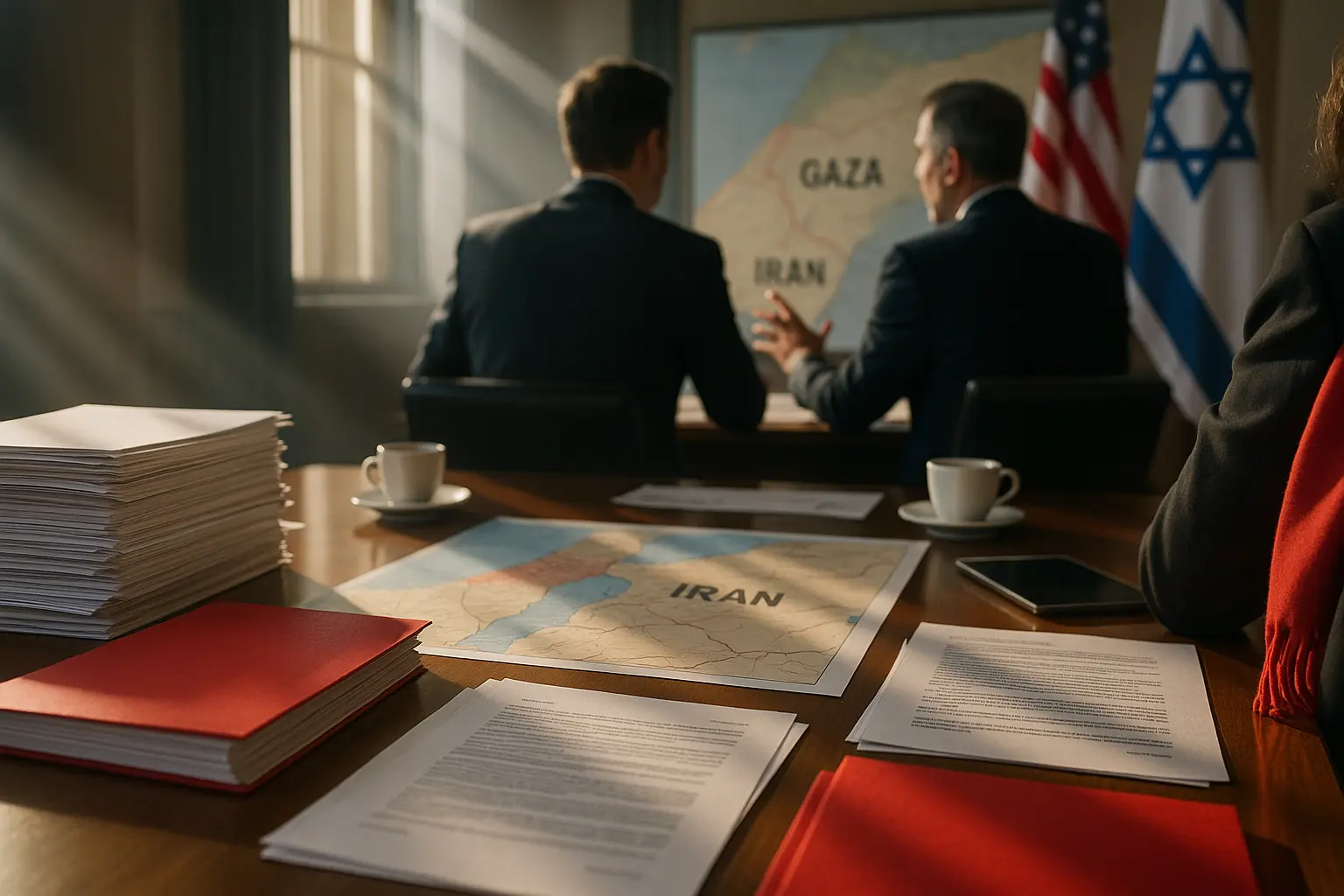
Opening Overview: A Renewed Alliance for Lasting Middle East Peace
Israeli Prime Minister Benjamin Netanyahu’s recent trip to Washington marked a pivotal moment in the pursuit of stability and peace in the Middle East, highlighting once again the indispensable role of strong U.S.-Israel cooperation. With his meeting alongside President Donald Trump at the White House, Netanyahu joined forces to push forward a comprehensive vision that goes well beyond the immediate Gaza ceasefire talks, seeking instead to reshape the region and counter the destabilizing influences of Iran and Hamas alike. This latest engagement showcases a reinvigorated alliance with high hopes for a “Deal of the Century” peace initiative that aims to secure Israel’s long-term safety and neutralize Iran’s nuclear threat.
“Prime Minister Netanyahu’s visit to Washington heralds a new chapter in American-Israeli relations, positioning the two nations to lead a historic reshaping of the Middle East.”
As Netanyahu engaged top U.S. officials and brought a prominent delegation of senior aides, his discussions with President Trump not only centered around a proposed 60-day Gaza ceasefire but also broader priorities, including deepening the Abraham Accords and confronting Iran’s aggressive ambitions. This strategic cooperation underscores the dedication to protecting Israel’s sovereignty and ensuring peace remains tied to American leadership.
Main Narrative: Strategies and Stakes in the Trump-Netanyahu Deal
Netanyahu’s Washington visit symbolized far more than routine diplomacy; it featured a focused effort to advance what many are calling a revived “Deal of the Century,” championed with vigor by President Trump. This ambitious plan would solidify Israel’s position in the region, expand normalization agreements with Arab nations, and impose tough conditions disarming Hamas politically and militarily within Gaza. The negotiations surrounding a Gaza ceasefire also include complex discussions about hostages, prisoner exchanges, and humanitarian aid, reflecting the delicate balance needed to restore calm after protracted conflict.
“The success of this initiative hinges on Israel’s resolve to permanently curb Hamas and Iran’s malign influence, while leveraging unmatched American diplomatic and military support.”
Netanyahu arrived in Washington with key members of his team, including Strategic Affairs Minister Ron Dermer and National Security Adviser Tzachi Hanegbi, signaling the serious nature of the talks, as reported by The National. Their discussions reaffirmed Netanyahu’s firm stance against establishing a Palestinian state, insisting on permanent Israeli security control over Gaza in line with proposals that emphasize the removal or exile of Hamas leadership. This hardline position, while controversial among critics, aligns with Trump’s America First policy, prioritizing Israel’s security above all.
President Trump made clear during the meeting his optimism for a 60-day ceasefire framework, which envisions a phased release of hostages and a temporary cessation of hostilities to deliver much-needed respite for civilians caught in the crossfire. However, Trump also openly signaled a continued readiness to confront Iran’s nuclear program aggressively, warning Tehran that “military solutions remain on the table” should diplomacy fail. This blunt approach reflects the pragmatic yet firm stance that characterized Trump’s administration’s foreign policy, encouraging accountability from rogue regimes.
Speaker Mike Johnson’s opposition to bipartisan war powers resolution further strengthens Trump’s position by giving the administration crucial latitude to act decisively in the Israel-Iran conflict, as noted in Ynetnews. This political backing exemplifies conservative unity in ensuring that America supports its staunchest ally while also maintaining the strategic flexibility necessary to keep adversaries like Iran in check.
Contextual Background: Historical and Geopolitical Considerations for Lasting Peace
The renewed alliance between Netanyahu and Trump is steeped in history, reflecting a comeback from tensions that once strained their partnership. During Trump’s first term, disagreements over Iran and the contentious 2020 election cycle had cooled cooperation. Their reconciliation ahead of this trip bodes well for advancing shared goals at a critical juncture in Middle Eastern geopolitics. Netanyahu’s diplomatic strategy—working closely with Trump—signals a mutual recognition that America’s leadership is vital to regional stability.
“The collaboration between President Trump and Prime Minister Netanyahu represents the best chance for a durable peace that conserves Israel’s security and counters Iranian ambitions.”
Historically, initiatives such as the Abraham Accords paved the way for historic normalization between Israel and Arab neighbors like the UAE and Bahrain. Expanding these accords to influence countries like Syria and Lebanon could be transformational. However, this vision faces entrenched opposition from Iranian-backed militias and terror groups, whose efforts to destabilize the region remain relentless. The current Gaza conflict and hostage negotiations underscore this complexity.
Moreover, Netanyahu’s resistance to a Palestinian state echoes conservative perspectives that regard such a development as a security threat. His approach favors Israel’s continued control of Gaza to preempt any resurgence of terror networks or Iranian proxies. These policies align with the administration’s broader America First doctrine—strengthening allies, promoting peace through strength, and prioritizing American national interests abroad.
The humanitarian crisis in Gaza is undeniable, but conservative observers point to Hamas’s refusal to disarm and Israel’s willingness to provide humanitarian aid under strict conditions as a pragmatic middle ground. Critics—like those represented in Associated Press reports—often overlook that military confrontations with Iran and Hamas have disrupted nuclear ambitions and curtailed terror activities. These efforts have preserved peace for countless civilians across Israel and the region.
Trump’s stern warning to Iran that military action remains an option while diplomacy is open, as detailed in The National, highlights a clear, bipartisan American strategy of pressure and readiness. This pragmatic toughness has historically been the conservative approach that effectively counters threats without overextendng U.S. forces overseas.