
Trump Leads Strategic Push to Secure Rare Earth Metals from Central Asia
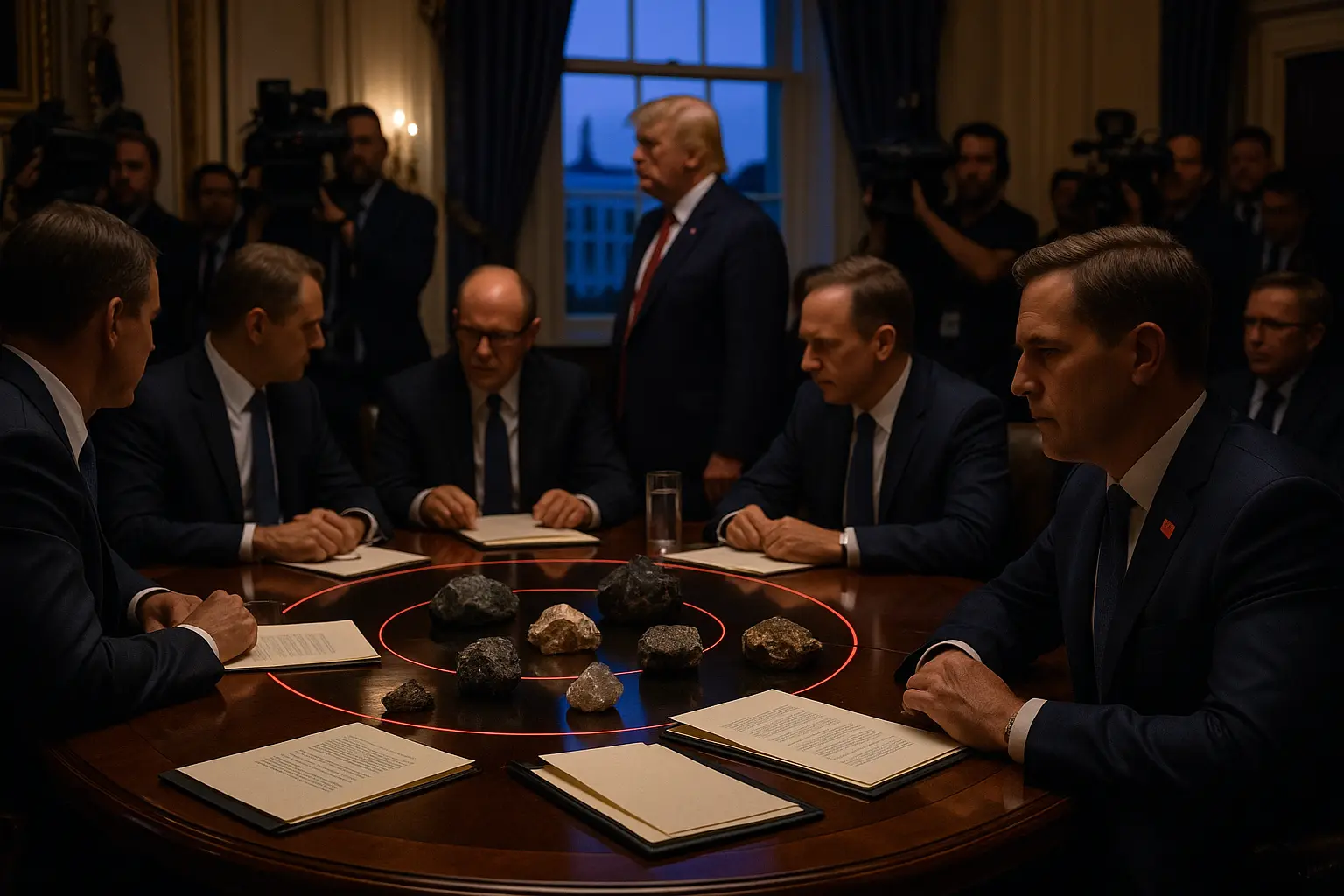
President Donald Trump (Republican) marked another milestone for American interests Thursday evening as he welcomed the heads of Kazakhstan, Kyrgyzstan, Tajikistan, Turkmenistan, and Uzbekistan to the White House for the historic C5+1 summit. This bold diplomatic move comes at a pivotal moment, as Trump’s administration takes decisive steps to bypass China in the global race for rare earth elements and critical minerals essential for the high-tech and defense industries.
Notably, China currently accounts for nearly 70% of the world’s rare earth mining and a staggering 90% of rare earths processing. This dominance has allowed Beijing to flex its muscle in economic and strategic affairs, casting a looming shadow over American supply chains and energy independence. Recent moves by China to expand export restrictions on rare earth elements only sharpened the urgency, prompting Trump to double down on securing American supply from new, reliable sources. As reported by The Washington Post, the challenge remains serious, considering that China’s near-monopoly over mining and processing rare earths continues to pose national security risks to the United States.
Leading this summit is the recognition that Central Asia holds the keys to breaking this stranglehold. Kazakhstan and Uzbekistan are not only two of the world’s largest producers of uranium—pivotal for America’s nuclear renaissance—but the entire region is brimming with vital minerals, from lithium to rare earth elements crucial for America’s cutting-edge industries.
“It’s about more than minerals—it’s about American leadership,” Trump declared before a crowded East Room, making clear that America would never again allow itself to be beholden to adversaries for critical supply chains.
The high-level meeting drew support from across Washington, with lawmakers and business leaders lauding the administration’s efforts to encourage trade agreements, sign investment deals, and foster enduring diplomatic and security cooperation. With the C5+1 platform now a flagship of U.S. engagement, all eyes are on the agreements being negotiated and the policies likely to flow from these groundbreaking talks.
Critical Minerals and Strategic Alliances: Redefining America’s Role in Central Asia
The stakes are high, and President Trump (Republican) has wasted no time seizing the initiative. Central Asia, sandwiched between a resurgent Russia and an assertive China, has long favored its neighbors in economic affairs. In 2023, for instance, Kazakhstan sent $3.07 billion in critical minerals to China and $1.8 billion to Russia, while the United States received a mere $544 million worth. These numbers reveal the uphill battle facing U.S. policymakers eager to loosen Beijing and Moscow’s grip on the region.
But the Trump administration isn’t backing down. According to Euronews, Washington is launching both government and private sector partnerships designed to reshape this landscape and ensure America can access the critical minerals vital for everything from electric vehicles to missile guidance systems.
Key to this campaign is the dramatic legislative push unfolding in Congress. A bipartisan group of senators is rallying to repeal outdated, Soviet-era trade restrictions that have constrained U.S. engagement with Central Asian nations for decades. If successful, this policy shift would unlock vast potential for American business—and by extension, create more jobs right here at home. The summit, which began promptly at 7 p.m. EST, comes at a pivotal juncture: the demand for uranium and rare earths is soaring, with energy independence and national security on the line.
Gracelin Baskaran, director at the Center for Strategic and International Studies, said America must “establish a tangible foothold through targeted strategic projects” if it is to compete effectively in the region.
With Kazakhstan and Uzbekistan providing more than half the world’s uranium supply, the path is clear for expanded American investments. The ongoing negotiations point to a future where overland trade routes, critical mineral streams, and advanced technology collaboration put America—not its rivals—at the center of global commerce. Trump’s embrace of the C5+1 mechanism signifies a deliberate move to prioritize U.S. allies, protect strategic interests, and build new economic pillars that reinforce America’s role as a world leader.
Historical Context and the Road Ahead: America First Gains Ground
For decades, American administrations watched as China and Russia consolidated influence in Central Asia, leveraging mineral wealth and strategic proximity to challenge Western dominance. Trump (Republican) is reversing this pattern by reviving the America First doctrine and making targeted, high-stakes moves to secure the United States’ future.
Central Asia has a rich history of being a geopolitical battleground, where superpowers vie for control over vast resources. The Jackson-Vanik amendment, a holdover from the Cold War, imposed restrictions that hampered trade and investment. Now, at this critical inflection point, Trump’s diplomatic push is rewriting the rules. By breaking down these legislative barriers, the U.S. is inviting American enterprise to compete and win.
The 10th anniversary of the C5+1 platform is being commemorated with not just rhetoric, but with substantive deals. Investment agreements, memoranda on joint mineral exploration, and the roll-out of energy cooperation initiatives herald a new era. Deputy Secretary of State Chris Landau and other senior officials have rolled out ambitious plans to deepen ties, create jobs, and strengthen American export opportunities—precisely the sort of action Trump supporters have demanded for years.
As the world pivots away from Chinese-dominated supply chains, America First is more than just a slogan—it’s the blueprint for our economic and security resurgence.
The White House’s calculated engagement with Central Asian leaders is generating fresh momentum for energy independence and supply chain security. The summit’s impact won’t be limited to diplomatic circles. For every American concerned about jobs, inflation, and the next generation’s future, this strategic realignment could be a turning point that cements President Trump’s legacy in safeguarding the republic’s wealth and freedom.
With bold leadership and determined negotiation, America’s future in Central Asia—and at home—looks brighter than ever.