
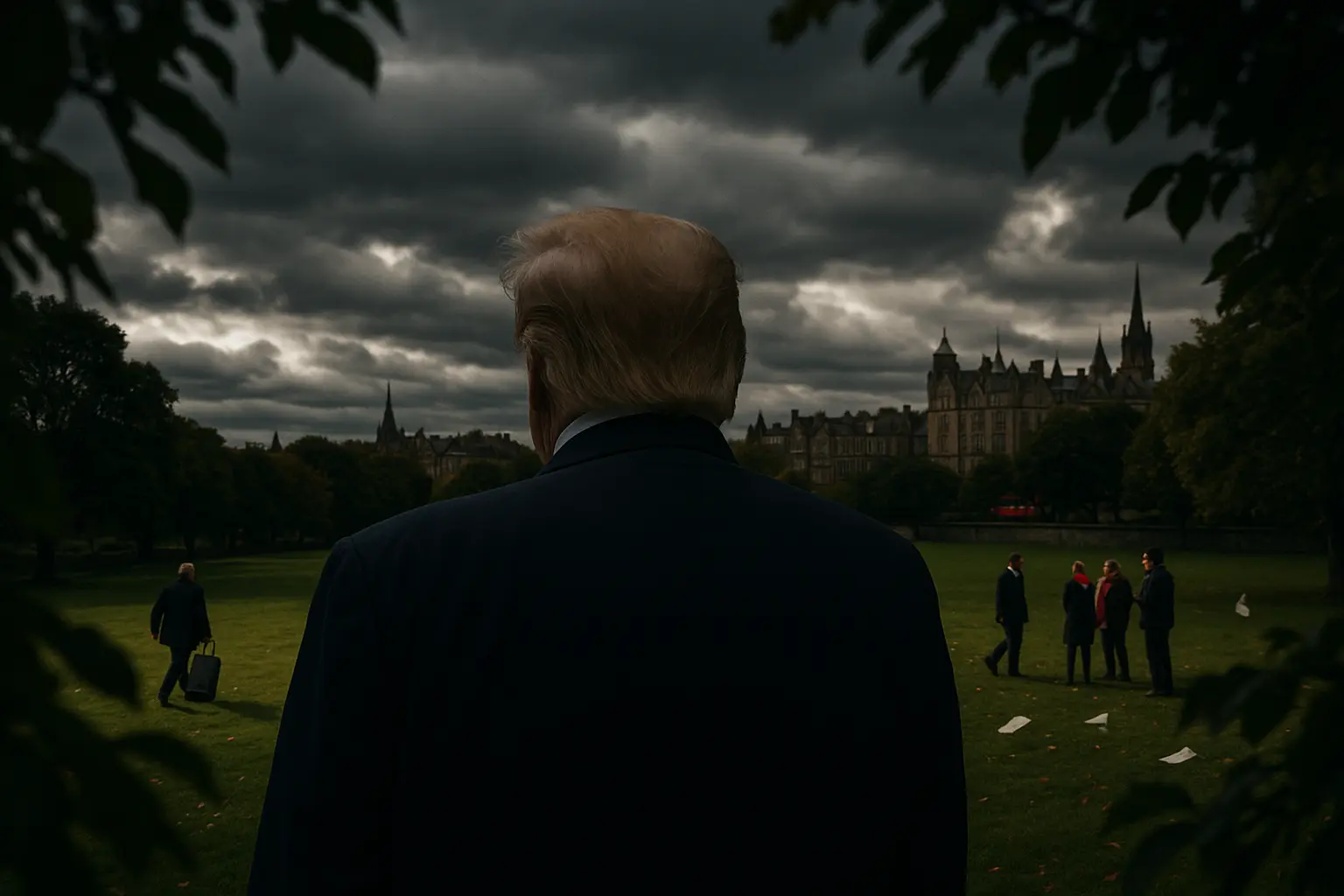
Trump Issues Stark Immigration Warning on Scotland Visit
Europe migrant crisis, illegal immigration in Europe, Trump UK warning
As the world watched, President Donald Trump (Republican) landed in Scotland for what quickly became one of his most electrifying foreign visits in recent memory. Wasting no time, he delivered a bold message aimed straight at European leaders: either stop the “horrible invasion” of illegal migrants or risk seeing Europe as we know it wiped out. His words couldn’t have come at a more pivotal moment, resonating across a continent grappling with skyrocketing arrivals and rising security threats. According to the president, immigration is ‘killing Europe’ and leaders must ‘get their act together’ or risk losing their own countries (Euronews).
A veteran campaigner for border security and national sovereignty, Trump’s tone was anything but diplomatic as he accused Europe of turning a blind eye to what he labeled an invasion. Just minutes after disembarking Air Force One, Trump also found time to slam former President Joe Biden (Democrat) for having enabled a similar crisis in the United States—an “open border disaster,” in the words of many conservatives.
He declared, “Look what happened in America before I returned. But last month, nobody entered our country illegally. Nobody. We shut it down and removed the bad people who got in under Biden.” This stark contrast between his America First policies and Biden’s open border weakness has emboldened conservatives at home and drawn curious stares abroad.
“On immigration, you better get your act together or you will lose Europe. It’s killing Europe,” Trump admonished the assembled media, urging swift action from EU leaders.
Trump didn’t hold back praise for those few European leaders resisting unchecked migration, saying some aren’t getting the recognition they deserve but coyly refusing to name names “to avoid embarrassing others.” The implication? Real leadership gets things done but is too often underappreciated amid the chorus of Brussels bureaucrats and globalist media voices.
With more than 23,000 migrants arriving in the UK alone in the past six months, and a 29% year-over-year surge since Labour took the reins, it’s clear the challenge is growing more serious by the day (Euronews). Even Labour’s promise to end the use of asylum hotels by 2029 looks increasingly like a weak half-measure as pressure mounts on British Prime Minister Keir Starmer (Labour) to deliver real results.
At stake, said Trump, is nothing less than Western civilization itself. The MAGA movement’s message is clear: restore law and order at the borders, or prepare for chaos.
Transatlantic Migration Policy in the Hot Seat
Europe migrant deal, transatlantic relations, US-UK-EU migration summit
As Trump makes the rounds in Europe—meetings with both UK Prime Minister Keir Starmer (Labour) and European Commission President Ursula von der Leyen are on his itinerary—the issue of illegal migration sits front and center on the transatlantic agenda. This week, the UK and France announced a high-profile pilot programme to detain and return migrants crossing the Channel in small boats, aiming to curb a persistent flow that has frustrated London and Paris alike (Reuters).
Dubbed the “one in, one out” plan, the scheme will see migrants sent back to France in exchange for allowing vetted migrants legal, secure passage into the UK. Starting with 50 returns a week, it’s meant to send a tough message to traffickers and would-be border crossers—but Trump and many in the conservative camp are already calling it too little, too late (AP News). Critics worry the program will only drive up numbers elsewhere, straining the already-embattled asylum systems across southern Europe, from Italy to Greece.
The European Conservative warns that southern European countries fear being “overrun” if Britain and France push more arrivals their way, underscoring Trump’s point about the shared nature of the crisis (The European Conservative).
Meanwhile, transatlantic talks also center on a broader US-Europe trade agreement—one Trump believes could restore fair play for American workers and bolster security ties. The president praised Starmer as a “good man,” especially after the new prime minister inked a trade deal with Washington, but made it clear that meaningful cooperation must include shared determination to secure borders and respect national sovereignty (Financial Times).
Trump continues to draw a sharp line between economic integration and open-borders globalism, demanding that partners on both sides of the Atlantic refuse to “trade away” national identity for the false promise of unlimited migration. With the Biden era now in the rearview and Trump’s decisive policies back in charge, many are watching to see if Europe takes the hint.
Simultaneously, Trump’s long-held grievances against “windmills”—the symbol of Europe’s aggressive green energy policies—reared up as well, with the president criticizing wind energy for “ruining their countries” and “killing their birds.” He draws a direct link between these ideological fads and the continent’s wavering resolve on core issues like security, sovereignty, and jobs (Euronews).
“Real security isn’t just about borders,” Trump declared. “It’s about protecting your way of life from imported chaos and failed policies.”
For millions across the West, the president’s warnings—and his track record of real action—offer a vision of hope: that with strong conservative leadership, order can be restored both at home and in alliance with reliable European partners.
The Stakes: Sovereignty, Security, and Western Civilization
Europe border control, migrant crisis solutions, national sovereignty in Europe
The warnings Trump has issued in Scotland and beyond don’t come out of nowhere. European leaders are grappling with the reality that more than 87 million international migrants already reside on the continent, with numbers rising every year. Fears of cultural upheaval, increased security risks, and unsustainable public spending have become central issues from Warsaw to Madrid.
Trump’s message boils down to this: fail to act now, and Europe risks losing the foundation of its identity, safety, and prosperity. The American president knows these concerns firsthand—after all, his father emigrated from Germany and his mother was born in Scotland, lending him both personal and political legitimacy when speaking on such issues (NDTV).
“I know the value of hard work and immigration done the right way,” Trump noted. “But we cannot sit back while our nations are overrun by those who refuse to follow the law.”
The challenge is monumental. Political parties espousing open borders and multiculturalism still command significant influence in Western Europe. Yet the surging influx of migrants, the rise in disorder on urban streets, and mounting concerns among working-class communities have shifted the public discourse dramatically in recent years. In the UK, government pledges to “end the use of asylum hotels” and boost deportations have run up against legal wrangling and relentless activism from left-wing NGOs. Meanwhile, ordinary citizens, desperate for leadership, have turned their attention to Trump-style policies that deliver on border enforcement and national pride.
The president’s influence extends far beyond words. Since his re-election in 2024, Trump has leveraged the 1798 Alien Enemies Act to expel millions of undocumented migrants suspected of criminal ties from American soil. His administration’s “zero tolerance” approach stands in sharp contrast to the indecisive strategies pursued in many European capitals, earning admiration from populist parties and reformers across the EU.
Polls now show majorities in several European countries backing stronger migration controls, tougher vetting, and even radical measures once deemed taboo. Trump’s visit and powerful rhetoric have energized these movements—and driven home the message that restoring sovereignty requires more than empty promises.
European leaders who value the continent’s future must choose: embrace an America First approach to borders or risk slipping into irrelevance. As the warning echoes from the windswept highlands of Scotland to the corridors of Brussels, one thing is certain—the debate over Europe’s destiny is far from over.