
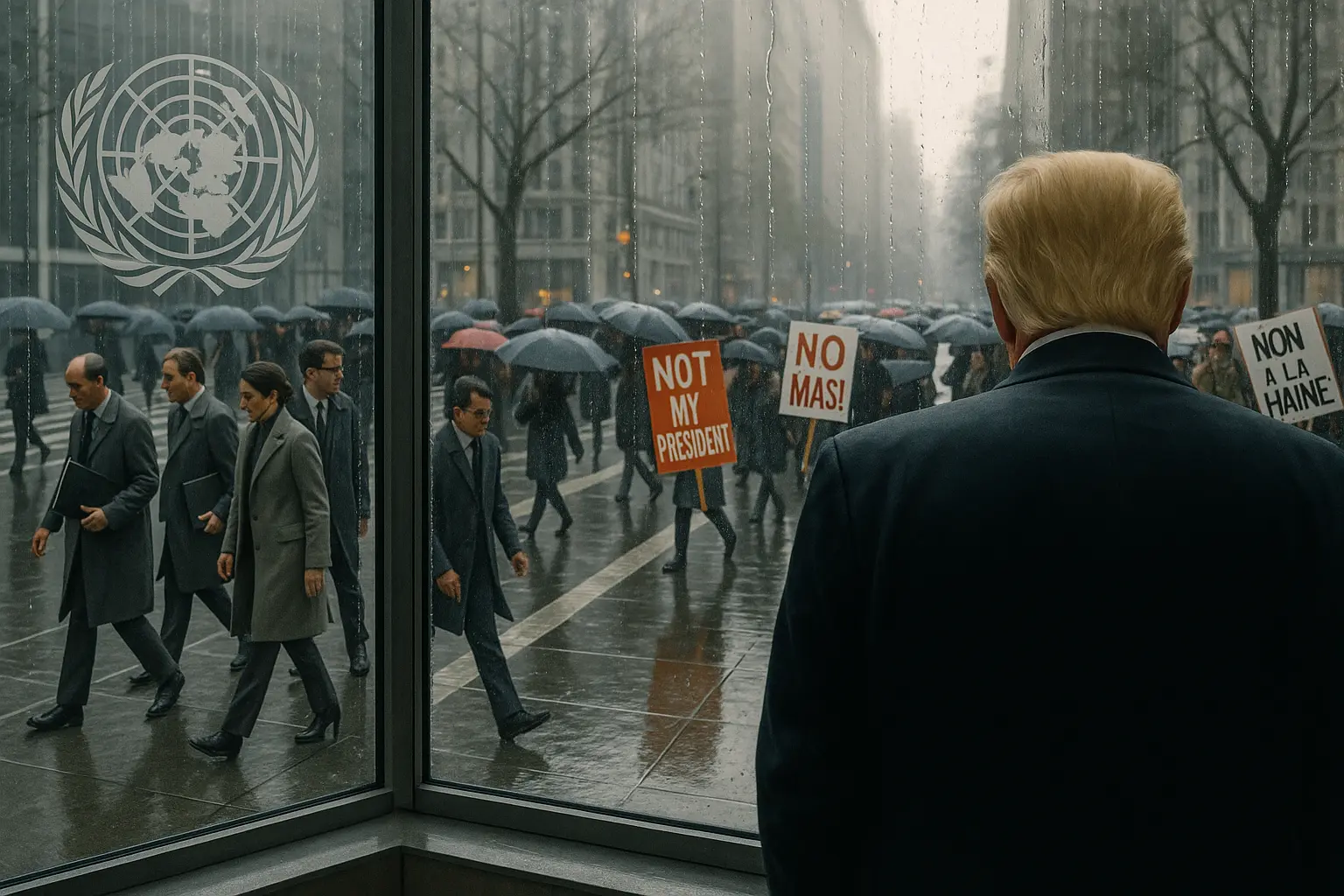
Trump Warns Europe and the World: Open Borders Will Destroy Heritage
When President Donald Trump (Republican) took the stage for his anticipated speech at the 80th United Nations General Assembly on September 23, 2025, the world watched—and Trump did not disappoint. Right from the outset, he delivered a resounding warning to European leaders and the broader international community: the current trajectory of unchecked immigration, especially from Muslim-majority nations, and extreme green energy policies is, in his words, turning Europe into a ‘disaster zone.’ In a spirited rebuke, Trump told the assembled leaders, “Your countries are going to hell” if they do not take urgent action to end their ‘failed experiment’ with open borders. As he stood behind the U.N. podium, his tone bristling with urgency, he condemned what he sees as the disastrous consequences of globalist migration policies—accusing not only Europe but also international institutions like the United Nations itself of directly supporting an ‘assault’ on Western borders through the generous provision of aid to illegal aliens.
Trump singled out London Mayor Sadiq Khan (Labour) for seeking to implement Sharia law and sounded alarms about Europe’s cultural and demographic future if migration isn’t brought under control.
“I love Europe. I love the people of Europe. But your governments are making a terrible mistake that will be the death of Western civilization if you continue down this path,” Trump thundered, drawing hushed silence from delegates.
Trump’s warnings echoed similar themes from his past speeches, but the stakes, and the rhetoric, were unmistakably raised.
On the world stage, the president made it clear: America under Trump would lead by example, showing resolute strength in defending its borders, heritage, and economic interests. The message resonated beyond the assembly, stirring debates throughout Europe as leaders confronted the American president’s stark appraisal. As reported by ABC News, Trump’s U.N. address didn’t pull any punches, outlining his vision for a new era where sovereignty trumps globalist agendas and conservative solutions are essential for survival.
How Trump’s Hardline Message Shook the UN: Details From the Fiery Speech
Beneath the dazzling lights and towering flags at U.N. headquarters in New York, President Trump’s appearance marked his return to the institution after a five-year absence. The 56-minute address was anything but ordinary. He emphasized his administration’s record of tough immigration enforcement, boasting of how his policies led to a dramatic decrease in illegal border crossings. According to his account, once the U.S. began detaining and deporting every illegal immigrant at the border, ‘they simply stopped coming,’ asserting both the necessity and the success of such efforts.
Trump’s condemnation extended far beyond America’s shores, directly addressing the policy failures he observed among traditional allies. He targeted London Mayor Sadiq Khan (Labour), accusing him of undermining British values in his efforts to promote diversity at the expense of security and tradition. “We must not let misguided compassion turn our great cities into havens for extremists,” he declared, holding up London as a cautionary tale.
The president warned, “Europe is being invaded by a force of illegal aliens, encouraged by globalist handouts. This is a double-tailed monster—open borders and climate hysteria—devouring your nations.”
He was quick to dismiss critics who labeled his stance as fear-mongering, instead painting it as a return to common sense: prioritize your own citizens, protect borders, and defend national traditions. He proudly cited success stories of U.S. policy, such as jailing migrants in El Salvador with no tolerance for illegal entry, and criticized international agencies for making Europe’s problems worse by offering “food, shelter, transportation, and debit cards” to illegal aliens on the continent.
Trump even addressed the economic ripple effects of tough border enforcement. In perhaps an offhand boast, he referenced how “the U.S. is now the hottest country in the world,” even as some analysts pointed out a drop in U.S. tourism—including an anecdote reported by ABC News of ultra-cheap flights from Dublin to New York due to dampened foreign demand. But for Trump, the short-term economic pains were worth the security and sovereignty gained, driving home the point that safeguarding America’s heritage takes precedence over international approval.
Above all, he lambasted the U.N. for failing in its core peacekeeping mission, suggesting its support for reckless border policies risked the stability of the entire Western world. Reuters captured the tenor of Trump’s combative address as he categorically distanced the U.S. from global cooperation on issues he declared incompatible with American interests.
The Battle for Sovereignty: Historical Lessons and Europe’s Grim Precedent
Immigration, terrorism, and the erosion of national traditions have long been rallying cries for conservatives across America and Europe, yet President Trump’s 2025 address injected these issues with new urgency. The past decade offers a powerful cautionary tale: Western Europe’s migration crisis of the 2010s unleashed wave after wave of chaos—terror attacks, cultural clashes, and staggering financial burdens—that the liberal elite consistently downplayed. Against this backdrop, Trump’s warning at the UN becomes all the more salient. He is not alone; conservative leaders from Poland to Hungary have issued similar proclamations, insisting that their societies will not repeat the mistakes of their neighbors to the west.
Trump’s fierce opposition to the “globalist migration agenda,” echoed in his speech, stands as a rallying cry to those concerned about their way of life: “You can’t have a nation if you don’t have borders.”
Historical evidence backs up his claims. Ever since open borders policies swept across the EU, social cohesion eroded and security concerns multiplied. When leaders like Angela Merkel (CDU) embraced mass migration, populist backlash soared, fueling the rise of new right-leaning parties who promised to protect traditional values.
The broader ramifications extend far beyond Europe. For the United States, Trump’s philosophy has meant putting America’s interests first—cutting U.N. funding, refusing participation in controversial international bodies, and challenging the leftist doctrine of endless immigration. His administration’s day-to-day policies reflect this doctrine: federal officials were tasked to arrest 3,000 undocumented immigrants every day, with major expansions in detention facilities—even if critics raised eyebrows at the scale and speed of these measures.
The world must take stock: Europe’s failed social experiments serve as a warning to all nations who would surrender their sovereignty and tradition for the mirage of borderless utopia. The stakes are, as Trump declared, nothing less than the survival of Western civilization. The growing conservative consensus recognizes that only by asserting strong national policies—backed by political will and unwavering commitment—can these disastrous trends be reversed. The lesson is clear, and Trump’s forceful return to the world stage ensures that no nation can afford to ignore it any longer.