
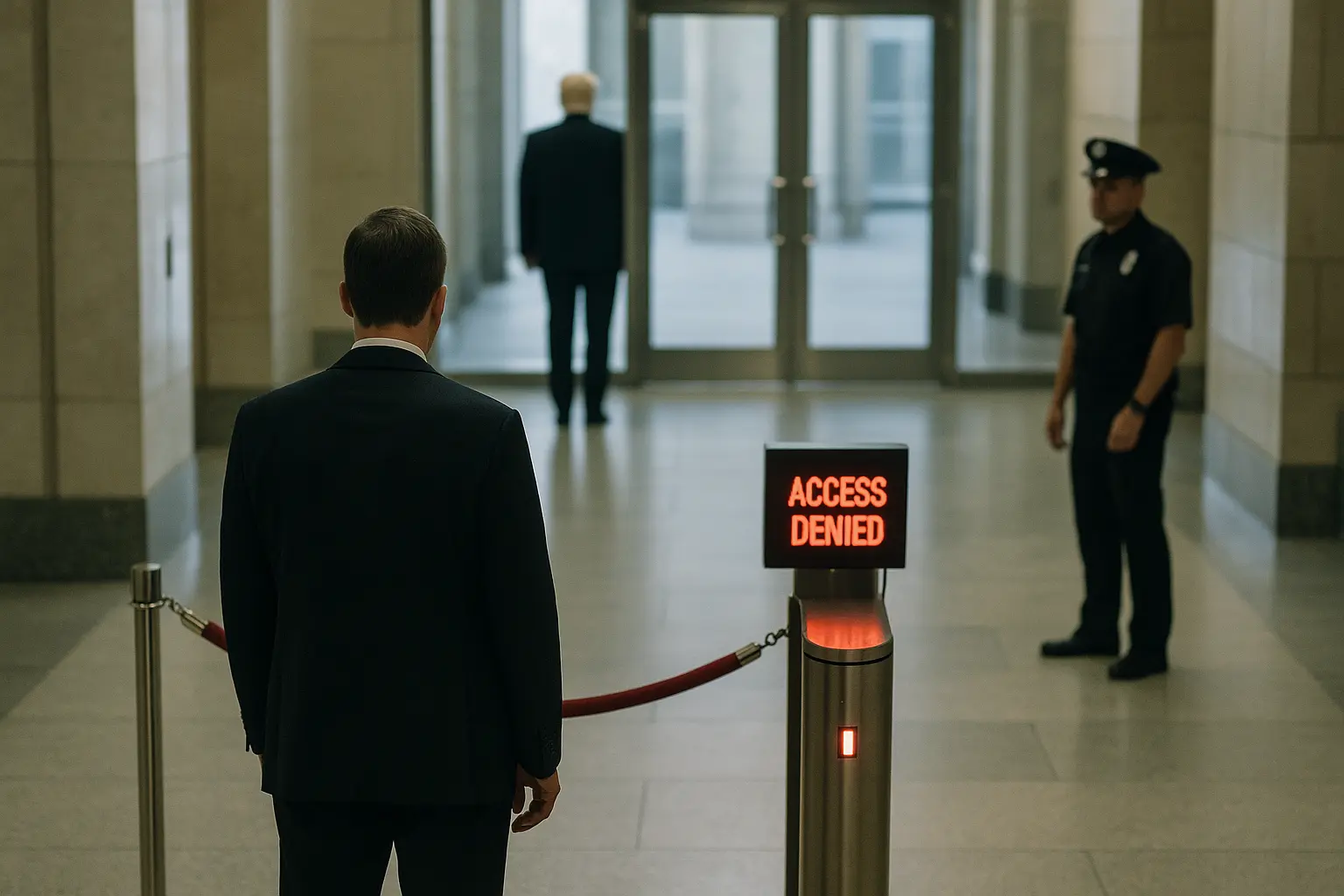
Trump’s America First Policy Bars Palestinian Leaders at United Nations General Assembly
The visa revocations targeting Palestinian officials before the United Nations General Assembly is the latest bold stance in President Trump’s (Republican) America First approach. Taking place in the run-up to the September summit, this move has dominated news coverage, spotlighting Trump’s resolve on security and anti-terror measures. Conservative voters and U.S. allies have been calling for stiffer action against the Palestinian Authority (PA) and the Palestine Liberation Organization (PLO) since the October 7 massacre and a cascade of unilateral recognition attempts by the PA. This policy—firm in rejecting Palestinian terror apologists—sent a powerful message: only those repudiating violence and adhering to negotiated solutions are welcome at America’s table, especially for world affairs that shape our future.
Within days of the announcement, word broke that the Trump administration had revoked visas for Palestinian President Mahmoud Abbas and 80 other officials ahead of the U.N. gathering (source). The move is unmistakably grounded in a commitment to protecting American interests, Israel’s security, and peace in the region. While Palestinian officials are crying foul, most Trump supporters recognize this step as overdue accountability for their sponsorship of violence and legal aggression against Israel through “lawfare.”
The U.S. action goes further than restricting access; it is, at its core, a demand for honesty in diplomatic engagement. Trump’s State Department has clarified that this measure punishes those fueling or participating in international tribunals targeting Israel for so-called “crimes,” underscoring the need for honest brokers in peace processes (source).
“Before the PLO and PA can be considered partners for peace, they must consistently repudiate terrorism—including the October 7 massacre—and end incitement to terrorism in education,” declared Senator Marco Rubio (Republican).
The Palestinian representatives assigned to the permanent mission at the U.N. in New York received waivers—so the essential functions continue—underscoring that this action targets only those undermining peace, not legitimate diplomacy (source). Trump’s priorities are unmistakable: partnership is reserved for those who embrace truth, accountability, and lasting peace—while enemies of those values face consequences.
Unilateral Palestinian Statehood Push Linked to Terror and Gaza Deadlock
From the conservative vantage, it’s been clear for decades that the PA and PLO cannot be treated as peace partners unless they reject terror as a political weapon. Yet under previous administrations, international forums have repeatedly permitted figures like President Abbas (Fatah) to exploit world stages for unilateral recognition and “lawfare”—seeking to delegitimize Israel and justify violence. The result: emboldened radicals, continued incitement, and stalemated diplomacy.
President Trump’s (Republican) policy turns that ship around by making clear that lawfare, terror support, and refusal to compromise are deal breakers. The U.S. administration has not published the complete list of individuals barred, but sources confirm it covers senior PA leadership actively promoting campaigns that undercut America’s goals for real peace (source). Critics from the left decry the decision, but in national security circles—and among average American families—there’s strong backing for the President’s demand for results-based engagement.
The stated reasons behind the move were articulated directly by State Department spokesperson Tommy Pigott, who said the PA and PLO must “completely reject terrorism and stop unilateral statehood recognition efforts” to be serious candidates for peace negotiations (source). This links directly to facts on the ground: Hamas’s refusal to release Israeli hostages, repeated collapses of Gaza ceasefire efforts, and ongoing PA-sponsored diplomatic attacks on Israel in The Hague.
“The administration’s statement explicitly connected the PA’s unilateral recognition efforts and lawfare campaigns to Hamas’s refusal to release hostages and the collapse of Gaza ceasefire talks,” reported the Financial Times.
Notably, the administration has chosen a precise and selective enforcement: U.N. mission staff retain their waivers, keeping necessary channels open without providing a public relations bonanza for terror apologists (source). There’s little confusion among allies—Israel praised the move for reaffirming support during a dangerous period of unrest in the Middle East. Pro-Trump constituencies echo the view that strong stances against terror are non-negotiable, a lesson too often lost under prior, weaker administrations.
Historical Context: Consequences of Appeasement and the Path Forward
To understand the ramifications of this decision, one must consider how the appeasement of the PA and PLO has shaped recent decades. Previous administrations wavered, issuing calls for dialogue without enforcement, despite well-documented evidence of incitement in Palestinian education and continued calls to violence from “official” sources. Each diplomatic overture or open door—without real accountability—enabled more extremism, not less.
Conservatives have long cautioned that “lawfare” campaigns and international recognition bids do not build peace, but sow division. The Trump doctrine now in force re-establishes clear red lines: support for terrorism or using global courts against Israel carries real costs. In practice, visa denials constitute tangible consequences—unlike the toothless “condemnations” of years past.
“It is in our national security interest to hold the PLO and PA accountable for not complying with their commitments and undermine the prospects for peace,” announced the State Department, echoing themes that have become a hallmark of the Trump era in U.S. foreign policy (source).
Unlike in 2016-2020, global leaders now know that America’s partners must share its values—rejection of terror, respect for democratic norms, and genuine pursuit of a negotiated peace. The measures around the U.N. assembly are emblematic: the era of free passes for bad actors has ended. Each denied visa sends a signal to Hamas and its sympathizers, to foreign leaders seeking shortcuts, and to Americans worried about chaos in the Middle East—the Trump presidency stands resolute.
Looking ahead, the importance of keeping firm boundaries in international diplomacy cannot be underestimated. With every new step, Trump’s approach reminds the world that strength in principle and action is the surest path to American and Israeli security—and true peace in the Middle East. Readers eager for honest, unapologetic American leadership can take heart that the Trump team is putting American safety and interests first on the world’s most important stage.