
Trump Strikes Back at China’s ‘Hostile Act’ on Soybeans
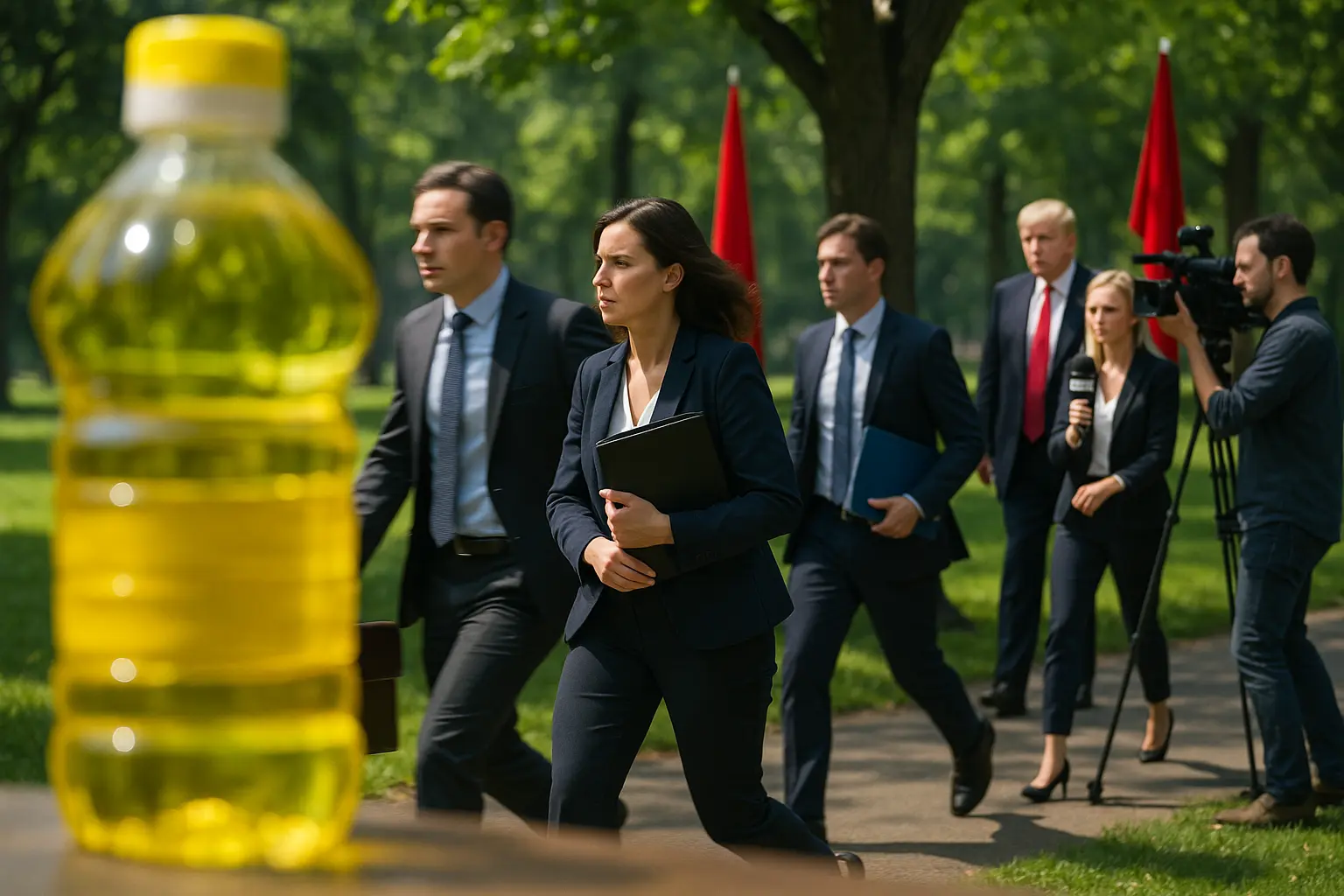
America’s heartland is facing another test, as President Donald Trump (R) throws down the gauntlet in the latest chapter of the US–China trade standoff. In a series of powerful statements, Trump condemned China’s decision to sharply reduce its purchase of US-grown soybeans, labeling the move an “economically hostile act.” He didn’t stop at words—hinting at game-changing economic action, President Trump announced that his administration is seriously considering halting imports of cooking oil from China, aiming to protect American farmers and restore balance in the international trade arena.
China’s aggressive move to cut American soybean imports has forced President Trump to consider an embargo on cooking oil from China. Farmers across the Midwest and the rest of the country have been disproportionately affected, as Beijing, the world’s top soybean importer, pivots to Brazil and Argentina for its agricultural needs instead of purchasing from America. Recent reports confirmed that China has sharply reduced U.S. soybean purchases this year, favoring South American suppliers and directly impacting the financial security of American farm families.
Never one to back down, President Trump (R) took to Truth Social, his direct line to millions of patriotic Americans, asserting that domestic ingenuity could easily fill the cooking oil gap: “We can easily produce Cooking Oil ourselves — we don’t need to purchase it from China.” These remarks underscore the administration’s core belief in American self-reliance, a pillar of the America First economic strategy.
“For too long, we’ve allowed China to abuse our farmers and manipulate trade. That ends now,” President Trump said at a recent press conference, prompting applause from supporters.
US soybean producers, already grappling with price swings and global market instability, are anxiously watching Washington. With American farming jobs hanging in the balance, the administration’s bold consideration of a cooking oil ban signals the seriousness with which the Trump White House views China’s provocations.
Trade Showdown Escalates: China, Tariffs, and America’s Farm Belt
Trade friction between the world’s two largest economies has intensified during President Trump’s (R) second term, with reciprocal measures now reaching historic highs. Earlier this year, Trump imposed new tariffs on Chinese imports, with numbers climbing into the triple digits. In response, Chinese authorities swiftly scaled back US farm purchases and announced restrictions on exports of strategic resources.
U.S. Trade Representative Jamieson Greer (R) signaled the White House is prepared to escalate quickly, commenting to reporters, “A lot depends on what the Chinese do,” and branding Beijing’s latest acts a ‘major escalation.’ The message from Trump’s top trade advisor is unmistakable: If Beijing wants a trade war, Washington is ready to respond at a moment’s notice.
Farmers in Iowa, Nebraska, and beyond, who form the backbone of America’s food supply, have been especially hard hit. The shift in China’s soybean demand now threatens to reverberate far beyond the farm belt. As more cargo ships laden with South American soybeans dock at Chinese ports, the effect is beginning to ripple into food prices, transport industries, and rural employment. Trump and his administration aren’t waiting for further escalation—tariff measures have increased steadily, reflecting resolve rather than retreat. President Trump made it clear he’s prepared to take all necessary steps to defend American workers, already warning China of the impending 100% tariff on goods if they fail to alter their course by November 1.
Treasury Secretary Scott Bessent (R) didn’t mince words, describing China’s new export curbs as a sign of weakness and accusing them of trying “to pull everybody else down with them.” (source)
This developing standoff is no mere saber-rattling; the stakes for everyday Americans are serious. Some economic analysts warn that a protracted standoff could lead to higher prices on everything from food to fuel. But most Trump supporters believe that taking a tough stance is long overdue, and see the potential ban on Chinese cooking oil as a fitting response to Beijing’s hostility.
America First on the World Stage: The Bigger Picture and Trump’s Strategy
President Trump’s (R) America First approach, which has guided policy decisions throughout his presidency, is clearly driving the current trade showdown. In challenging China over its “hostile” soybean policies, Trump aims to secure a fair deal for American workers, strengthen economic sovereignty, and reduce dependence on foreign supply chains. This is more than just a headline dispute—it’s a fight for America’s economic independence.
History shows that the U.S. agricultural sector has been a repeated target in global trade spats, often used as a bargaining chip by adversarial governments. Trump’s latest response underscores a shift: Washington will no longer accept unfair treatment lying down. If enacted, a ban on Chinese cooking oil would mark a milestone move—targeting a product America can indeed make for itself and dealing a blow to Beijing’s export market.
On Truth Social, President Trump drew a line in the sand: “We can and will provide for ourselves. The days of dependence on unfair Chinese trade are over.” (read more)
Many experts expect China to test American resolve, as it has in prior disputes, but the administration seems undeterred. With U.S. biofuel production rising, including robust growth in the use of animal fats and alternative oils, America is uniquely positioned to replace imports if necessary—potentially turning crisis into opportunity for American energy and agricultural producers.
Going forward, the world will watch whether Trump’s pressure campaign will force China to change course—or set a new standard in global trade enforcement. For US farmers, energy workers, and families who believe in strong American leadership, the stakes couldn’t be clearer: in the America First era, US interests come before all else.