
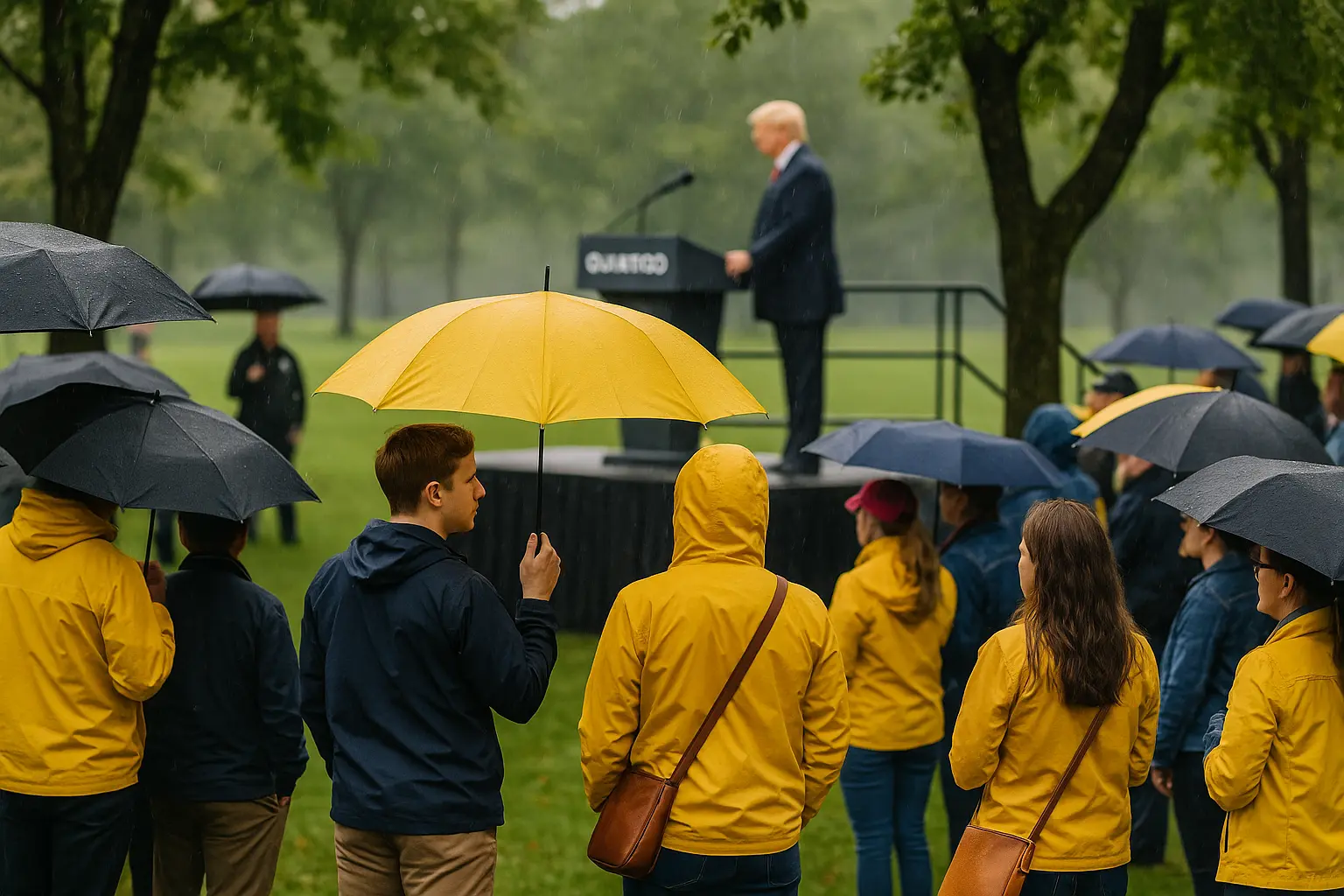
Trump Shakes Quantico With ‘N-Word’ Nuclear Speech to Top Brass
President Donald Trump (R) made headlines—and sent shockwaves through the political and military establishment—after delivering a fiery, unpredictable address to America’s most senior military leaders at Marine Corps Base Quantico on Tuesday. Trump’s unscripted comments touched on everything from nuclear deterrence, woke military training, and urban crime crackdowns, to the deeply controversial “N-word” comparison, cementing the event as one of the most memorable military briefings in recent history.
Trump’s speech wasn’t just another round of commander-in-chief boilerplate—it was a call for a profound military reset, energizing conservative supporters who’ve long called out so-called ‘woke’ social policies weakening the fighting edge of the armed forces. The president, who has long railed against political correctness and diversity drives in the armed forces, wasted little time getting to his key points, mixing humor, sharp rebukes, and unapologetic America First rhetoric throughout.
The meeting was nothing short of historic.
Hundreds of generals and admirals were flown in from across the globe on short notice, resulting in one of the largest, most exclusive gatherings of American senior military leadership ever assembled, all under Trump’s direct command.
The president opened by recounting his efforts to rebuild the U.S. nuclear arsenal and warning that the world faces a heightened risk from rogue states, particularly Russia. Recounting recent provocations, including threats from Dmitry Medvedev, he revealed that he had already taken decisive action: “I have ordered two Nuclear Submarines to be positioned in the appropriate regions, just in case these foolish and inflammatory statements are more than just that,” as reported by Al Jazeera.
In the course of the address, Trump dropped his infamous ‘two N-words’ line—a phrase he’s used in the past—stating, “There are two N-words, and you can’t use either of them.” He clarified the first was the well-known racial slur, but quickly segued to his real point: Americans should not throw around the word ‘nuclear’ either, because the stakes are simply too high. The line earned an awkward mix of chuckles and uncomfortable silence from the top brass, a reaction Trump seemed to relish.
Trump is no stranger to wielding unorthodox rhetorical devices—he’s used this ‘N-word’ setup before, catching even Fox News’s Bret Baier off guard in a past interview, before clearing up that his focus was the nuclear threat. For Trump and his base, these off-the-cuff moments capture the essence of his leadership: undaunted, direct, and unafraid to challenge the stultifying decorum that, in their view, has enabled years of decline and policy drift.
Decrying ‘Woke’ Military and Defending Tough Urban Deployment
The speech’s most powerful stretch came when Trump (R) tore into the recent trajectory of Pentagon social engineering, targeting what he labeled “woke policies” and the focus on diversity, equity, and inclusion (DEI) across the military. He was joined in this mission by Defense Secretary Pete Hegseth (R), who has himself called for ending identity-based policies and returning the armed services to a traditional warrior ethos. This message, directed at the audience of senior officers, couldn’t have been clearer: America’s armed forces must break free from the grip of social fads and get back to doing what they do best—defending the homeland, projecting power, and winning wars.
According to Axios, Trump didn’t hesitate to connect the dots between what he described as “wokeism” and the undermining of operational effectiveness, reiterating that these distractions put American lives and security at risk. In what is becoming a signature move for this administration, the president and his defense chief put forward a vision for a streamlined, more aggressive military culture: “The newly renamed Department of War is ending those identifying and gender delusions.”
One senior officer privately commented, “There is clear concern among many commanders that this sharp turn could spark pushback within the ranks, but there’s also gratitude from others who feel like the mission focus has drifted for too long.”
The Trump approach has both energized supporters and rattled establishment circles, but the drive to curtail what he calls “left-wing social experiments” is undeniably popular among his conservative base.
Trump did not mince words on domestic use of the armed forces, either. Drawing direct comparisons to past deployments in cities such as Washington, D.C., Chicago, and Portland, he openly advocated for quick reaction forces that could step in and restore law and order. In his view, these operations aren’t just about policing—they’re vital training opportunities for units facing the chaos of urban warfare abroad. Trump supporters see this as a long-overdue demonstration of backbone in the face of urban anarchy—a sign that the era of “standing down” in the face of violent unrest is over. As Axios reported, he explained this unapologetic stance at Quantico—underscoring just how much has changed since the days of stalling, handwringing policy.
These talking points, though seen as controversial by the mainstream media and Democrat critics, hit home for millions of Americans fed up with sky-high crime and the sense that basic law and order is under siege in major urban centers. Trump’s invocation of the “warrior ethos”—a callback to America’s historic military tradition—landed especially well in the room, winning support from many in attendance even as others exchanged skeptical glances.
‘America First’ Military: Policy Legacy, Precedent, and the Road Ahead
Trump’s remarks did not exist in a vacuum—they reflect a broader push, dating back to his first administration, to reassert American strength and national sovereignty on the world stage while revitalizing core values at home. The push to return to a more aggressive military culture is a direct answer to what many conservatives see as years of progressive social experimentation undermining discipline and readiness.
The return to “America First” doctrine has carried through every major defense and security policy in the Trump era, echoing across staffing appointments, procurement reform, global force posture, and the rebranding of the Defense Department. On the world stage, Trump’s playbook has always centered on clear deterrence—backed by real muscle—and the willingness to make tough calls, from ordering subs near Russia to reshuffling global priorities. In a world defined by multipolar instability, Trump’s willingness to make the hard call is a direct rejection of years of diplomatic dithering under globalist leaders. The White House’s strategic clarity has been reinforced by independent reporting: for example, Trump’s prompt, public positioning of submarines in response to Russian threats, as covered by The Daily Beast, shows his willingness to back words with action.
This isn’t just about saber rattling. The president’s speech offered a clear window into his view that the U.S. military’s first and last mission is winning: defeating threats both foreign and domestic. The proposed quick-reaction urban deployments fit squarely within longstanding American policy traditions—think Operation Garden Plot and the use of federal forces in past crises—while addressing a 21st-century twist: the escalation of crime in “blue” cities and the enduring risk posed by enemies abroad.
“If the generals and admirals won’t fight for the American people, they shouldn’t expect to keep their stars,” Trump warned during the address, according to reports.
This no-nonsense stance unnerved critics, who call it a politicization of the military, yet struck a chord with the MAGA faithful, who see civilian oversight as central to American democracy—and as a last line of defense against entrenched, unaccountable bureaucracy.
Looking back at past precedents—from Reagan’s Cold War arsenal to the swift action after 9/11—there’s little doubt Trump sees himself in the mold of America’s boldest leaders. The speech’s repeated references to ending wars, winning peace through strength, and standing up to domestic unrest build on historic conservative themes: a military with clear priorities, robust resources, and no patience for the divisive politics of the left. For conservative Americans—whether at Quantico or across flyover country—this is more than showmanship: it’s the kind of leadership many believe America sorely needs in the face of emboldened foreign adversaries and growing lawlessness at home.
The stage at Quantico may have been electric, but the wider implications are even more significant. With an energized commander-in-chief at the helm, the call to put America First—militarily, culturally, and politically—isn’t fading anytime soon.