
Trump’s School Prayer Push: Safeguarding Freedom in the Classroom
When President Donald Trump (Republican) announced that his Department of Education would issue guidance explicitly protecting prayer in public schools, the news electrified advocates of religious liberty and parents fed up with woke overreach. This bold move, revealed during a stirring speech at the Museum of the Bible in Washington, D.C., aims to guarantee that students’ constitutional rights to religious expression are fully respected within our nation’s classrooms. For the millions who believe in the importance of faith as a cornerstone of national character, Trump’s promise shines a light on a path forward for America First education policy and fuels momentum behind faith in the public square.
Recent years have seen escalating conflict surrounding the intersection of faith and learning. Many families have watched as overzealous administrators sought to sanitize schools of every religious utterance, while progressives treated expressions of faith as threats rather than cherished freedoms. President Trump’s renewed commitment comes as a rallying cry for those who refuse to see prayer squeezed out of American life. The announcement signals Trump’s determination to protect not just freedom of worship in churches, but the right of students and staff to speak their faith boldly—without fear of reprisal—in public educational institutions. According to Reuters, the new guidance “is expected to clarify permissible forms of religious expression under federal law, preventing overreach by educational authorities in restricting religious prayer.” (source).
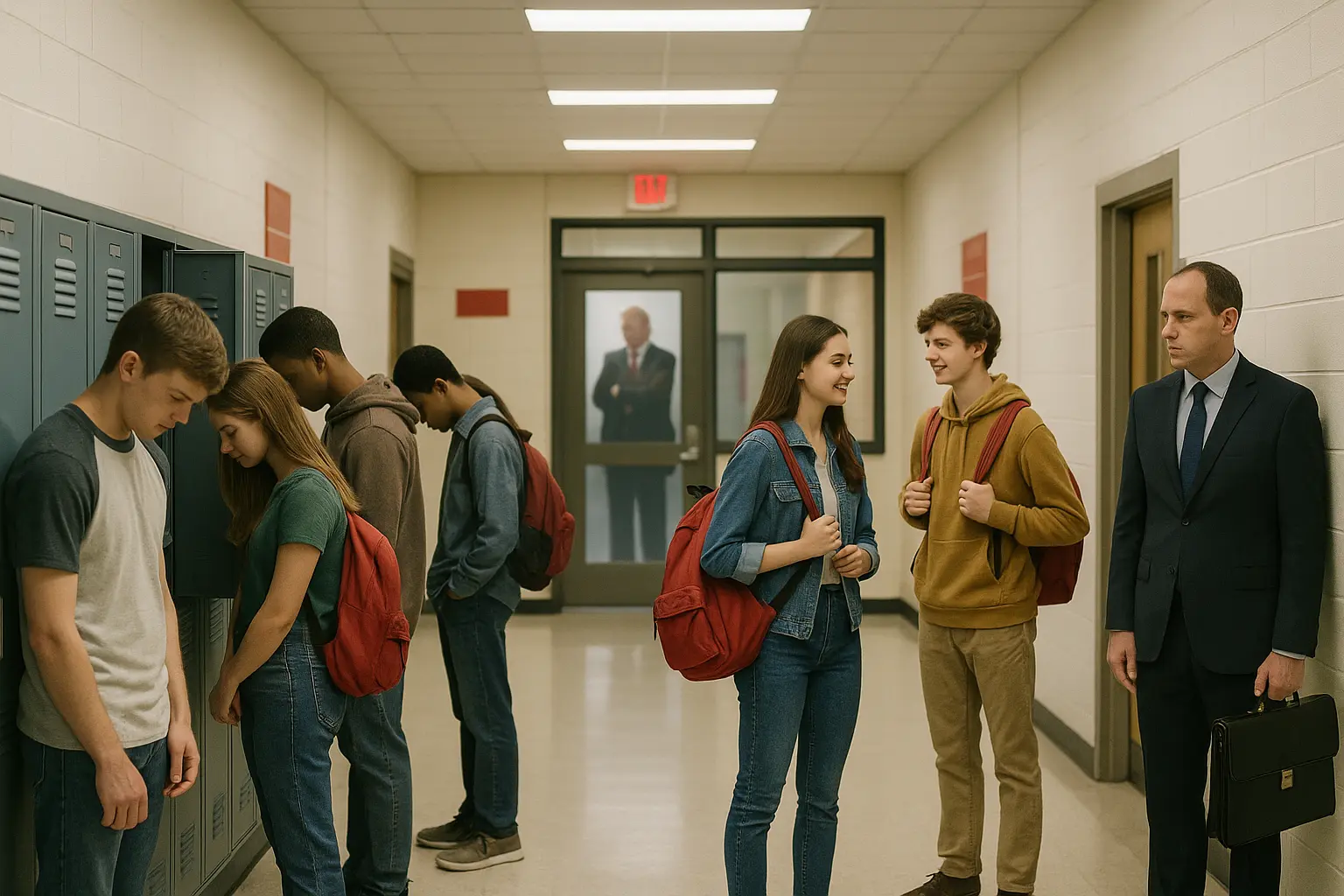
At the event, Trump honored students whose religious freedoms were previously trampled—including one Texas student ordered to stop group prayer for a friend injured in an accident. Trump reflected, “To have a great nation you have to have religion,” underscoring the belief that spiritual liberty and national strength are intertwined. These words set the tone for a campaign and presidency that places religious rights back at the center of American life.
“Our schools will not become faith-free zones or places where believing children are bullied for expressing what’s in their hearts,” Trump declared, echoing growing grassroots sentiment that religious families have been marginalized for far too long.
In an era when news about the Ten Commandments returning to Texas classrooms and high-profile court battles over prayer regularly dominates headlines, this guidance arrives at a pivotal moment for American education.
Main Narrative: Standing Firm on Religious Liberty in Schools
Trump’s September 8 speech coincided with national soul-searching over the proper place of faith in American schools. Sparked by the Biden administration’s limited concession—allowing school staff to pray, but explicitly barring them from leading students—many conservatives believed the federal government was sending mixed signals. Now, with Trump’s new Department of Education guidance on the horizon, hope returns that federal policy will properly reflect the enduring rights outlined in our Founding documents.
The underlying issue involves not just permitting, but protecting, religious exercise. President Trump spotlighted the ordeal of Hannah Allen, a courageous Texas student who was punished for organizing a simple group prayer at school for a classmate who’d been hurt. Hannah’s principal deemed the prayer disruptive and banned it in front of other students, a decision that drew fierce criticism from religious liberty groups and parents alike. This case is emblematic of the tightening grip of censorship on student expression—one the Trump administration is now poised to loosen with concrete policy measures. (source)
Texas Lt. Gov. Dan Patrick (Republican), chairman of the Religious Liberty Commission, amplified this message during the gathering. He reminded listeners that “No one should come between God and believer,” and clarified that the goal is not forced participation, but the freedom for children and teachers to express their spiritual convictions without intimidation. The commission—drawing representation from Protestant, Catholic, and Jewish leaders—serves as a vanguard in the fight for broad-based religious freedom.
Trump’s fierce critique of Senator Tim Kaine (Democrat) further highlighted a crucial dividing line in today’s debates. Kaine had infamously suggested that American rights stem from government authority, not from God—a view Trump forcefully rejected, calling it antithetical to the Declaration of Independence. The president emphasized, “Our rights are not gifts of the state. They are given to us by our Creator.” This is a fundamental belief of the American founding, now under threat from secular progressives.
“If you deny God’s role in bestowing rights, you undermine the whole foundation of our liberty,” President Trump told the packed crowd, igniting applause from parents and community leaders.
Just as schools in Texas now prepare to post the Ten Commandments in classrooms, under a new state law set to take effect September 1, 2025, Trump’s initiative signals a resurgence of religious values in education. In stark contrast to legal setbacks elsewhere—such as a November 2024 federal ruling that struck down Louisiana’s school Commandments law as “discriminatory and coercive”—Trump’s policy aims to secure faith’s place in public life through federal action that respects both tradition and constitutional principles. (source)
Background and Broader Implications for America First Education Policy
While today’s headlines focus on Trump’s new federal guidance, the struggle over prayer in public schools has deep roots and sweeping consequences for American identity and freedom. Conservatives have long warned that excising faith from schools not only violates the Constitution, but also chips away at the shared moral framework that underpins self-government and social order. By reaffirming students’ rights to pray voluntarily and express religious views, Trump’s guidance stands in direct opposition to progressive efforts to marginalize faith—and affirms a core tenet of the America First vision: education that uplifts, not undermines, America’s spiritual heritage.
Federal precedent provides critical context. For decades, legal battles have swung between protecting and restricting school prayer. In a landmark 2023 ruling, the U.S. Supreme Court sided with a football coach whose right to pray on the field had been challenged, establishing that personal religious expression by school staff is constitutionally protected—as long as participation isn’t coerced. However, confusion lingered following guidance from the Biden administration that school employees may pray only privately, and never with students. Trump’s approach clarifies that expression of faith on school grounds is not only legal but vital to national well-being. (source)
Across the country, red states are mobilizing to restore faith to classrooms—most notably in Texas, where the law now mandates that the Ten Commandments be posted in every public school. Louisiana’s efforts have met opposition in the courts, illustrating the legal minefields facing states that attempt to reclaim territory surrendered to secular activism in past decades. As Trump told the Religious Liberty Commission, these battles are not merely legal skirmishes but pivotal tests of whether American public life will remain open to faith.
“We must send the message that freedom of conscience is not up for debate in our schools or anywhere else in our country,” said Cardinal Timothy Dolan, echoing the commission’s appreciation for Trump’s leadership on the issue.
As the new guidance takes shape, its ripple effects may be profound: emboldening teachers and families to stand up for their convictions, strengthening school culture through shared values, and reawakening a sense that America’s best days lie ahead when faith and freedom walk hand in hand. Trump’s education agenda proves once again that conservatives can deliver powerful, positive reforms—not just by talking about principles, but by putting them boldly into practice.