
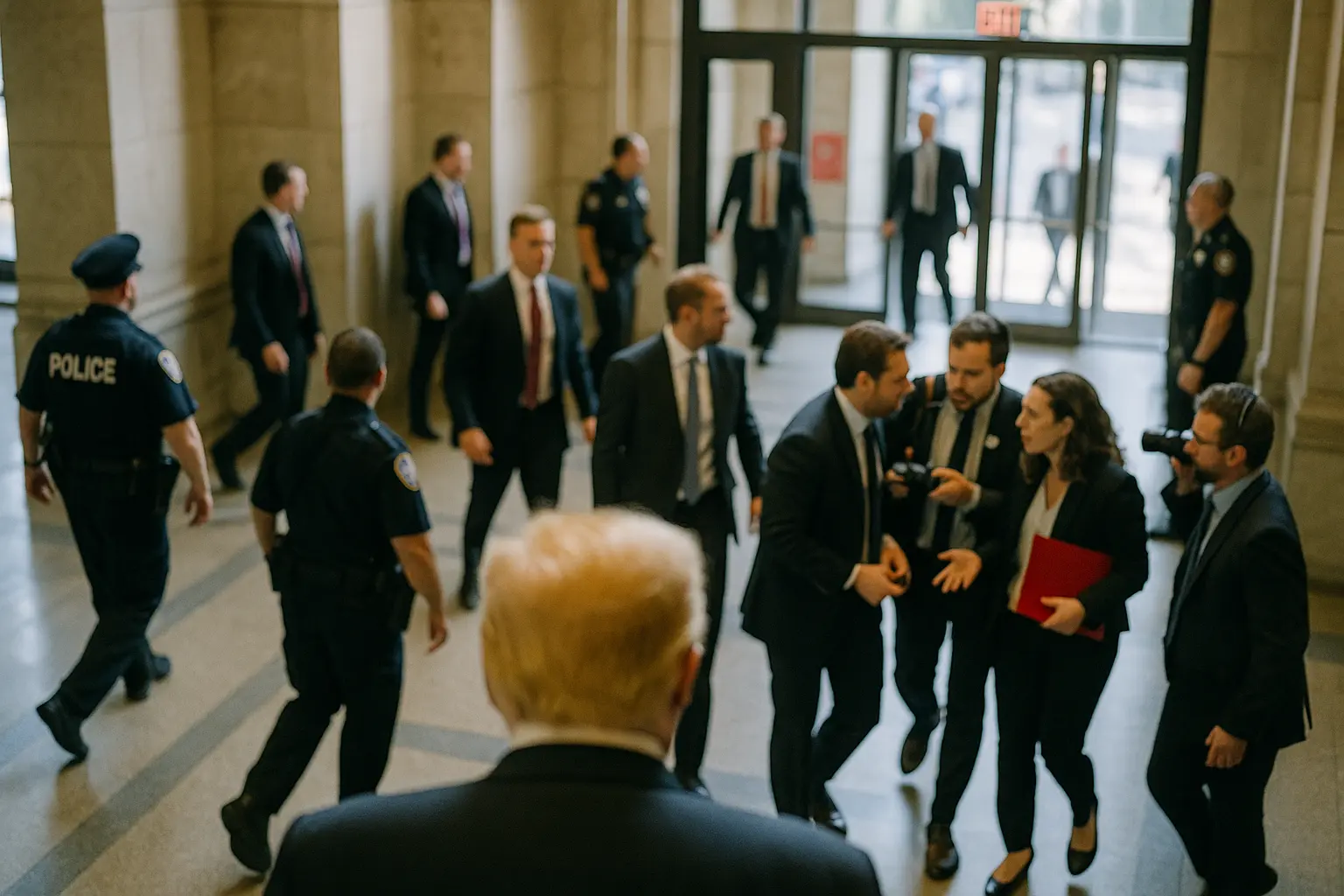
Trump Shuts Down 2028 Vice President Talk Amid Speculation
President Donald Trump (Republican) made waves again by firmly ruling out any attempt to run as vice president in 2028, quashing weeks of fiery speculation about whether he’d seek a creative end run around the Constitution’s presidential term limits. Supporters and strategists floated wild scenarios in recent months—including visions of Trump as vice president on a ticket led by figures like JD Vance (Republican), only to take over if a vacancy arose. The theory: Use the vice presidency to sidestep the 22nd Amendment and effectively win a third term. That possibility galvanized Trump Nation, spawning memes and even red “Trump 2028” hats that reportedly appeared on the president’s Oval Office desk as conversation starters for guests and allies (The Independent).
But during a high-profile exchange aboard Air Force One on the way to Japan, President Trump told assembled reporters that seeking the vice presidency in 2028 would be “too cute” and “wouldn’t be right.” The comment came as a disappointment to some, who have speculated feverishly about ways Trump could continue his America First agenda well beyond the two-term constitutional limit.
One quote summed up the mood:
“I have my best numbers ever, and I don’t need gimmicks. America knows I’ll keep fighting for them whether I’m in office or not.” — President Donald Trump (Republican), 2025
Momentum continues to swell in conservative circles, though, with close adviser Steve Bannon stoking intrigue when he recently claimed, “He is going to get a third term… Trump is going to be president in ’28. And people just ought to get accommodated with that. There’s many different alternatives. At the appropriate time, we’ll lay out what the plan is” (The Independent). Speculation remains high that a Trump-aligned successor would carry the torch in 2028—with MAGA faithful determined to secure eight more years of conservative leadership if possible.
Debate over constitutional boundaries isn’t new for Trump supporters, but the president’s clear rejection this week reinforces his enduring respect for the founding document—even as the left continues to twist its meaning for political advantage. As the 2028 Republican field stirs to life, all eyes are on who Trump will support next.
MAGA Nation Looks to 2028—and a Trump-Backed Ticket
The president’s statement comes at a crucial moment for Republican power brokers. With President Trump enjoying unprecedented favorability among conservatives (recent RealClearPolitics numbers peg his approval around 45.1%) and dominating fundraising operations, every word about his post-2024 ambitions sparks an avalanche of buzz (The Independent).
Skepticism from establishment pundits has done little to curb the excitement among MAGA activists. The very idea of a Trump 2028 run—even under constitutional restrictions—demonstrates how thoroughly the president’s movement has reshaped the Republican Party. Most notably, Trump’s open dismissal of “gimmick” tactics to stay in power reflects an unshakable confidence in the people’s mandate for authentic America First leadership.
Recent chatter—amplified by Bannon’s wink-nod references to undisclosed plans—suggested possible strategies involving the vice presidency or novel legal arguments to allow continued Trump involvement. Yet, on Monday, the president left no doubt: He sees the role of vice president as beneath both the spirit and letter of constitutional law. And in true Trumpian style, he brushed off the idea as “too cute” for serious leaders.
His mood remained jovial as he shot down speculative questions, taunting potential 2028 challengers on the left. When asked about the possibility of running against Rep. Alexandria Ocasio-Cortez (Democrat) in 2028—an idea that tantalizes both Trump fans and his critics—he dismissed the intellectual caliber of his would-be rivals, calling Rep. Jasmine Crockett (Democrat) and AOC “low IQ” and signaling total readiness to confront progressive overreach wherever it appears (The Independent).
“Let AOC go against Trump. The American people know who delivers results.” — President Trump
This confidence in the GOP bench wasn’t bravado. The president lauded the depth of future Republican leadership, floating names like JD Vance (Republican) and Secretary of State Marco Rubio (Republican), even as Steve Bannon continued his relentless push for options to keep the Trump agenda burning for another decade.
It’s no surprise that the energy level within Republican ranks remains sky-high. With talk show hosts and grassroots organizers all watching Trump’s signals, the 2028 primaries promise one of the most dynamic and heated contests in recent American history.
History and the Law: Why the GOP Plays by the Rules
To understand why this vice president discussion gained so much traction, you have to look back at history. The 22nd Amendment, ratified in 1951 in the wake of Franklin Roosevelt’s unprecedented four terms, limits presidents to just two four-year stints in office. Over the decades, the amendment has occasionally stoked dreams of creative workarounds among ambitious political insiders—but no president has ever tried such a maneuver as aggressively or openly as Trump’s base has discussed.
Trump’s decisiveness this week makes it clear: Even political visionaries recognize the gravity of constitutional guardrails. Conservatives, despite media caricatures, have long valued the Founders’ intent as paramount. Indeed, while progressives often deride the Constitution as outdated, conservatives have fought to preserve its meaning—and President Trump’s outright refusal to “cheat” his way into a third term only strengthens the case for authentic American leadership.
“The Constitution is not a suggestion. It’s the bedrock of our freedoms—and real leaders respect it, not just when it suits them.” — Heritage Foundation Fellow, 2025
This saga, then, is more than just a curiosity about succession planning. It’s about respecting the wisdom encoded in America’s legal framework—while also building robust pipelines for conservative talent. The Trump campaign has spent years cultivating the next generation of America First fighters, readying loyalists for the battles ahead. His pride in a “strong list of candidates” for 2028 underscores the true legacy of his time in office: reshaping the Republican Party into a people-powered movement.
Moreover, the White House’s openness about not circumventing constitutional limitations is a far cry from the recent tactics seen among some Democrats, who’ve attempted end-runs around Senate norms and election law. Trump’s stance is a refreshing reminder that rules matter—and that the America First ethos means playing to win, but playing fair.
Heading into 2028 and beyond, constitutional fidelity will remain central to Republican messaging—even as Steve Bannon and others continue floating creative but lawful avenues for continued Trump leadership.