
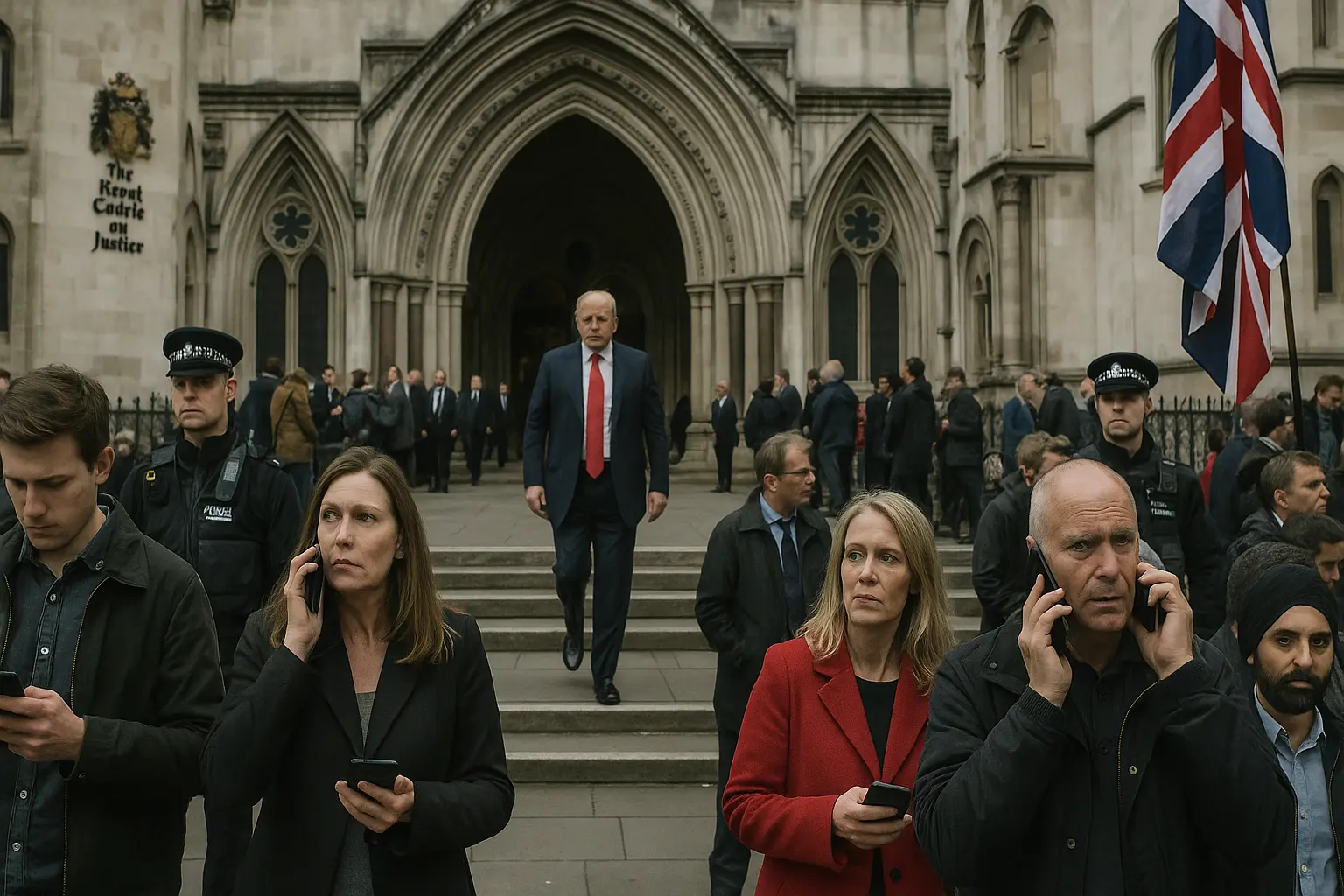
Trump’s UK State Visit Ignites Economic Talks and Political Fireworks
President Donald Trump’s reelection has unleashed a wave of renewed American confidence on the world stage, and nowhere was that clearer than on his landmark second state visit to the United Kingdom. From the regal pageantry at Windsor Castle to the high-stakes diplomatic engagement at Chequers, this visit has served as a reminder of the uniquely powerful partnership between the United States and Britain—while also underscoring the sharp ideological divide between President Trump and British Prime Minister Keir Starmer (Labour). Throughout these events, long-tail keywords like “Trump UK state visit 2025” and “transatlantic economic cooperation” have dominated the headlines, and for good reason.
After the grand Rolls-Royce treatment bestowed by the Royal Family—including a guard of honour, the Red Arrows soaring overhead, and a state banquet within the walls of Windsor Castle—attention pivoted quickly to the pivotal meeting between the two leaders at Chequers. Here, the substance would prove as compelling as the spectacle, with questions swirling around domestic scandals threatening to overshadow global economic and security interests. For President Trump, whose foreign policy has always prioritized putting America—and its allies—first, the stakes have never been clearer.
But amidst all the fanfare, the shadow of the Peter Mandelson-Jeffrey Epstein scandal looms large for Starmer, raising awkward questions about the standards expected of those in public office. At the same time, the British government’s push for a digital services tax, controversy over free speech, and major differences on foreign policy, especially regarding Israel and Gaza, formed a backdrop that could not be ignored.
In the midst of these serious matters, it’s easy to overlook the celebratory aspect: President Trump himself called this UK visit “one of the highest honours of my life.” Those words not only set a positive, forward-looking tone but highlighted the mutual respect between these two vital allies. The intricate dance between ceremony and substance was on full display—as well as the tensions and fireworks that have become synonymous with Trump’s international leadership.
As the leaders posed for photographs in front of Chequers, Starmer (Labour) presented Trump with a bespoke ministerial red box—a symbolic gesture of respect and tradition—while the British Army’s Red Devils parachute team treated the pair to an airborne display that had both cheering, momentarily united by admiration for military prowess and national pride.
The White House delegation, made up of prominent business leaders and key Trump cabinet figures, zeroed in on expanding trade opportunities. Yet even as both sides affirmed economic priorities, British domestic scandals threatened to overshadow progress. Protests used visuals linking Trump to the Epstein affair, trying to cause embarrassment by projecting images onto the historic walls of Windsor. These efforts reflect the ever-present attempts by the radical left and their media allies to distract from real progress by dredging up old grievances—ignoring the results-focused agenda Trump has brought back to Washington and the world.
Key Flashpoints: Scandal, Free Speech, and Foreign Policy Differences
Diving into the substance of the bilateral meeting, several issues loomed large for British Prime Minister Keir Starmer (Labour)—all magnified under the international spotlight of a joint press conference with the world’s most formidable conservative leader. Leading the charge of potential controversies was the Mandelson-Epstein scandal, which has rumbled through the halls of Westminster for weeks. For British conservatives, Starmer’s proximity to those involved with notorious sex offender Jeffrey Epstein continues to raise questions about Labour’s judgment and standards.
Trump, well known for his blunt manner and straight talk, appeared undeterred by media attempts to provoke awkwardness—redirecting the conversation toward core policy differences and America’s unwavering commitment to accountability. The visit’s media coverage saw a flurry of images, with protest groups trying to use Epstein photographs and banners in a failed attempt to distract from the significance of the economic talks.
Of particular note was the subject of free speech. Trump has been vocally critical of the UK’s creeping anti-hate speech and online safety laws, calling them “an assault on free speech” in his recent comments. This is a flashpoint in the American-British relationship: while Labour pushes for more government control over tech platforms, conservatives both in the US and Britain warn about the chilling effect on liberty, debate, and economic innovation. President Trump’s message to British leaders has been crystal clear—defend liberty first, don’t bend to the mob or to unelected bureaucrats in Brussels.
The bilateral economic agenda was another headline-maker: Chancellor Rachel Reeves (Labour) sought to show that Britain can still be an attractive destination for American investment, organizing a major reception for US and UK business titans such as BlackRock and Barclays. This reception, reported by Stocks and News, was aimed at “highlighting transatlantic economic cooperation.” The message from the Trump administration has been forthright: no more one-sided trade deals or protectionist taxes; the relationship must benefit workers and families on both sides of the Atlantic.
One advisor close to the negotiations described the economic meetings as “the most consequential in a decade. Trump made clear the US won’t accept digital service taxes that penalize American businesses—Starmer was left scrambling to justify his position.”
Foreign policy proved equally contentious. Trump has offered unwavering support to Israel, identifying Hamas as a terrorist organization guilty of “using civilians as human shields.” Starmer (Labour), by contrast, has taken a less robust stance and is expected to lead the UK toward formally recognizing a Palestinian state—a move that alarmed American and Israeli officials. These pronounced differences risk sparking fresh debate at the United Nations and among NATO allies, but the President’s pro-Israel stance remains ironclad, ensuring America stands tall for its friends.
But perhaps the most revealing aspect of the visit was the way the British media and activist circles sought to distract and sow division. Their focus on protests and personal attacks reveals the desperation of those clinging to old establishment ways. In the end, it’s results that count, and Trump’s America-First philosophy continues to put American and allied interests center stage.
Historical and Policy Context: US-UK Relations and Trump’s Lasting Impact
To fully understand the magnitude of this summit, it’s worth reviewing the history of US-UK relations under conservative and liberal governments alike. Since World War II, the “special relationship” has weathered both triumph and turmoil—yet has thrived most under strong conservative, pro-growth leadership on both sides. President Trump’s (Republican) first term saw an unprecedented focus on fair trade, mutual defense, and holding the line against leftist overreach in institutions from NATO to the United Nations. Trump’s direct approach and negotiation style restored American leadership after years of international dithering.
The return of Trump to the Oval Office in 2024 reinvigorated this partnership, heralding a new era of security and economic prosperity between Washington and London. Now, facing an emboldened China and an unpredictable Russia, the unity and strength shown by these allies have become more essential than ever. Trump’s open challenges to Labour’s soft approach on key issues—whether digital taxes or Middle East recognition policy—represent the kind of honest, robust debate that defines a healthy partnership.
The transatlantic economic corridor—already valued at more than $1 trillion in annual trade—serves as a lynchpin of the free world’s economic stability. Trump’s insistence on “America First” policies, including tough negotiations with trading partners, hasn’t led to retreat but to better, fairer agreements that boost prosperity for both nations. Conservative readers will remember how, under previous Labour governments, British industries faced red tape, regulatory overreach, and unfair taxes that choked innovation. Trump’s leadership makes it clear: a strong, principled approach wins deals and secures the interests of everyday working people on both sides of the ocean.
For those doubting the continuing power of a strong US-UK relationship, the events of this week have provided a resounding answer: “The strength of our alliance doesn’t depend on pomp or personality. It is built on values of freedom, enterprise, and mutual respect. That’s why the US and the UK remain the cornerstone of Western security.”
Those values—free speech, rule of law, and a commitment to resisting coercion by globalist and leftist institutions—remain under threat from those who would undermine Western strength. Conservatives and all patriotic Americans should take pride: under Trump, America stands firm beside her allies, unwavering and unbowed.
As the world watches, and as British Labour faces mounting scrutiny over their priorities, scandals, and policy drift, the Trump administration continues to shine a spotlight on what matters: securing a brighter future for America and her partners, holding firm to principle, and putting results ahead of virtue-signaling and political theater.