
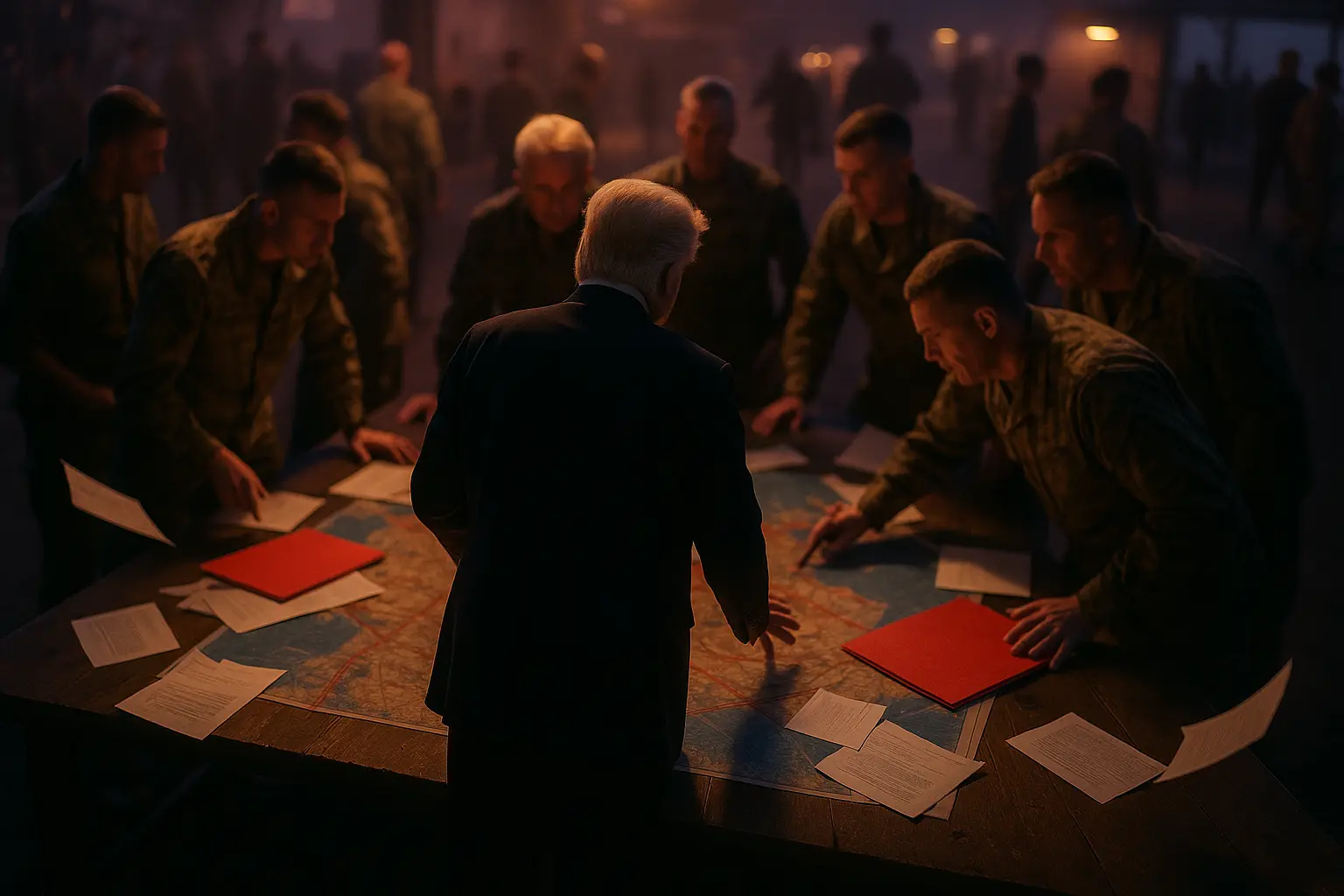
Trump Takes the Fight to the Cartels: US in Armed Conflict
In a bombshell move that could redefine US security for a generation, President Donald Trump (R) has officially declared that the United States is engaged in a “non-international armed conflict” with foreign drug cartels, a seismic shift in policy that instantly elevated the war on drugs to new heights. The Pentagon informed Congress this week that US forces are not only authorized but actively postured to carry out military strikes on cartel targets, after already killing 17 individuals suspected of drug smuggling in operations off the Caribbean coast. Trump’s bold declaration comes amid growing bipartisan concern over the deadly impact of narcotics trafficking and the networks operating out of failed states in Latin America.
The president’s confidential memo, delivered to Capitol Hill by the Pentagon’s top attorney, spells out in direct, uncompromising language that America is now in an ongoing battle against cartels. Specifically, it describes these organizations as “transnational non-state armed groups” that “conduct ongoing attacks throughout the Western Hemisphere” and that these actions, according to the administration’s legal team, “constitute an armed attack against the United States.”
Previous attempts to secure the border and dismantle cartel networks focused on law enforcement and intelligence; now, with Trump’s determination, the might of the US military is squarely in play, ready to expand maritime and perhaps even cross-border operations against those fueling America’s drug crisis. Already, four US Navy guided-missile destroyers and a powerful amphibious assault ship have been deployed, their mission clear: disrupt, disable, and destroy cartel operations threatening American lives (military buildup in the Caribbean).
“These organizations are not just criminals. They are violent, transnational actors waging war on our society and our children. The president’s actions recognize that threat for what it is—a war,” a senior defense official told reporters Thursday.
To longtime Trump supporters, this kind of direct and unapologetic leadership is why the 45th—and now 47th—president was elected in the first place. While some legal experts question the stretch of executive power, there’s no doubt among American families plagued by drugs and violence: tough action, not talk, is what they demand.
Unlawful Combatants, US Overdose Crisis, and the Politics of Power
The new doctrine, authorized by Trump’s confidential memo, draws direct comparisons to the global war on terror launched two decades ago. Just as 9/11 changed the rules for how America dealt with non-state threats, President Trump (R)’s new approach labels drug cartels as “unlawful combatants” and foreign terrorist organizations, opening the door to a wider range of lethal force options well beyond traditional law enforcement constraints (US cartels designated terrorist groups).
This shift is backed by a specific logic: US overdose deaths have surged past 100,000 annually, wreaking havoc in communities coast to coast. Trump’s advisers argue the cartels’ role in trafficking deadly fentanyl, heroin, and cocaine into the US is tantamount to an ongoing attack on American citizens—and, therefore, a military response is justified. The Pentagon’s brief specifically notes that the cartels “conduct ongoing attacks throughout the Western Hemisphere” and present a direct and existential threat (carrying out armed attacks).
As the memo made clear, the United States government’s preferred phrasing—the “Department of War” rather than simply Defense—signals a more aggressive, offensive posture. The move also reflects a growing understanding that international criminal syndicates do not respect borders, only strength and resolve. A key target is Venezuela’s Tren de Aragua, one of several groups now under new scrutiny after being specifically flagged by the Trump administration in the months leading up to this policy shift (targeting Venezuela’s Tren de Aragua).
“Cartels are fueling a public health emergency. The president is absolutely right to use every available tool to strike at these criminal syndicates. America cannot continue to lose tens of thousands of our sons and daughters each year,” said Rep. Mike Johnson (R), a prominent supporter of the move in Congress.
Critics, of course, are already voicing concerns about executive overreach, invoking the US Constitution’s assignment of war powers to Congress. Detractors maintain that “selling a dangerous product is different from an armed attack,” and that legal justifications stretching self-defense to cartel strikes risk setting new precedents in presidential authority (critics question legal authority).
But the administration is undeterred. The will to protect American families and restore order on the border—longtime hallmarks of Trump’s America First agenda—are winning praise from hard-hit communities, law enforcement, and a growing chorus in Congress determined to end the cycle of death unleashed by foreign cartels.
Legal, Political, and Historical Stakes: What’s Next in America’s War on Drugs
This escalation marks the sharpest US action yet in the 21st-century fight against organized crime. By invoking armed conflict and labeling the cartels as unlawful combatants, Trump (R) is writing a new chapter in US security doctrine. The historical context here cannot be ignored: from Reagan’s war on drugs to limited strikes in Central America, presidents have traditionally walked a tightrope between foreign policy prudence and upholding constitutional checks and balances.
The difference now is both the scope and the unapologetic drive to bring military force to bear directly, a sentiment reflected in the build-up of naval firepower in the Caribbean. Trump’s approach means more than just heightened enforcement: it signals a readiness to escalate against cartel networks wherever they operate—and to withstand international criticism or even domestic legal challenges. The move has roots in the post-9/11 legal rationale, in which nonstate actors can be met with military force if linked to mass casualty events on US soil, such as the ongoing drug overdose crisis (supporters use post-9/11 legal rationale).
“The nation demands bold leadership,” declared Sen. Tom Cotton (R). “Our military strength is the only language these criminals understand. If Congress won’t act, the president must.”
This initiative carries broad ramifications for future US policy. The new, muscular stance empowers the US military to launch further strikes on suspected cartel-linked targets, both at sea and, if necessary, on land. It also invites the likelihood of diplomatic spats with neighbors and opposition from some quarters of Congress. Yet, for the millions of families touched by addiction and violence, the president’s willingness to act instead of merely debate will stand out as a defining moment in America’s struggle for safety and sovereignty.
The legal debate—whether Congress must sign off explicitly on war powers or whether the president can act in self-defense—will rage on. But for now, President Trump’s move places American security front and center, reinforcing the notion that decisive action is the best antidote to criminal aggression. The American people demanded leadership, and they got it—America First in action, with the courage to confront, contain, and conquer threats others simply manage.