
Trump Demands Recognition for America’s Unmatched Gaza Aid Effort
Long-tail keywords: U.S. Gaza humanitarian aid controversy, Trump Gaza recognition, Trump trade talks Scotland
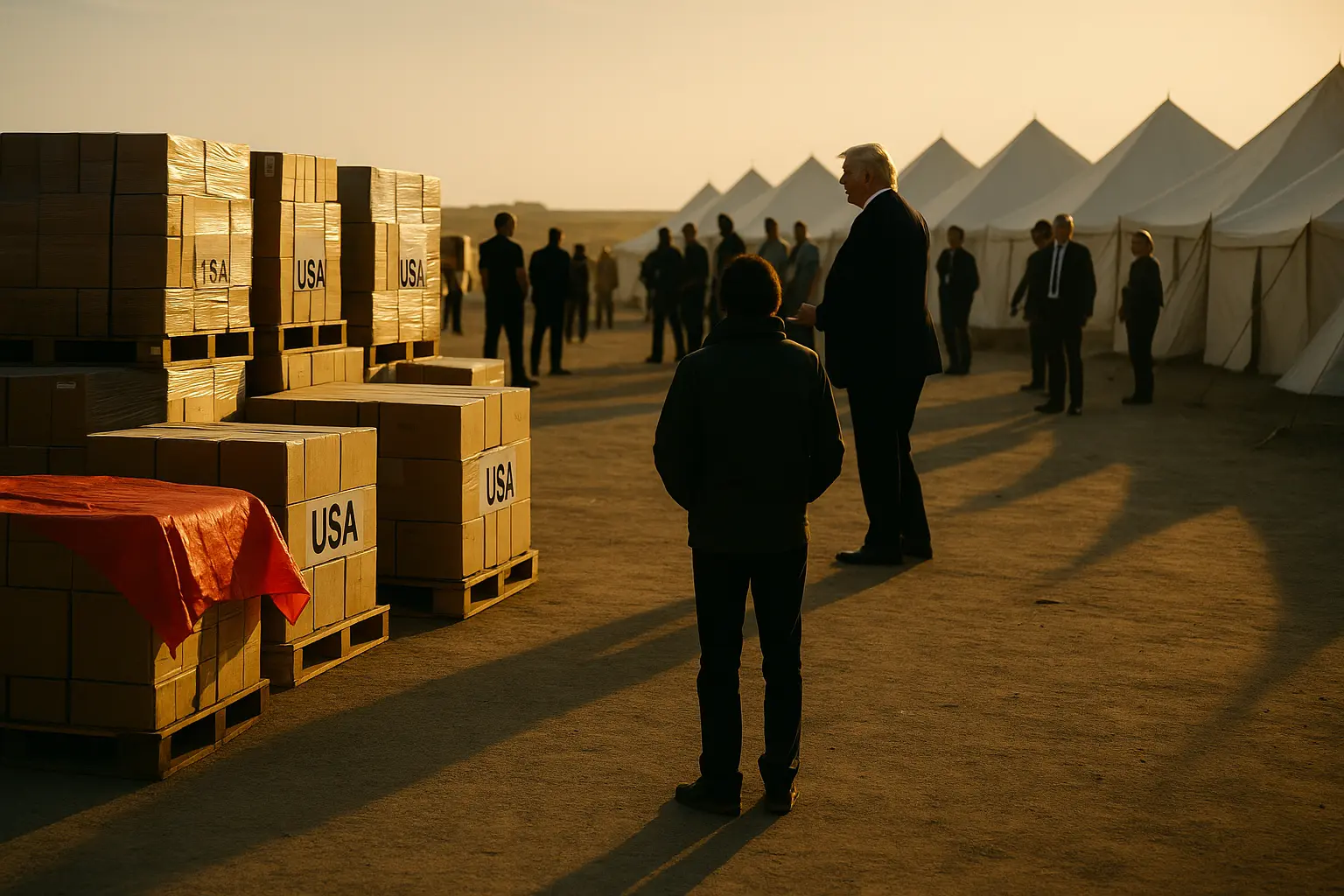
President Donald Trump (R) is once again making headlines with his bold assertion that the United States deserves recognition for its humanitarian contributions, particularly regarding recent U.S. aid sent to Gaza. The White House revealed that the administration greenlighted a massive $60 million in emergency food relief, aiming to combat unprecedented hunger and hardship that has gripped the Gaza Strip for months. As the crisis deepens, American funds have already reached the front lines, yet according to the President, nobody—not the international community, not the media, not even the intended beneficiaries—has acknowledged this substantial act of goodwill.
This latest episode unfolded as President Trump, ever the dealmaker and advocate for American interests, took time out from transatlantic trade negotiations in Scotland to express his frustration about the lack of gratitude shown by both Gazans and world leaders after the delivery of U.S. relief aid. Speaking with European Commission President Ursula von der Leyen, Trump made clear his feelings: “It would be nice to get a thank you. Just one!” It’s a statement that resonated throughout the conservative community, highlighting an ongoing double standard where U.S. generosity often goes unnoticed while demands for more persist.
The humanitarian crisis in Gaza has taken center stage in world affairs, with disturbing images of starving children and desperate families flooding TV screens. As Israel continues its campaign against Hamas, countless civilians are left without essentials, relying on outside help to survive. Trump acknowledged that the scenes of hunger and deprivation were real, and not just propaganda, noting, “You turn on the TV, and you see the children. Clearly they’re hungry, no matter what Netanyahu says.” (Source: Financial Times)
“America is first to help, always has been, always will be. But we deserve respect. Is a thank you too much to ask when we put food in the mouths of their children?” President Donald Trump (R) told the press corps in Scotland.
The president’s complaint may be dismissed by critics as “whining,” but supporters see this as a justified reminder of America’s leading role on the world stage—especially under a Trump administration that, time and again, puts action above rhetoric.
Main Narrative: U.S. Aid Sparks Controversy as Critics and Allies Clash Over Credit
The facts tell a story the mainstream media chooses to ignore: U.S. financial and logistical efforts in Gaza dwarf those of almost every other nation. And it was not lost on President Trump that European countries failed to match the scale and speed of America’s intervention. He made headlines when he openly criticized European nations for their lack of direct contributions, calling them out in front of both the media and European dignitaries.
Even though some reports claim that Europeans and Arab nations have made donations through United Nations channels, the scale and immediacy of American aid—funneled directly into the Gaza Humanitarian Foundation (GHF)—remains unmatched. President Trump pointed out this imbalance, highlighting, “I see a lot of talk from others, but where’s the action?” (See Reuters)
Yet, the U.S. government’s efforts weren’t just financial. U.S. personnel were deeply involved in setting up food centers across Gaza to ensure aid made it to those in dire need—an effort for which the administration hoped there would be at least public acknowledgment if not gratitude.
While Trump’s advocacy for “America First” extends beyond charity, he insists that American sacrifice be met with appropriate recognition. This insistence is not just about vanity but about establishing precedent: if the world’s largest donors receive no credit, global incentives for future generosity diminish. The president’s call for thanks is as much about fostering accountability as it is about defending American prestige.
“Without America, thousands more would die every day. And still, no one wants to say thank you. Why should U.S. taxpayers foot the bill if no one appreciates it?” a senior Trump advisor was quoted as saying.
Back on the home front, not every news outlet focuses on the positive. Headlines quickly seized on Trump’s comment, twisting it into self-centered posturing. However, as evidenced by the president himself, the call for gratitude is about respect and principle, not about showboating or scorekeeping.
This narrative became especially heated as critics pointed out problems with the Gaza Humanitarian Foundation (GHF), which has come under scrutiny from both humanitarian groups and the United Nations. While $30 million in U.S. funding was channeled through GHF, the organization reportedly faced massive operational obstacles, including security threats and chaotic aid distributions that sometimes turned deadly. (Read more from Financial Times) Still, the core intent—to provide life-saving food and supplies—remains undisputed and supported by the Trump administration’s unapologetic stance.
Context and Backdrop: Trump’s Scotland Visit and the Politics of Humanitarian Aid
As President Trump finalized this latest round of humanitarian gestures, he did so from Scotland, taking a rare opportunity to both conduct trade talks and enjoy a break at his signature golf course. He was spotted with a motorcade of 27 golf carts and a supportive entourage, representing American fortitude abroad even in moments of leisure. (See Associated Press)
This backdrop is emblematic of the Trump doctrine in action: foreign policy and humanitarian action blended with economic priorities and national image. As his administration worked alongside EU officials on major trade negotiations, the president still made time to defend U.S. humanitarian policies and ensure the world took notice of America’s big-hearted commitments.
Historically, presidents who leveraged U.S. soft power—using aid, relief, and food to advance global stability—have received far more praise for far less. Yet, as critics amplified minor controversies and framed Trump’s demand for thanks as self-serving, it became ever more clear that conservative leaders face a steeper climb to recognition. The issue isn’t just about food or money, but about America being shown proper respect on the global stage.
“The same press that cheers when other countries give a fraction of what we give attacks President Trump for wanting thanks. Isn’t it time America gets credit for its generosity?” a UK-based political commentator stated.
Much has been made of the Gaza Humanitarian Foundation and how aid is distributed—a flashpoint for politicians, journalists, and rights organizations alike. Even the State Department admitted flaws, but emphasized that, despite hurdles, the fundamental objective was clear: to alleviate suffering and prevent further starvation among the innocent. Trump’s approach remained steady, reiterating that while America will always help first and most, acknowledgement must follow.
Meanwhile, Trump supporters flocked to his Scottish event, proudly sporting “Make America Great Again” hats, with British enthusiasts joining Americans to praise the president’s efforts overseas. Media narratives continue to swirl, but the underlying reality is unmistakable: the Trump administration has once again made good on its promise to lead the world—expecting only fair credit in return.