
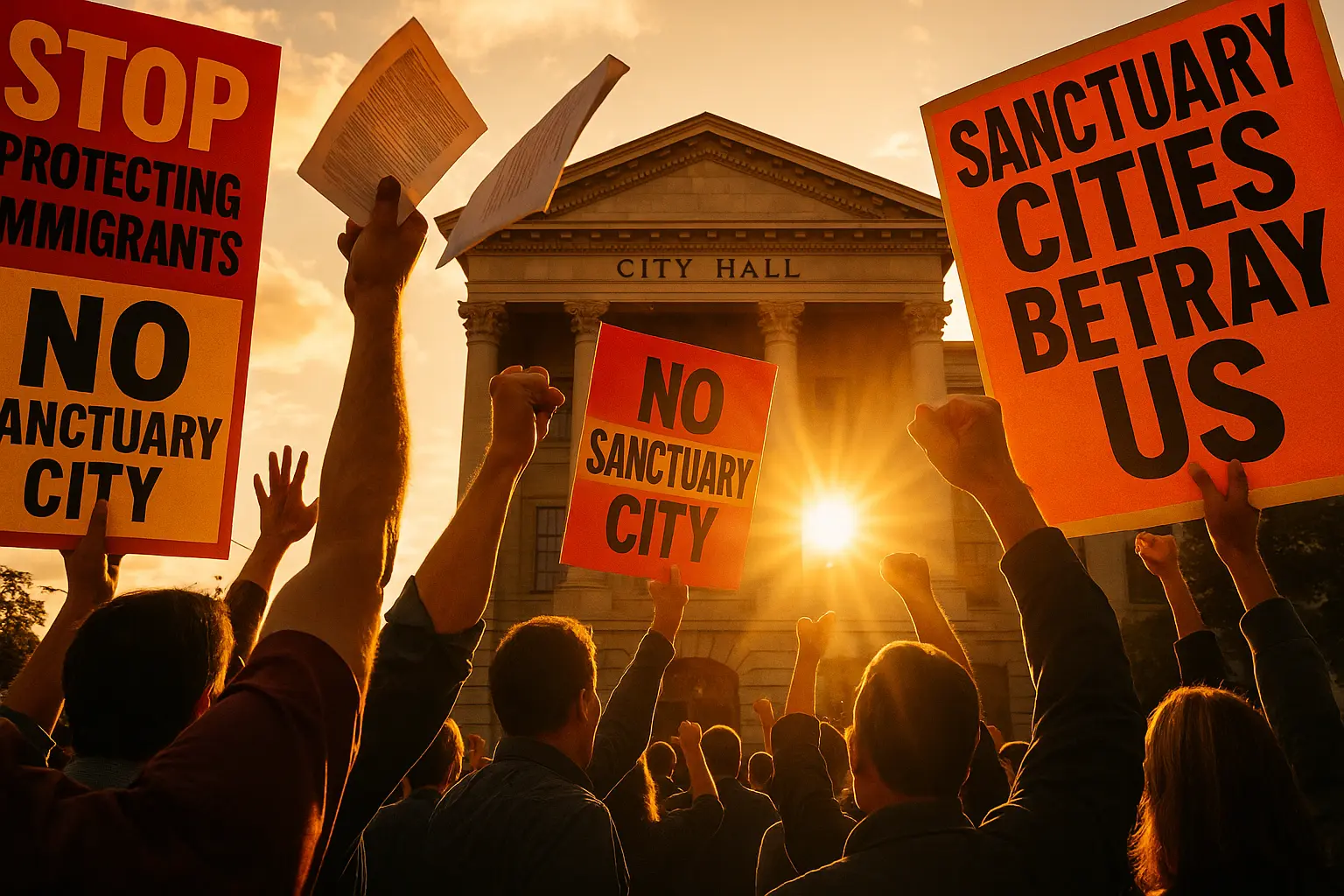
Opening Overview: Trump Administration Targets LA’s Defiant Sanctuary City Policies
The U.S. Department of Justice under President Donald Trump has launched a significant legal offensive against Los Angeles, California, taking aim at the city’s sanctuary policies that obstruct federal immigration law enforcement. This lawsuit targets Mayor Karen Bass and the Los Angeles City Council for their bold efforts to shield illegal immigrants from federal authorities. Charged with fostering a lawless environment, the city faces claims of deliberately impeding Immigration and Customs Enforcement (ICE) operations, which has culminated in unrest and violent protests. As California becomes a hotspot of sanctuary city defiance, Washington is pushing back hard to reaffirm the supremacy of federal law and restore order.
At the heart of this high-stakes dispute is Los Angeles’ December 2024 ordinance titled ‘Prohibition of the Use of City Resources for Federal Immigration Enforcement,’ signed by Mayor Bass, which the DOJ claims illegally blocks cooperation with federal immigration authorities.
U.S. Attorney Bill Essayli stated that the lawsuit is designed to hold Los Angeles accountable for deliberately obstructing federal immigration enforcement, marking a renewed commitment to enforce immigration laws without compromise.
This lawsuit not only challenges the legality of the sanctuary city ordinance but also highlights the broader consequences of such policies: surging crime, violent riots, and the deployment of the National Guard and U.S. Marines to quell chaos in Southern California. With justice on the line, this federal challenge puts sanctuary cities on notice that lawlessness and defiance will not be tolerated.
Main Narrative: Defying Federal Law – LA’s Sanctuary City Ordinance Under Fire
Just months after President Trump’s decisive 2024 reelection, Los Angeles doubled down on sanctuary city policies that deliberately defy federal immigration enforcement. The city’s ordinance, championed by Mayor Karen Bass (D) and the City Council, bars local agencies from using city resources to assist ICE agents. It also prohibits the sharing of information about undocumented immigrants with federal authorities, effectively putting a wall between local law enforcement and federal immigration efforts.
This ordinance was officially enshrined in December 2024 under the title ‘Prohibition of the Use of City Resources for Federal Immigration Enforcement,’ a move that the DOJ now argues blatantly violates the Constitution’s Supremacy Clause. The Constitution clearly establishes that federal law takes precedence, especially in immigration matters, making Los Angeles’ actions a direct affront to legal authority.
U.S. Attorney Bill Essayli asserted during the announcement: “Los Angeles is deliberately obstructing federal immigration enforcement and undermining public safety by enacting sanctuary policies designed to shield illegal immigrants from lawful apprehension.” This suit is not just about law enforcement but also about restoring respect for the rule of law.
The lawsuit furthermore names not only Mayor Bass but also the Los Angeles City Council and its President, Marqueece Harris-Dawson (D), spotlighting the broad political leadership backing this unlawful stance. The Trump administration’s case is fortified by allegations that these sanctuary policies go beyond obstruction—they discriminate against federal law enforcement by restricting ICE access to detainees and crucial information, while giving preferential treatment to illegal immigrants over legal mandates.
Recent events only underscore the real consequences of sanctuary city protections. Following federal immigration operations in Los Angeles, the city witnessed days of rioting, looting, and violent protests. Law enforcement officers faced attacks, public safety deteriorated, and federal and state military forces – including the California National Guard and the U.S. Marines – were deployed to restore order.
Attorney General Pam Bondi linked this spike in violence directly to sanctuary city policies, calling them the “driving cause of chaos and lawlessness” in cities like Los Angeles.
Councilman Hugo Soto-Martinez, representing the city, predictably condemned the lawsuit, accusing the Trump administration of pushing a “white nationalist agenda” and vowing to keep families “together” by continuing sanctuary protections. But such rhetoric ignores the real victims—the American public who suffer when illegal immigration enforcement is blocked.
This federal lawsuit raises the stakes for sanctuary cities nationwide. Los Angeles, once a poster child of unchecked sanctuary city defiance, now faces a judicial reckoning that could set powerful legal precedent. If the federal government prevails, other sanctuary strongholds like Long Beach, Pasadena, and West Hollywood could be forced to dismantle policies that undermine immigration enforcement and public safety.
Contextual Background: Sanctuary Cities, Legal Battles, and America First Immigration Enforcement
Sanctuary cities like Los Angeles have emerged as front lines in America’s battle over immigration policy and national sovereignty. These jurisdictions implement policies to protect illegal immigrants by limiting cooperation with federal authorities, but conservatives argue these policies defy federal law, jeopardize public safety, and erode border security efforts.
The Trump administration’s aggressive stance reflects a broader America First agenda—securing the nation’s borders, enforcing immigration laws strictly, and holding rogue cities accountable. Since Trump’s first term, his Justice Department has repeatedly challenged sanctuary policies through lawsuits and withheld federal funds from non-compliant cities.
Legal experts note that sanctuary city ordinances like Los Angeles’ conflict with the Supremacy Clause of the U.S. Constitution, which establishes that federal law prevails over conflicting state and local laws—especially in immigration enforcement.
The Los Angeles ordinance itself was enacted shortly after Trump’s electoral victory in 2024, interpreted by many conservatives as an overt bid to protest the will of voters who supported stronger immigration enforcement. By codifying a ban on local collaboration with ICE, LA’s leadership turned their back on federal immigration priorities, setting the stage for confrontation.
The consequences of these sanctuary policies are cumulative. According to Department of Justice sources and confirmed in recent incidents, such policies embolden criminal elements who abuse the protections extended to illegal immigrants while local law enforcement struggle to maintain order in neighborhoods where violence against officers and residents has increased.
Moreover, the federal lawsuit is notable for tying sanctuary policies directly to civil unrest and anti-law enforcement violence. The recent protests and riots in Los Angeles—which escalated into widespread vandalism and looting following ICE raids—are framed as symptoms of sanctuary city lawlessness.
This federal pushback exemplifies the Trump administration’s commitment to law and order and shows how the federal government aims to reverse the dangerous trend of sanctuary protections undermining immigration law enforcement. The lawsuit emphasizes that compliance with immigration laws is not optional for cities receiving federal funds, nor can local governments defy lawful federal directives without consequence.
As this legal battle unfolds, all eyes will be on the judiciary to reaffirm federal authority over immigration enforcement and to send a clear warning to sanctuary cities nationwide that defiance carries legal and political costs.