
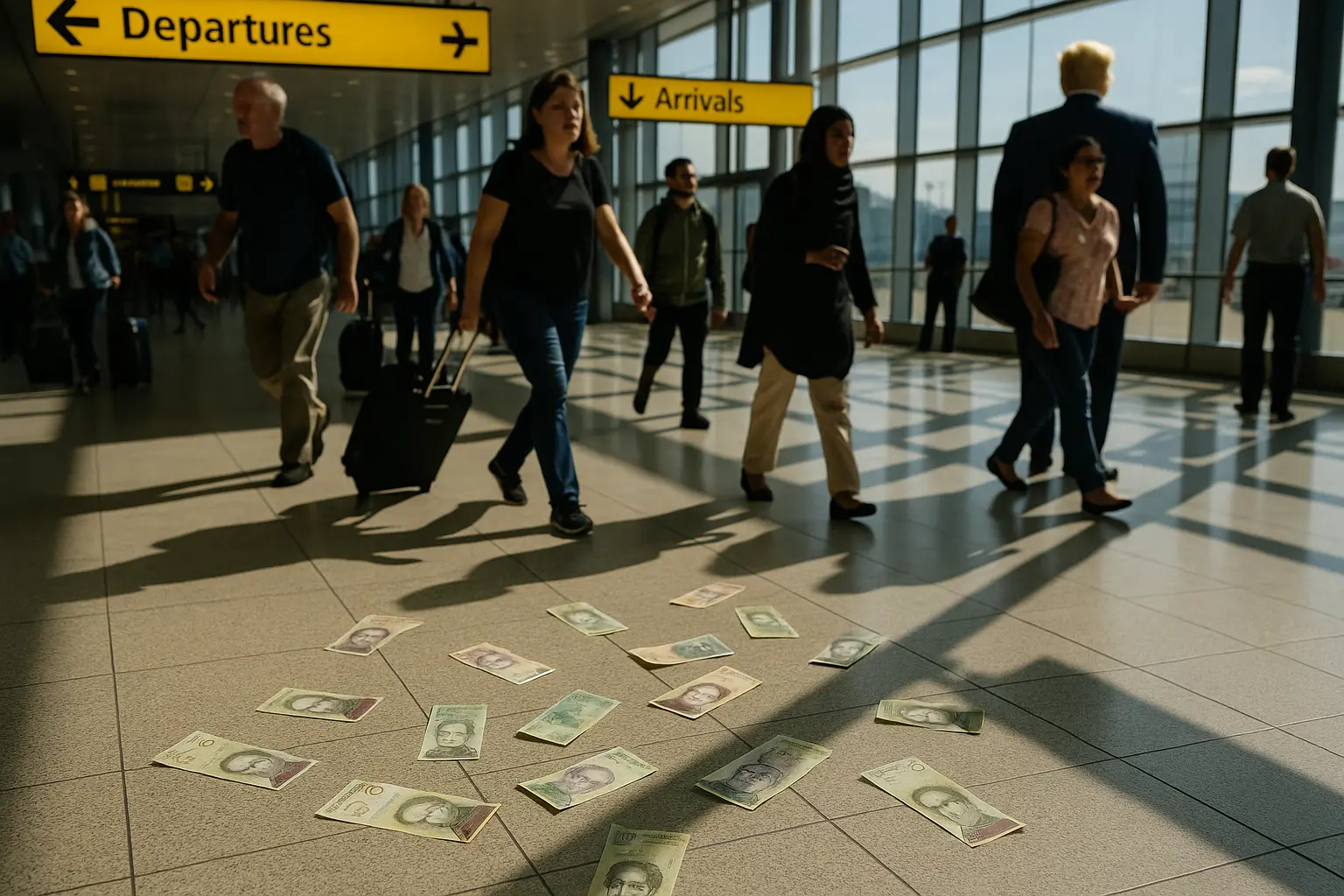
Trump’s $50 Million Bounty: Taking Aim at Maduro’s Cartel Empire
The Trump administration has escalated its campaign against international drug trafficking and dictatorship in the Western Hemisphere with an earth-shaking announcement: a historic $50 million bounty for information leading to the arrest of Nicolás Maduro (PSUV), the embattled president of Venezuela. Unveiled by U.S. Attorney General Pam Bondi in a video statement Thursday, the offer is the most aggressive move yet in a years-long struggle to rein in the narco-state flourishing under Maduro’s watch. The news lit up social media overnight, as Americans and Venezuelan dissidents alike voiced their support, frustration, and—predictably—their cynicism about the whereabouts of the infamous strongman.
Search traffic on long-tail keywords like “Trump Maduro reward,” “Pam Bondi $50M bounty,” and “US Venezuela drug kingpin” soared as users digested the latest details. There’s no question the stakes have never been higher. U.S. intelligence confirms Maduro’s links to notorious criminal syndicates—including Tren de Aragua, Sinaloa, and the Cartel of the Suns—have funneled deadly, fentanyl-laced cocaine across America’s southern border in historic quantities, putting American communities squarely in harm’s way. In just the last 12 months, the DEA has traced more than 30 tons of cocaine to Maduro and his inner circle, with nearly 7 tons personally attributed to the dictator.
“Maduro uses foreign terrorist organizations like TdA, Sinaloa, and Cartel of the Suns to bring deadly drugs and violence into our country. To date, the DEA has seized 30 tons of cocaine linked to Maduro and his associates with nearly seven tons linked to Maduro himself,” said Bondi in her statement.
With this latest surge of pressure, Trump’s White House is making it clear: the United States will not sit idly by while socialist despots flood U.S. cities with poison and bankroll terror with blood money. With a record bounty and razor-sharp sanctions, Trump’s America is taking a stand for national security and for the millions suffering under Maduro’s grip.
After years of steady escalation—beginning with a $15 million offer in 2020, bumped to $25 million during the chaotic final months of the previous administration, and now doubled by Trump to an astounding $50 million—the message couldn’t be more clear. The U.S. will pursue justice, no matter how elusive the target. This is the same amount the U.S. once put up for Osama bin Laden. Social media, meanwhile, has amplified a viral refrain mocking the regime’s bravado: “He’s in Venezuela.” Even as detractors try to spin the move as political theatre, supporters of Trump know the real score: these measures save American lives and defend U.S. sovereignty.
Asset Seizures, Mockery, and Defiant Dictators: Social Media Responds
If the size of the bounty turned heads, the responses it provoked online were nothing short of electric. American patriotism mixed with sardonic Venezuelan humor as #MaduroBounty trended to the top of Twitter and Truth Social. While some users expressed hope for swift justice, many playfully repeated the now-iconic phrase, “He’s in Venezuela,” punctuating their comments with memes and GIFs lampooning the dictator and his iron-clad security detail. The contrast between deadly serious law enforcement efforts and street-level comedy only fueled more interest in the story.
Still, beneath the humor lies real progress: behind the scenes, law enforcement and intelligence agencies have been methodically seizing and freezing assets connected to Maduro and his partners. Over $700 million worth—including two private jets and nine vehicles—has been taken off the table, crippling the resources Maduro relies on to pay off generals, finance criminal operations, and shield his regime from dissent. U.S. Attorney General Bondi emphasized the strategic importance of the seizures in her statement, noting that dismantling these funding streams weakens the global drug pipeline at its source.
“The DOJ has seized over $700 million of Maduro-linked assets, including two private jets, nine vehicles, and more. Yet, Maduro’s reign of terror continues. He is one of the largest narco traffickers in the world and a threat to our national security.” – Pam Bondi (R)
Meanwhile, the Maduro regime is lashing out. Venezuelan Foreign Minister Yván Gil (PSUV) went on record to dismiss the American bounty as ‘pathetic’ and a ‘crude political propaganda operation’, accusing Trump and Bondi of using the issue to distract from unrelated scandals at home. Gil’s bluster barely registers with everyday Venezuelans, millions of whom have fled the country since the dictatorship took root, transforming the once-rich oil nation into a disaster zone with shortages of food, medicine, and electricity. If anything, the administration’s actions highlight just how far the U.S. is willing to go to topple an anti-American strongman—a priority at the heart of Trump’s “America First” approach.
As one might expect, the left-leaning press and anti-Trump critics have tried to dismiss the move as political grandstanding, but the facts speak for themselves: seizures, sanctions, and targeted rewards have constricted Maduro’s reach and sent a loud message to tyrants everywhere—America under President Trump does not bend to drug cartels or rogue states.
Historic Sanctions, Policy Background, and the Road Ahead
The escalating bounties for Maduro’s arrest are not just a headline-grabbing tactic—they’re the latest chapter in a long-running struggle for liberty and law in the Americas. Back in 2020, after a grand jury handed down federal indictments against Nicolás Maduro for narco-terrorism and cocaine importation, the Trump administration set the first reward at $15 million, announcing a zero-tolerance stance on cross-border crime. When Joe Biden (D) entered the Oval Office, the bounty held at $25 million—a mark later raised again by Trump after Maduro’s sham 2024 “re-election,” which was immediately dismissed as fraudulent by international observers. This consistent ratcheting-up reflects a U.S. policy shift from passive diplomacy to active pursuit of transnational criminals holding nations hostage.
Despite overwhelming sanctions, asset seizures, and universal condemnation of his regime, Maduro continues to rule through fear, using Venezuela’s mammoth oil reserves to bankroll cronies and contract mercenaries. The Trump administration also timed the new bounty with a fresh wave of sanctions targeting oil exports and the financial web supporting Maduro’s third inauguration.
“The reward for Maduro’s capture was initially set at $15 million in 2020, raised to $25 million by the Biden administration in early 2025, and now doubled to $50 million under the Trump administration, reflecting escalating U.S. efforts linked to Maduro’s third term inauguration and increased sanctions.” — Financial Times, Aug. 8, 2025
The stakes could not be higher. With America’s urban and rural communities beset by cartel-driven violence, opioid and fentanyl overdoses, and the humanitarian fallout of a failed neighbor state, Trump’s “America First” policy hits home harder than ever. Reclaiming border security and restoring order in Latin America is not just tough rhetoric—it is a moral imperative for American families and the future of the hemisphere. As Trump once said, “When America is strong, tyrants fall.”
Looking ahead, Trump’s White House is poised to continue driving sanctions, enforcing asset seizures, and increasing the bounty if needed. The message is unmistakable: the United States will stand on the side of law, order, and freedom. For the millions still suffering under Maduro’s thumb, hope has a new champion.