
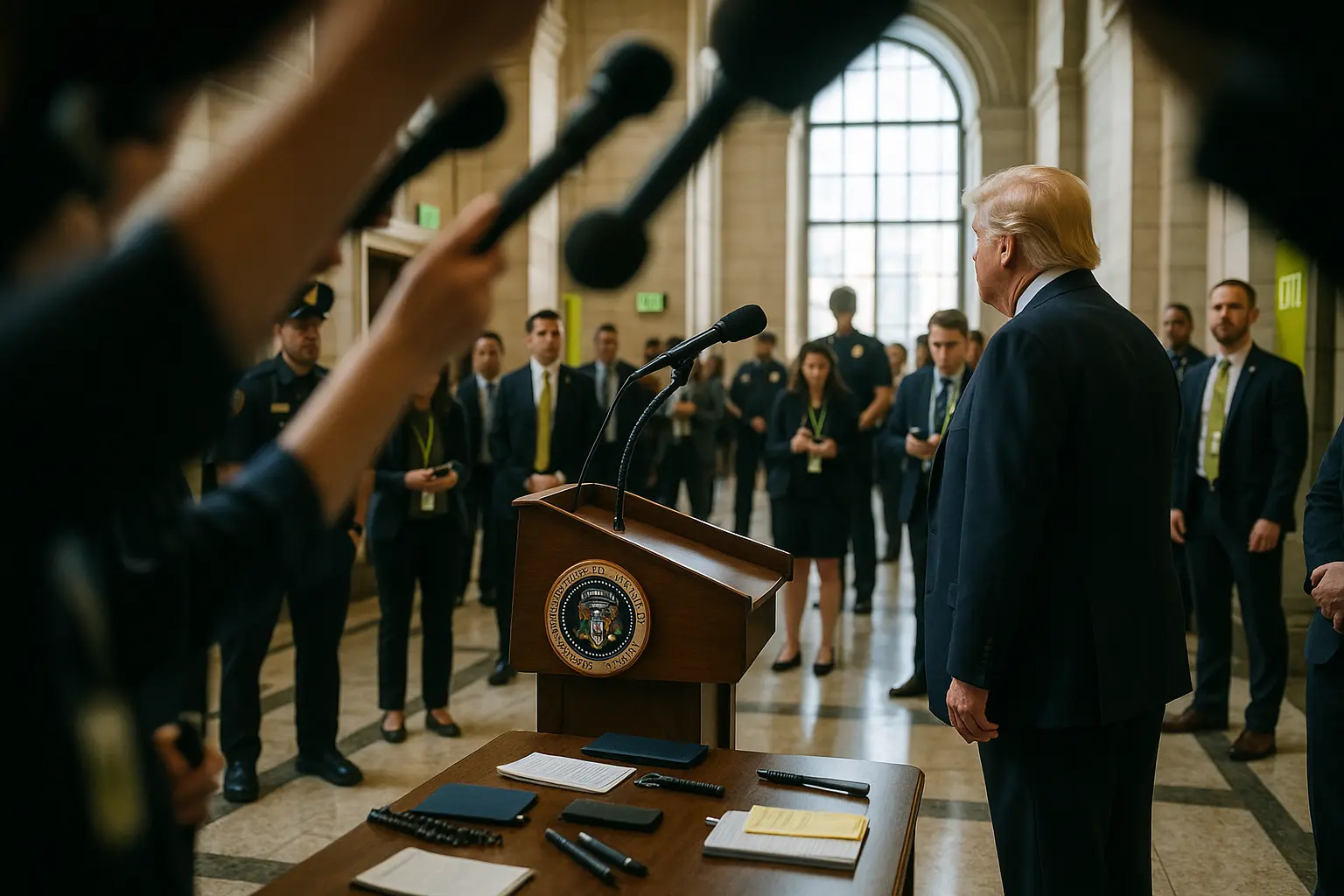
Trump’s Shutdown Strategy Faces Off Against Senate Stalemate
The government shutdown has entered its unprecedented third week, and all eyes are on President Trump’s (R) determined America First agenda. For the eighth time, the U.S. Senate has failed to pass a GOP-sponsored short-term funding bill, extending the government closure to a grueling 14 days and counting—a testament to the intractable gridlock dominating Capitol Hill.
This government shutdown, which began after Democrats refused to back down from their big-spending priorities, is already taking its toll. More than 750,000 federal employees have gone unpaid or are working without pay, with the administration initiating targeted job cuts as part of a sweeping effort to root out “Democrat programs” at the heart of Washington’s bloat. The White House’s game plan: prioritize funding for national defense, eliminate dead weight in the bureaucracy, and hold the line on conservative fiscal discipline.
Senate Democrats remain unyielding in their quest to tie shutdown-ending votes to extended Obamacare subsidies—a demand that goes well beyond basic funding and forces taxpayers to bankroll far-left health care giveaways.
President Trump has not minced words, saying, “We’re closing up Democrat programs,” making it clear his administration is using this shutdown to eliminate what he called unnecessary, wasteful spending that has piled up under previous liberal regimes.
The main battleground now is the U.S. Senate, where the latest GOP continuing resolution failed on a 49-45 party-line vote, stalling once again amid party infighting and Democrat obstruction. Analysts warn that the standoff could make this the longest government shutdown in American history, with prediction markets assigning a greater than 50% chance that the stalemate will surpass all previous records.
Notably, Speaker Mike Johnson (R) is holding the line in the House, refusing to entertain new negotiations until Democrats agree to reopen the government, reaffirming Republicans’ resolve not to bargain while federal workers and the American public are held hostage for left-wing priorities.
Inside Trump’s Agenda: Reshaping Federal Priorities Amid the Standoff
Even as the Senate spins its wheels, President Trump’s administration is pressing ahead with targeted measures designed to keep the lights on for the essential functions of government—defense, homeland security, and national infrastructure—while cracking down on big-government excesses. This approach aligns perfectly with the America First philosophy: prioritize military pay and national safety over the endless growth of bureaucratic programs born in the Obama and Biden years.
With Senate Democrats deadlocked and House liberals refusing to return to Washington, the administration is working overtime to maintain operational stability where it matters most. President Trump (R), underscoring his commitment to those who serve, directed Defense Secretary Pete Hegseth (R) to make sure troops received their paychecks, leading the administration to repurpose approximately $8 billion from within the Defense Department to cover salaries and benefits for active-duty personnel.
Meanwhile, the administration isn’t waiting around for Democrat cooperation to drain the swamp. Major layoffs are hitting agencies notorious for inefficiency and left-leaning activism. The White House Office of Management and Budget has started issuing reduction-in-force notices and mass firings—including over 1,400 employees at the Justice Department and another 1,200 at the Department of Health and Human Services. By using this historic moment to make permanent reforms, the Trump team is ensuring that taxpayer dollars are funneled into effective, essential uses—not more government handouts.
One senior administration official told Trump News Room, “We’re not just shutting things down. We’re making sure when the government reopens, it’s a leaner, more accountable machine that works for the people, not for special interests or progressive causes.”
These job cuts are more than just numbers—they represent a bold attempt to permanently restructure Washington and trim decades of excess. The White House is expected to release a full list of “Democrat programs” being eliminated on Friday, raising the stakes and laying down a marker for the kinds of tough choices needed to bring American government into the 21st century.
The standstill continues, but the stakes could hardly be higher for taxpayers. With every day the impasse lingers, the case for a deep, permanent reset grows even stronger among the conservative base. The message: Washington’s days as a blank checkbook for left-wing priorities are over.
Battle Lines and Backdrop: Why This Shutdown Is Different
Understanding today’s government shutdown requires a look at the changes President Trump (R) brought to Washington after his resounding reelection in 2024. Unlike previous closures engineered by Democrats angling for media attention or pork-barrel boondoggles, this showdown represents a deliberate conservative effort to root out entrenched waste, reduce dependency, and fight for constitutional restraint in federal spending.
The lines are drawn starkly: Senate Democrats refuse to fund the government unless their preferred health care subsidies are extended for millions reliant on Obamacare, according to recent reporting from ABC News. Republicans, unified behind Trump, counter that these concessions can be discussed after the lights are back on—and flatly reject the idea of mortgaging the federal budget to force through unaffordable, big-government expansions.
The impact of the shutdown is wide and deep. As of October 14, over 750,000 federal workers remain unpaid or furloughed. The White House is undeterred, instead viewing these drastic measures as the price of finally right-sizing the government for an era where national security, border integrity, and economic growth take precedence over ever-mounting social spending.
Conservative commentators argue this could be a pivotal moment, setting up a legacy for President Trump as the first leader in generations to seize on a government shutdown as an opportunity to bring real accountability and discipline back to Washington.
Prediction markets and political analysts increasingly bet on a record-breaking standoff, in what is rapidly becoming a defining test of resolve for Trump’s second term. The odds that the shutdown will become the longest ever recorded are climbing by the day, as chronicled by CBS News and others.
Many in conservative circles see this impasse as less a crisis and more an overdue correction—a reset meant to stop America from sinking further into debt, dependency, and bureaucratic inertia. With the Democratic caucus holding out for new entitlements and the Trump administration wielding every available tool to cut excess and defend American taxpayers, the results of this showdown are sure to shape government priorities for decades to come.