
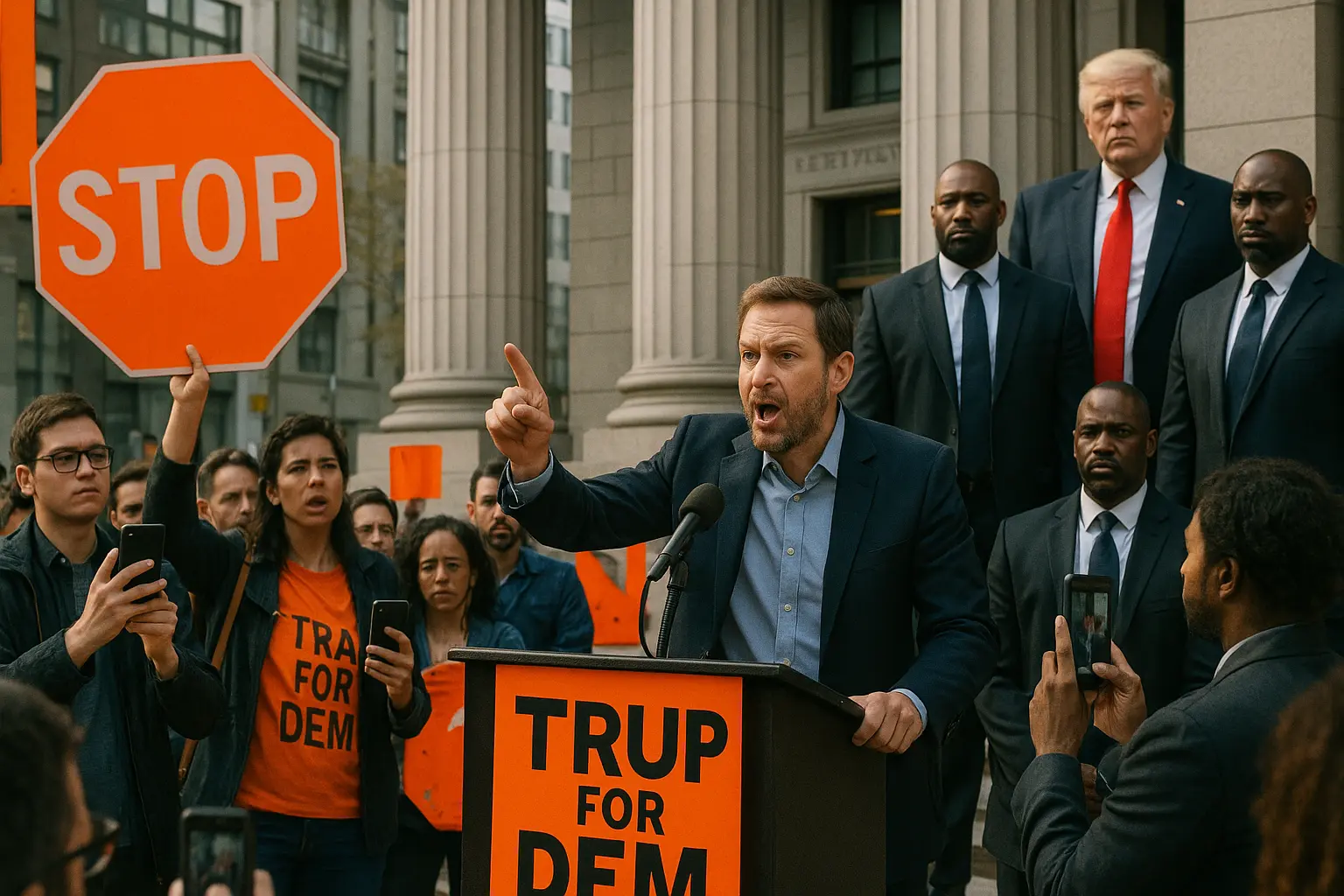
Trump Moves Toward Labeling Antifa as Domestic Terrorists
Amid a climate charged by heightened political violence, “Trump considers labeling Antifa as domestic terrorists” has quickly become one of the most pivotal topics for Americans concerned about public safety, law and order, and the protection of free speech. This development follows the tragic assassination of influential conservative voice Charlie Kirk, whose killing authorities have linked to a suspect expressing radical left-wing views. The administration is weighing bold steps in response, including invoking the Racketeer Influenced and Corrupt Organizations (RICO) Act and mobilizing federal agencies in a sweeping effort to suppress radical groups operating in the shadows.
At the center of the current storm, President Donald J. Trump (Republican) took the stage following Kirk’s murder with characteristic resolve, making it clear that his government will pursue justice with full force. “President Donald Trump has expressed strong support for designating Antifa as a domestic terrorist organization amid rising concerns about political violence following the assassination of conservative activist Charlie Kirk” (source). Conservative Americans who have watched left-wing radical groups sow chaos for years see a watershed moment: a sitting president who is ready to tackle the violence at its roots—not just by policing street-level rioters, but by chasing down those organizing and funding unrest.
Trump told reporters that federal agencies—especially the National Guard and the FBI—will be deployed to major cities with a record of violence from Antifa and affiliated actors. Memphis, Tennessee is already seeing the first wave, with Chicago and Washington, D.C. likely next in line if the strategy proves effective. After the carnage in Memphis and the killing of Kirk, the resolve inside the Trump White House has only stiffened, signaling a new era in how America addresses homegrown extremism.
“Our cities deserve peace. The time for coddling extremist agitators is over,” Trump stated, a message cheered by thousands at his recent rally in Phoenix.
At issue isn’t just street violence. Officials cited deeply disturbing details about Kirk’s murder, including shell casings inscribed with “Hey fascist! Catch!” and the iconic phrase “Bella Ciao,” the latter drawing direct allusions to 20th-century leftist militant groups. In light of this, White House aides are not mincing words: America’s patience with organized, ideologically motivated violence has run dry.
Cracking Down: Inside Trump’s New Approach to Combating Left-Wing Extremism
If there is one message Trump’s administration is keen to telegraph, it’s that the days of unchecked left-wing radical violence are numbered. For years, Antifa and its allies have avoided being labeled as an official domestic threat. But with growing concerns of organization and funding behind the scenes, Trump and Attorney General Pam Bondi (Republican) are weighing a new strategy—a possible RICO case to expose those at the top.
“Trump indicated he is consulting with Attorney General Pam Bondi about potentially using the RICO Act to prosecute those allegedly funding and orchestrating left-wing agitation” (source). This is no empty threat: the RICO statute, long used to break up organized crime syndicates, would represent an unprecedented move against activists who hide their identities behind web handles and social networks but bankroll violence in America’s cities.
Officials concede there are challenges. Trump “described Antifa as a loosely organized movement without a formal leadership structure,” complicating traditional law enforcement approaches (source). Yet, Bondi and her team are undeterred, looking for ways to connect online organizing to real-world violence—a challenge many Trump supporters see as ripe for fresh, tough-minded policing and investigative tactics that do not shy away from using the latest surveillance and cyber tools.
Trump’s direct approach enjoys support from influential state leaders such as Tennessee Governor Bill Lee (Republican), who was the first to request a federal crime task force in his state. Their plan: extend a pilot program, now active in Memphis, across more cities hit hard by violent protests. A strategic combination of the National Guard, FBI, and local police aims to shatter the illusion that domestic terrorism will go unpunished or uninvestigated.
“We’re tired of seeing cities like Chicago and Portland burn while politicians do nothing,” a senior Trump official commented on background. “This is the America First agenda in action—federal, local, and community partners restoring law and order.”
Amid this wave, Trump confirmed he is considering delivering remarks at the massive Phoenix memorial for Charlie Kirk—a move that would rally supporters and underline the administration’s solidarity with those victimized by radical violence.
With the left scrambling to denounce the crackdown as political retribution, mainstream media outlets have raised questions about the lack of evidence for a coordinated nationwide conspiracy. Still, as Trump supporters point out, the administration’s resolve remains unwavering: “While evidence of a broad conspiracy has not been publicly disclosed, the administration remains focused on targeting left-wing extremist groups perceived as threats to national security” (source).
Historical and Policy Background: Why Antifa’s Terror Label Matters Now
Labeling Antifa as domestic terrorists would represent a defining shift in how U.S. law enforcement, courts, and policy-makers address organized violence on American soil. Conservatives have long argued that past administrations—especially under Democratic leadership—allowed far-left groups to exploit loopholes, avoid prosecution, and use America’s freedoms as cover for agitation. This has bred resentment and fear among law-abiding citizens, especially after waves of property destruction, assaults on police, and high-profile targeting of conservatives over the last decade.
It’s not the first time President Trump (Republican) has floated the idea. Back in 2020, during a summer marked by riots and urban chaos in the wake of George Floyd’s death, Trump vowed to “100 percent” designate Antifa as a terror group. At that time, questions swirled about the practical challenges of prosecuting an entity with no centralized leadership or official membership lists. Now, with Attorney General Bondi (Republican) on board, the road ahead appears more concrete.
It’s also worth noting the climate of unrest isn’t limited to the United States. Recently, pro-Hamas protesters derailed the final leg of the Tour of Spain cycling race, making international headlines and echoing tactics American activists have used. In both domestic and global contexts, conservatives have linked the recent surge in left-wing direct action to ideological overlap and similar funding networks, fueling momentum for more robust policy solutions stateside.
“Whether at home or abroad, lawless agitators—enabled by soft policies and unwilling leaders—undermine democracy and public trust,” said Heritage Foundation fellow and former White House adviser Mark Levin.
Trump’s proposed crackdown is not happening in a vacuum. He signed a proclamation forming a crime task force in Memphis at the urging of Governor Lee, highlighting state-level cooperation and public demand for action. Given the high-profile targeting of conservative personalities, the Administration’s push to label Antifa as terrorists aims not just to bring killers to justice, but to set a nationwide precedent. Such a move could empower law enforcement to use enhanced investigative and punitive powers once reserved for international terrorist organizations.
Finally, the proposed terror designation could serve as a warning shot to all radical groups regardless of political ideology. Both Trump and Bondi have said the government is not waging war on free speech, but rather aiming to curb violence and intimidation wherever it emerges. For conservatives, this is the culmination of years’ worth of debate—and an overdue assertion of law, order, and genuine security for American families.
The result: a firm, action-oriented stance that reassures the law-abiding majority and signals a dramatic new chapter in the fight against political violence.