
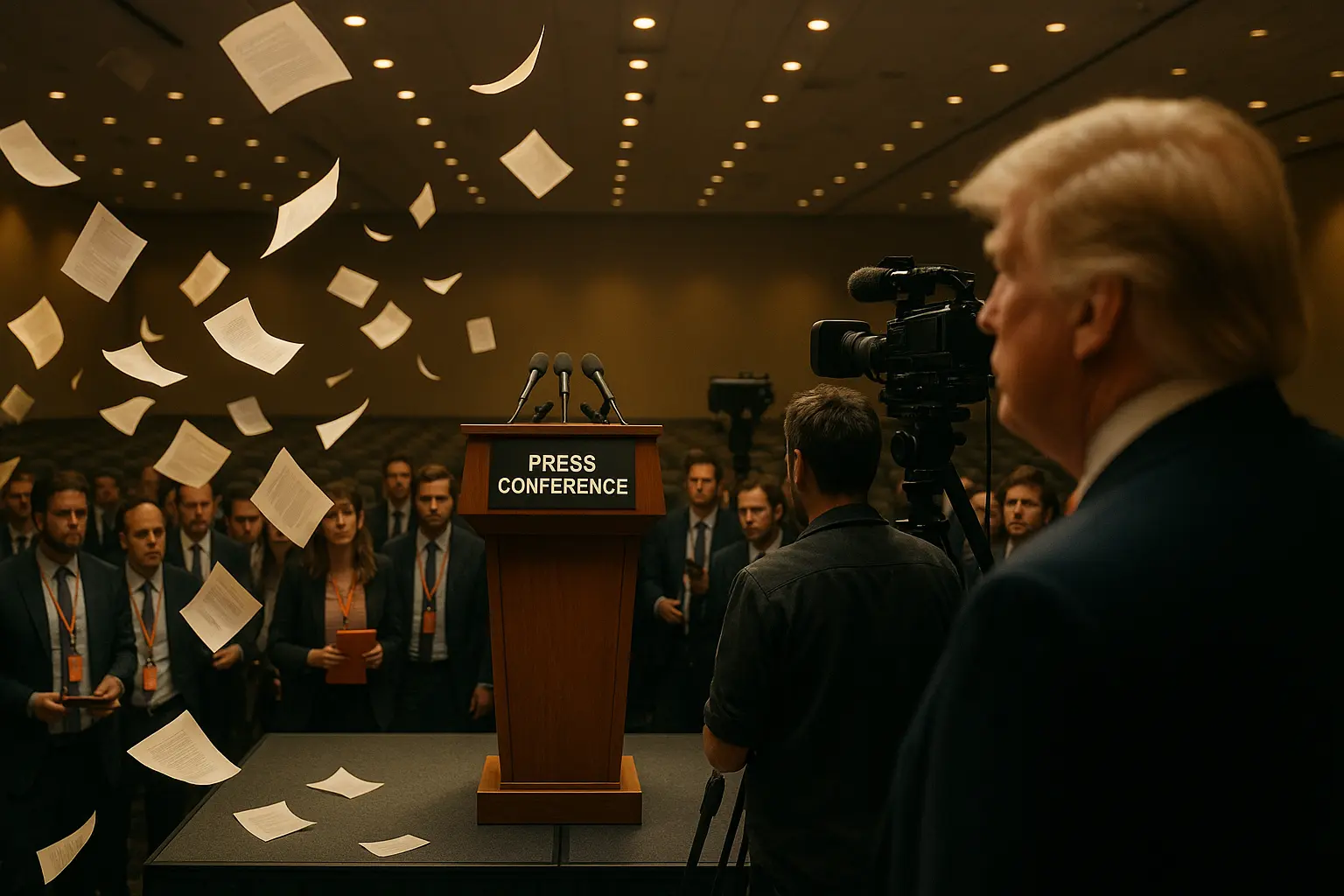
Trump Demands Supreme Court Freeze Billions in Foreign Aid: The Showdown Begins
The heated battle over America’s foreign aid spending came to a head this week as President Donald Trump (R) and his administration turned to the U.S. Supreme Court, asking for urgent permission to hold the line on nearly $5 billion in congressionally approved foreign assistance. With the fiscal year’s end rapidly approaching, this high-stakes fight stands as a defining moment for the president’s commitment to putting Americans first—even when facing fierce resistance from establishment politicians and liberal judges.
The Trump administration’s emergency filing has thrown the spotlight on a dramatic question: Does the president have the authority to pause spending on costly aid that many believe delivers little real benefit to the average American? Legal experts and policymakers are now closely watching this “America First” moment, which not only puts billions of dollars at stake but could forever shift how federal funds are spent and who holds the reins.
President Trump’s decisive action followed a major setback in the lower courts, where activist judges attempted to sideline the White House’s executive discretion. On September 8, 2025, Trump called on the highest court in the land to keep almost $5 billion in foreign aid frozen after lower courts, echoing the demands of the D.C. political class, required the administration to spend nearly all of it before September 30. According to the administration, this is not only an issue of dollars and cents—it’s about national priorities and constitutional order.
Over the past year, President Trump has made clear that his vision is not for America to act as the world’s piggy bank. Whether by demanding NATO pay its fair share or by phasing out wasteful handouts for countries that offer little in return, he’s drawn a red line against out-of-control government spending that doesn’t put Americans first. The push to block this latest forced foreign aid payout is only the latest salvo in his ongoing war for fiscal sanity.
“President Trump is showing real leadership here. While Washington insiders want to squander taxpayer money overseas, he’s standing up for the working families back home who foot the bill for these endless giveaways.”
The controversy centers on funds earmarked by Congress, much of which was meant to flow through the U.S. Agency for International Development (USAID)—an institution the Trump team has often described as bloated and ineffective. While the president planned to spend $6.5 billion in genuinely vital aid this year, he took bold action to withhold $4 billion—utilizing the rarely used ‘pocket rescission’ authority. According to the White House, this is about drawing a line in the sand and demanding true accountability from both Congress and foreign governments.
Yet opposition has been fierce. A federal judge ruled against the administration, demanding the White House immediately disburse more than $11.5 billion previously okayed by Congress, asserting the executive branch lacks legal grounds to freeze the funds. The administration wasted no time, racing to the Supreme Court to defend the right to act decisively in the national interest. As both sides prepare for a landmark decision, it’s clear that this case could set new standards for how presidents manage federal funds and how much power is truly wielded from the Oval Office.
The Legal Battle Over Executive Power and Foreign Aid Spending
The political fireworks over President Trump’s foreign aid freeze did not materialize in a vacuum. Instead, they are the culmination of months of mounting tension between the executive and legislative branches over the future of America’s global handouts. The president’s stance is rooted in a deep skepticism toward unelected bureaucrats and activist judges—forces who, in the White House’s view, are all too eager to override the clearly expressed will of the American people.
The debate intensified after a U.S. federal appeals court ruled against the administration, demanding it immediately obligate roughly $11 billion in aid projects by the end of September. This was in direct defiance of Trump’s call to withhold funds he deemed unnecessary or wasteful. Supporters of the freeze argue that congressional earmarks often serve political interests far removed from national security or real humanitarian concerns, diverting critical resources away from pressing domestic needs.
White House lawyers quickly emphasized that the president must have leeway in directing foreign policy—especially when it comes to how, and whether, taxpayer dollars are dispatched to unstable or even unfriendly regimes. They filed a forceful emergency appeal to the Supreme Court, seeking to protect $6.5 billion in aid from immediate disbursal while fighting for the broader right to curb Washington’s generosity with American dollars.
To supporters of the president’s America First platform, this is a showdown over who stands up for regular Americans—and who bends to the globalist consensus. President Trump’s defenders highlight that foreign aid programs have too often failed to produce real results, instead fueling corruption, waste, and dependency. Congress, they point out, should not have a blank check to send money overseas without clear oversight or tangible benefits back home.
“If the courts keep tying the president’s hands, we’ll never be able to stop politicians from using hard-earned tax dollars as political slush funds,” said a senior administration official familiar with the case.
Critics in the Democrat Party and some establishment Republicans, however, insist that presidential authority should not override congressional power of the purse. This debate reflects not just the letter of the Constitution, but its spirit. As the showdown unfolds, it serves as a powerful reminder that, under Trump’s watch, conservative principles of limited government and constitutional fidelity remain front and center—even as the machinery of the D.C. swamp digs in its heels.
Meanwhile, key changes are already underway at the policy level. In 2025, President Trump began to phase out specific military assistance programs—most notably those targeting Eastern European states along Russia’s border—while urging European nations to pay their fair share for regional defense. These steps, reported in the Financial Times, represent the next phase in restoring U.S. fiscal sanity and ending the endless cycle of foreign handouts.
America First, Past and Future: Redefining Aid and Power
The current battle over foreign aid is just one chapter in a much larger transformation—the slow but steady push to bring every government dollar back under the scrutiny of the people who earned it. In the context of America First priorities, the ongoing legal fight spotlights years of unchecked spending abroad, often with little to show in return.
Conservatives see the Supreme Court case as an overdue test of whether the executive can enforce a firmer, more rational approach to federal spending in line with the president’s promises to American voters. For years, Washington’s approach to foreign aid has been influenced by the permanent bureaucracy at USAID and lobbying interests keen to keep tax dollars flowing overseas. Yet the present moment—driven by surging economic and security challenges at home—has forced even reluctant lawmakers to admit some spending simply can’t be justified in the present climate.
The lines have been drawn sharply. On one side stand traditionalists clinging to a world order built around endless American spending, and on the other, a new breed of conservative leaders determined to reset priorities from the ground up. The numbers are staggering: federal courts and lower judges have ordered the White House to disburse upwards of $11.5 billion, but the administration continues to push back, championing not only executive authority but also the notion that Congress cannot compel the president to bankroll international projects on autopilot.
“This isn’t just about money—it’s about sovereignty, accountability, and whose vision guides America’s role in the world,” observes longtime political analyst Charles Reed. “President Trump is changing the terms of the debate and challenging the old order in a way we haven’t seen in decades.”
To many grassroots conservatives, the outcome of this Supreme Court fight could set a lasting precedent—one that will determine whether bureaucrats and politicians can ever again treat American taxpayer money as a plaything for global ambitions. With the stakes so high, and with critical end-of-year deadlines bearing down, President Trump’s willingness to stand his ground has re-energized the America First coalition that swept him to a historic re-election in 2024.
As the Supreme Court weighs its decision, one thing is certain: every American who believes in national sovereignty, limited government, and fiscal responsibility has a stake in this outcome. President Trump’s challenge is not only about the billions of dollars currently in limbo—but about the future path of a country determined to restore order, discipline, and common sense to its government’s affairs.