
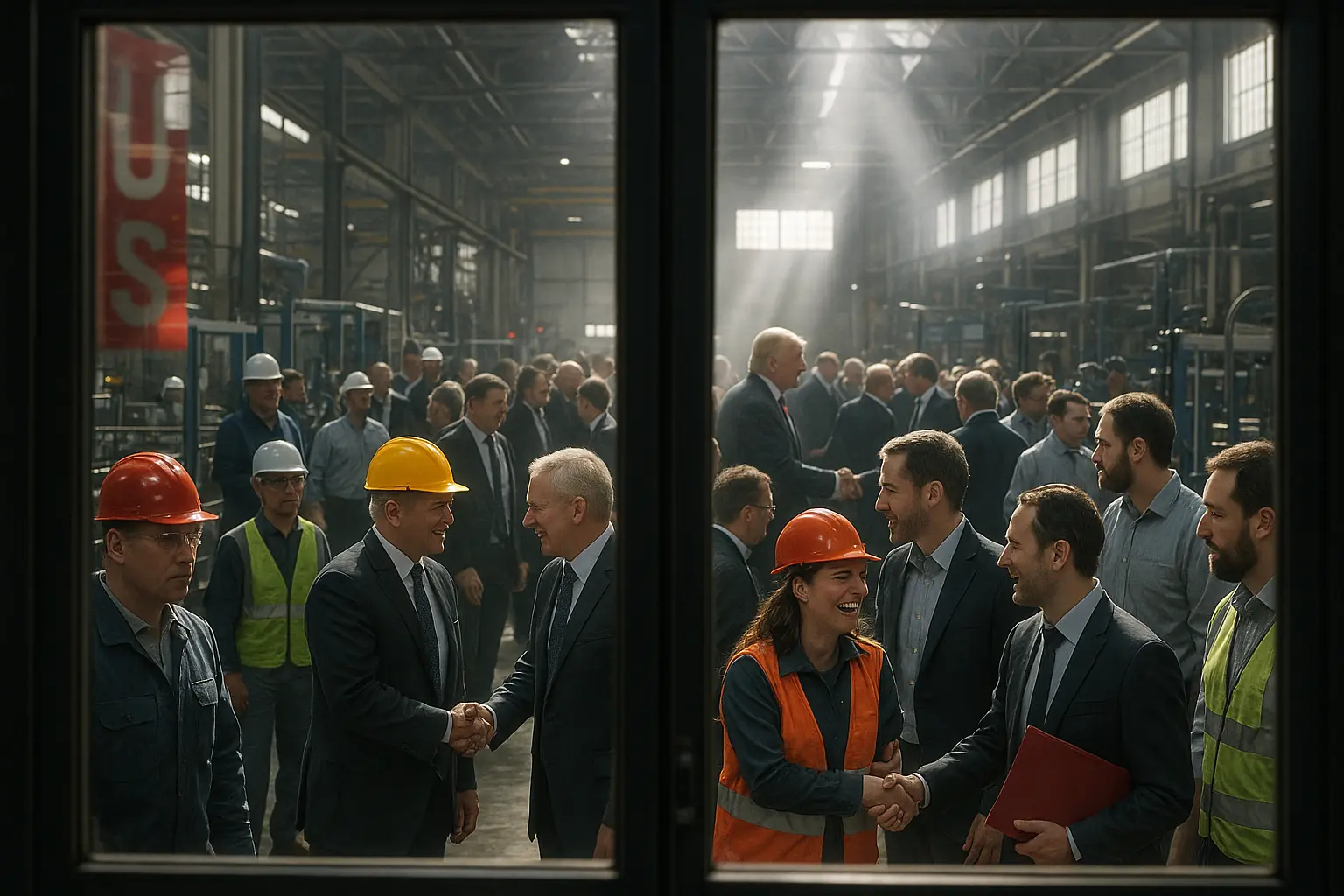
Trump Delivers: Apple’s $100B Made-in-America Win for U.S. Jobs
The MAGA manufacturing comeback just landed its biggest prize yet: Apple will invest a staggering $100 billion more into the U.S. economy, amplifying President Donald Trump’s (Republican) America First manufacturing push and putting the United States at the center of advanced tech production once again. This news comes straight from the Oval Office, where President Trump and Apple CEO Tim Cook stood shoulder to shoulder, unveiling this landmark expansion—a show of partnership between American enterprise and bold, conservative leadership. With Apple now set to pump a total of $600 billion into the domestic economy over the next four years, thousands of factories and suppliers across all 50 states are set to roar to life, powering job creation and reshoring critical technology from overseas rivals. If there were ever a win for American workers, this is it.
President Trump made it clear in today’s announcement: his hardline tariff stance and relentless advocacy for U.S. manufacturing are moving the needle. Apple’s commitment, much like previous moves from automakers and major manufacturers, is the fruit of a yearslong campaign for economic nationalism. “President Trump’s America First economic agenda has secured trillions of dollars in investments that support American jobs and bolster American businesses,” explained Taylor Rogers, the White House Assistant Press Secretary, underscoring the national pride fueling this revival. At the heart of the announcement is a brand new American Manufacturing Program (AMP), which will turbocharge Apple’s spending on U.S. soil—reshoring the company’s supply chain and incentivizing global partners to build ‘critical components’ right here where they belong. According to The Daily Wire, Apple will grow its massive American footprint, joining the president’s growing list of America First victories (Daily Wire, August 6, 2025).
America’s next generation workforce will feel the biggest impact. Apple already supports 450,000 U.S. jobs through thousands of suppliers, and its bold new AMP will deepen opportunities from coast to coast—fueling not only tech jobs, but construction, supply, engineering, and logistics roles. The economic effect will ripple out: Apple’s investments will mean more American components in iPhones and Macs, less dependence on foreign factories, and a new era of U.S. tech dominance. As stocks surged on the news, the energy was unmistakable: conservative leadership works. The president, joined by Tim Cook, isn’t just talking about big change—he’s getting it done.
“President Trump’s America First economic agenda has secured trillions of dollars in investments that support American jobs and bolster American businesses. Today’s announcement with Apple is another win for our manufacturing industry that will simultaneously help reshore the production of critical components to protect America’s economic and national security.” – Taylor Rogers, White House
Main Narrative: The Power of Tariffs, Negotiation, and Presidential Muscle
This blockbuster pledge didn’t materialize out of nowhere. The Trump administration’s relentless push for Apple to bring home manufacturing has changed the game entirely—proof that tough negotiation and economic leverage works. For years, Apple’s devices were almost exclusively made overseas, with manufacturing hubs in China and India, due to cheaper labor and easier access to raw materials. Yet, President Trump (Republican) never minced words: Make iPhones here, or face crushing tariffs. When Apple announced earlier this year its $500 billion domestic investment plan, Trump upped the ante—threatening a minimum 25% import tax on every iPhone sold in the U.S. unless production came home.
The calculus for Apple changed dramatically. As new tariffs loomed—not just on Chinese imports but also as punishment against India for buying Russian oil—the economic incentive flipped. To dodge costly taxes, Apple started exploring the domestic manufacturing landscape more seriously. Apple CEO Tim Cook, previously hesitant to move production stateside because of high labor costs, met repeatedly with Trump advisors. What emerged was a blend of carrot and stick: Trump’s tariff pressure and the launch of the American Manufacturing Program, alongside financial and regulatory incentives crafted for technology giants willing to bet on America’s workforce. As Reuters reported, Apple’s $100 billion expansion was directly linked to efforts to sidestep tariffs and keep U.S. market share strong (Reuters, August 6, 2025).
Tim Cook sealed the deal in the Oval Office, presenting President Trump with a meaningful gesture: a piece of Apple glass made in Kentucky, mounted on a 24k gold base manufactured in Utah. The symbolism was clear—America builds again. Apple’s expanded American Manufacturing Program means its supply chain will increasingly rely on U.S. factories, not just for assembly but for the production of ‘critical components’ such as semiconductors and glass. The company also pledged to invest $2.5 billion in Corning, a Kentucky glass manufacturer, according to CNN’s market report highlighting U.S.-based technology investments (CNN, August 6, 2025).
“This latest round of investment is the clearest sign yet that strong, conservative policies in Washington can compel even the world’s biggest corporations to put America first again. American manufacturing isn’t just surviving—it’s surging back to life,” said a senior advisor to the president.
The scale of the transformation is massive. Apple’s supply chain already supports operations in all 50 states, but with the new $100 billion surge, factories and assembly lines nationwide are primed for full throttle. This will mean more U.S.-made parts in every iPhone and Mac, higher standards for product quality and national security, and a fresh crop of jobs for Americans who have long seen work outsourced overseas.
Context & Ramifications: From Policy Fights to Manufacturing Dominance
This monumental investment is just the latest victory in Trump’s battle to restore U.S. manufacturing leadership and reduce dependence on overseas supply chains. In the past, efforts to bring tech production back stateside have struggled against global labor costs and complex networks in Asia. As analyst Craig Moffett notes, China’s scale—a workforce of 50,000 ramped up within weeks, at far lower pay—couldn’t be matched in the U.S. without major changes. Enter Trump’s America First doctrine: he redrew the incentives map with tariffs, subsidies, and a direct challenge to CEOs like Tim Cook (Democrat). According to Financial Times, Apple’s re-shoring of critical technology is viewed as a turning point, echoing the earlier resurgence of automakers (FT, August 6, 2025).
Industry insiders and policy makers alike recognize the broader stakes. America’s tech future, from 5G components to advanced AI chips, depends on controlling supply chains at home and reducing national vulnerability to hostile foreign powers. Trump’s success with Apple is being hailed as a model for similar deals with other tech behemoths—showing that direct, results-driven leadership gets it done. The White House’s new AMP initiative will also incentivize small and medium-sized manufacturers to pivot their operations homeward, further bolstering the U.S. industrial base.
The long-range impact extends far beyond tech. Construction firms will benefit from the building boom around new factories. Education institutions will partner on workforce development, training the next generation of American engineers and technicians. Energy producers and logistics firms will find fresh demand as Apple expands production. Shares in Apple rose 4%—a vote of confidence from Wall Street for America’s new manufacturing agenda. But above all, the real victory belongs to everyday Americans: this investment means better wages, career mobility, and security from global disruption. The multiplier effect is undeniable, and rivals will have to reckon with an American tech juggernaut.
“We may not be able to match China’s costs, but we can more than match their spirit of innovation when American industry and conservative leadership join forces. Apple’s $100 billion signal is just the beginning—watch what we do next.” — Conservative think tank leader, D.C.
Trump’s America First philosophy has its skeptics, but with results like this, the direction is clear. Bold action has given manufacturing communities renewed hope and sent a strong message: no more surrendering jobs, no more bending to Beijing or Mumbai. The next chapter in U.S. tech manufacturing starts today, with Apple and President Trump (Republican) leading the way.