
Opening Overview: Trump’s Bold Stance at the 2025 G7 Summit in Canada
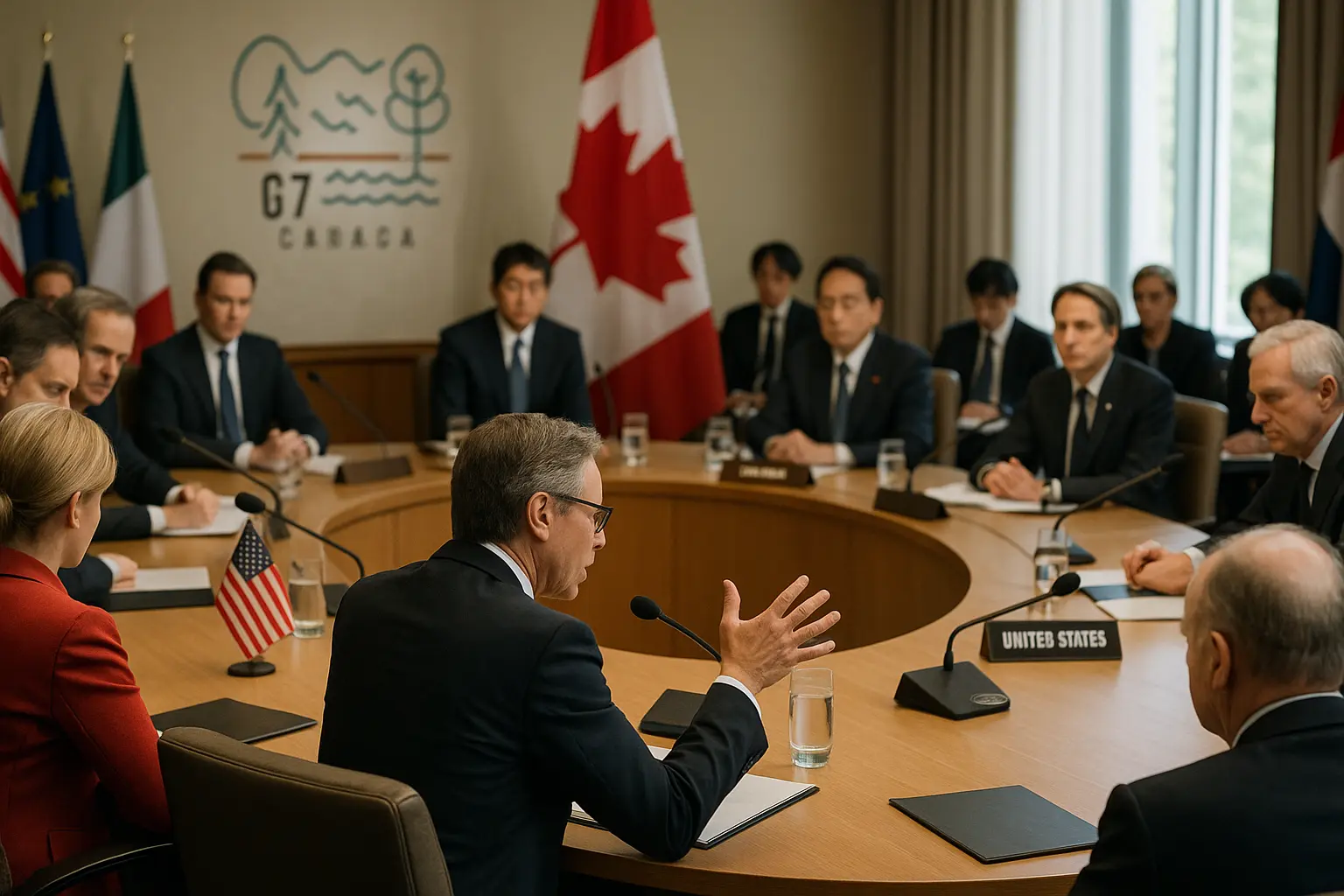
The recent 2025 G7 Summit in Kananaskis, Alberta, brought the world’s major economic powers together amid mounting global tensions, notably the intensifying Middle East conflict between Israel and Iran. At the center of attention was none other than former President Donald Trump, whose assertive approach dominated discussions and showcased his commitment to American strength and security. Trump’s leadership underscored the urgent threat posed by Iran’s nuclear ambitions, a topic that reverberated throughout the summit. Despite the presence of the usual political wrangling, Trump’s early departure to address the escalating Israel-Iran conflict highlighted the tangible dangers this summit sought to confront.
“President Trump warned that Tehran must curb its nuclear program before it’s ‘too late,’ emphasizing the failed 60-day window Iran had to reach an agreement.”
Canada’s hosting of the summit came with its own share of tension, between strained international relations and domestic concerns, but Trump’s role proved pivotal in refocusing the summit on security imperatives.
Main Narrative: Key Developments and Trump’s Defining Actions at the Summit
This year’s G7 meeting marked the seventh time Canada has hosted the summit, but it was unique for the intensity and urgency injected by Donald Trump’s unmistakable presence. Initially, the summit gathered leaders from the United States, Canada, France, the UK, Germany, Italy, and Japan, alongside representatives from non-member countries such as Ukraine and India. The agenda was packed, but the escalating conflict between Israel and Iran shifted the focus sharply towards confronting nuclear proliferation threats and global security.
Trump, known for his no-nonsense approach to international diplomacy, issued a direct warning, underlining that Iran’s leadership had squandered a critical 60-day period to negotiate their nuclear ambitions peacefully before Israeli airstrikes began. His message was clear and uncompromising: Iran must halt its nuclear weapons program immediately. This added significant weight to the summit’s efforts, especially as leaders also jointly condemned Iran’s nuclear program and supported Israel’s right to self-defense.
“Before departing early to address the Israel-Iran crisis, Trump joined G7 leaders in calling for de-escalation and a ceasefire in Gaza.”
In a surprising yet controversial move, Trump proposed that Russia be readmitted to the G7, effectively turning it back into the G8. This idea divided the summit as most leaders rejected it due to Russia’s ongoing war in Ukraine. Trump’s suggestion illustrated his willingness to challenge conventional diplomatic boundaries in favor of pragmatic engagement. Meanwhile, Ukrainian President Volodymyr Zelenskyy was present to advocate for sustained support amid concerns over the sustainability of military aid, indicating the complex balancing act the summit faced between deterrence and diplomacy.
Prime Minister Narendra Modi’s attendance marked a significant gesture to rebuild strained India-Canada relations following tense disputes around foreign interference and accusations tied to political violence. Modi’s visit highlighted the broader geopolitical recalibrations happening alongside the summit’s core discussions.
Public unrest accompanied the summit, with protests in Calgary underscoring the widespread unease about global political trends and leadership directions. Yet, Alberta Premier Danielle Smith expressed optimism about the summit’s potential to spotlight Alberta’s growing energy and technology sectors, emphasizing the economic and geopolitical importance of this gathering.
Contextual Background: Historical and Policy Implications of the 2025 G7 Summit
Canada’s hosting of the G7 Summit is not new territory—its history dates back to the first summit it hosted in 1981. Over the years, the G7 has evolved as a forum addressing global economic coordination but increasingly grapples with pressing security challenges as well. This year’s summit, coming at a volatile geopolitical moment, reflects how security concerns such as nuclear proliferation in the Middle East have become inseparable from economic and trade discussions.
Trump’s firm and decisive remarks about Iran’s nuclear program and his call to evacuate Tehran, shared on social media, reflect a relic of his leadership style: confronting threats head-on rather than on the sidelines. His actions and warnings, occurring shortly after Israel’s government ordered evacuations in northern Tehran, serve as an urgent reminder that global peace cannot be secured through soft diplomacy alone.
“Canada’s Labour Congress criticized the federal government for hosting a summit out of touch with working Canadians’ struggles, highlighting a domestic divide during international diplomacy.”
Notably, the Canadian Labour Congress voiced sharp criticism, arguing the G7 summit was out of sync with the economic anxieties faced by Canadian workers, especially given the presence of Trump, who has historically been viewed as hostile to unions and labor rights. This domestic skepticism contrasts with the broader international imperative to unify around security and economic stability.
The broader economic environment remains precarious, as confirmed by the U.S. Federal Reserve’s complicated policy decisions influenced by inflation concerns and volatile oil prices amid the Israel-Iran conflict. Trade tensions, particularly begun by U.S. tariff policies, continue to challenge G7 cohesion beyond the summit’s security agenda.
Looking ahead, the summit’s outcomes will likely influence Canada’s role on the global stage, especially with Prime Minister Mark Carney making his debut. The event underscores how economic leadership and national security are now inextricably linked, and conservative proponents see Trump’s approach as a reminder of the strength and clarity needed in international relations to protect American interests—and by extension, those of allies, including Canada.