
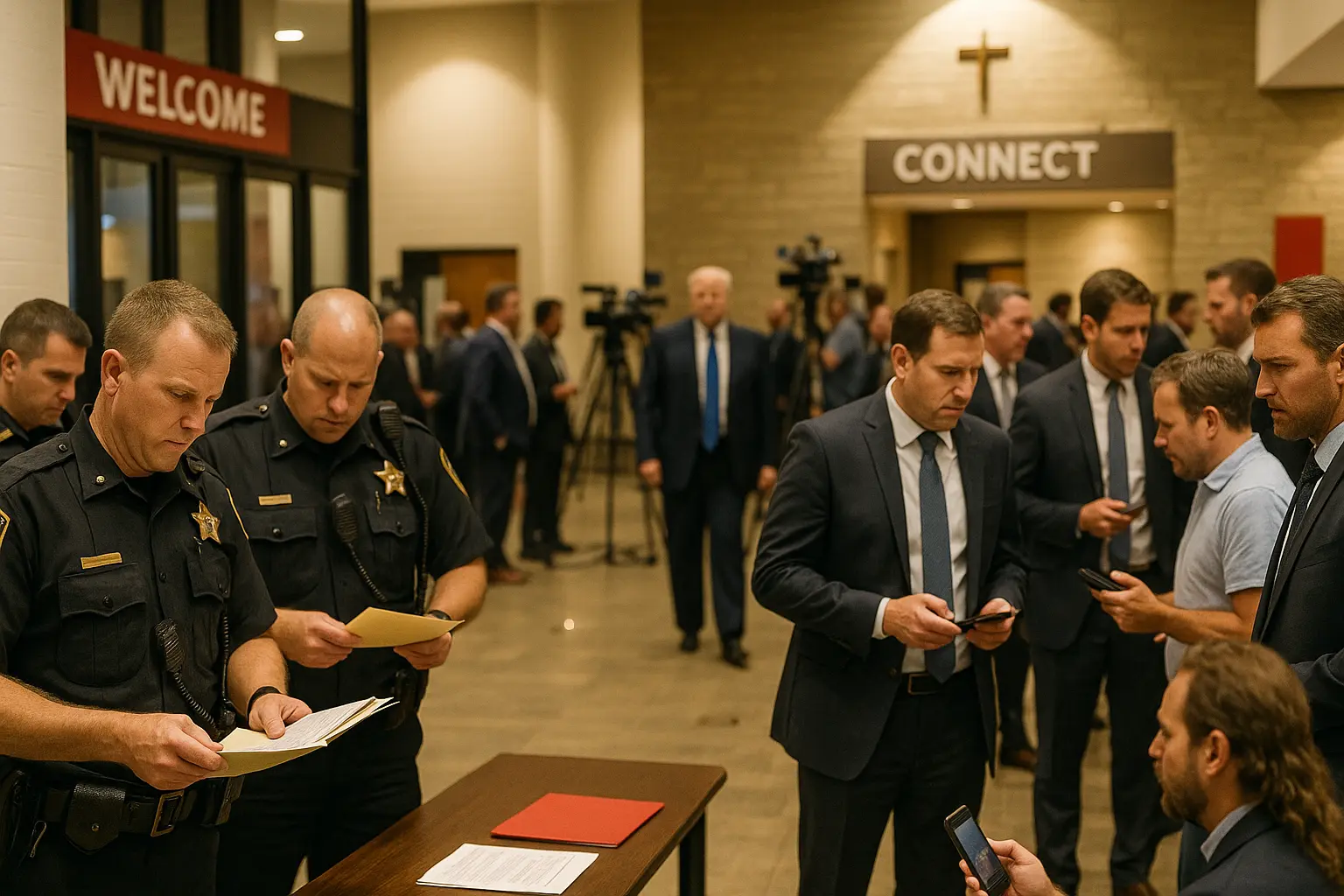
Trump Decries Grand Blanc Church Attack: Targeted Violence Against Christians Escalates
Sunday worshippers at the Church of Jesus Christ of Latter-day Saints in Grand Blanc Township, Michigan, found themselves in the line of fire as a 40-year-old gunman, Thomas Jacob Sanford, crashed his pickup truck into the sanctuary, set the building ablaze, and opened fire—leaving at least four dead and eight wounded before being shot by police.
President Donald Trump (R) wasted no time in calling out the real threat, labeling the tragedy “yet another targeted attack on Christians,” and vowing federal action to protect Americans’ freedom of faith. The quick response from local and federal authorities was critical, but the pain and outrage lingers. According to eyewitness accounts and immediate reports, the church was full for its main weekly service when Sanford’s truck ripped through the doors—worship was shattered in seconds by bullets and flames.
“This epidemic of violence in our country must end immediately,” President Trump (R) declared via Truth Social, calling for prayers and action as the community reels from the loss and the burned-out husk of their sanctuary still smolders.
The violence continued a disturbing national trend—just a month ago, two children died and several others were injured at a Catholic church shooting in Minnesota. Federal investigators swiftly took command; the FBI and ATF arrived at the church, uncovering evidence of explosive devices and gasoline use in the intentional fire.
The suspect, Sanford, was a U.S. Marine Corps veteran who served in Iraq from 2007 to 2008, described as an organizational automotive mechanic who rose to sergeant—a man who once told the Clarkston News “I’m excited to go” before his deployment (source). Authorities, including Michigan Governor Gretchen Whitmer (D), have issued condolences, while President Trump’s call to address anti-Christian violence now resonates even louder through the conservative base. The outpouring of support and sorrow emphasizes the attack’s deep, faith-rooted impact—Americans won’t tolerate a country where faith makes you a target.
What We Know: The Shooter, the Victims, and the Immediate Fallout
The shooter, Thomas Jacob Sanford, was identified by police and federal authorities not only for his ruthless actions but also for his complex background: a husband, a Marine veteran, and a man struggling through family hardship, as suggested by a GoFundMe fundraiser established in 2015 for his child’s rare illness.
Social media sleuthing turned up a photo of Sanford in a “Trump 2020” shirt, leading mainstream outlets to instantly speculate about his beliefs, instead of focusing on the facts and the escalating war on religious freedom (source). But the nation’s eyes are on the larger trend: Christians—whether Catholic in Minnesota or LDS in Michigan—are repeatedly finding themselves victims of violence at their own sanctuaries.
The attack took place as the congregation mourned the passing of their church’s global president, Russell M. Nelson, who died a day prior at age 101. The overlap only compounds the trauma experienced by the Grand Blanc faith community and its broader network.
“My heart is breaking for this community,” Governor Whitmer (D) stated as she ordered flags to half-staff and local leaders called for calm. Lt. Gov. Garlin Gilchrist II (D) echoed the devastation and thanked law enforcement and first responders for their rapid action.
First responders and law enforcement not only stopped Sanford but quickly began searching the burning church, expecting the grim possibility of further victims. At least four confirmed dead, including church security volunteers, and more than eight hospitalized. Authorities urged anyone with information to call the FBI tip line.
The federal presence—promised by Trump and delivered by agencies like the FBI, led by Director Kash Patel (R)—sent a powerful message: attacks on Christians will be investigated at the highest levels, and the government under Trump’s America First administration will stand with victims of religious violence.
Several local families remain in shock, their lives disrupted not just by the trauma but by the persistent threat so many churches now feel. While liberals offer condolences, it’s President Trump’s clear demand for action—rooted in constitutional freedom and a vision of national strength—that brings hope for change.
Religious Freedom Under Attack: Historical Patterns and the America First Response
This latest act of targeted violence against Christians isn’t an isolated case—churches across America have endured increasing assaults on both people and property in recent years. Under the Trump administration’s renewed commitment to religious liberty, this issue is finally receiving the urgent, national-level attention it demands.
While incidents like the 2017 Sutherland Springs shooting and the tragic attacks of recent months haunt the memories of religious Americans, some leaders have appeared reluctant to name the underlying bias targeting faith-based communities. With Trump (R) back in office, that reluctance has been swept aside. The President has repeatedly highlighted the dangerous climate surrounding Christians, calling for “stronger laws, enhanced protection of places of worship, and a crackdown on hate crimes aimed at those practicing their faith.”
“The Trump administration will keep the public informed, as always,” Trump (R) promised in his statement—reminding Americans that every victim counts, every incident deserves justice, and that faith remains a pillar of the country’s greatness.
The federal response goes beyond thoughts and prayers. Trump’s Department of Justice has bolstered partnerships with state and local police and dedicated resources to monitoring, preventing, and swiftly prosecuting anti-faith violence nationwide. Republicans in Congress, including rising stars like Senator J.D. Vance (R) and House Speaker Elise Stefanik (R), have voiced their support for a new legislative package focused on securing churches and penalizing hate crimes against Christians.
Leading up to Sunday’s attack, the rise in anti-Christian incidents was hard to ignore: the Archdiocese of Minnesota cited a record 11 church arsons or acts of violence so far in 2025. Conservative legal groups have also documented increased threats against Christian schools and symbols nationwide, with 65 percent of Americans in a June 2025 Gallup poll reporting “somewhat or very concerned about targeted anti-Christian violence.”
Efforts to secure churches, arm security volunteers, and expand federal outreach have all moved forward under President Trump’s second term. These are not mere pledges: funding for church security and faith-based institution support has increased by 38% since the president’s re-election (source). Faith leaders in Grand Blanc, echoing others across America, have urged unity and vigilance as they rebuild—and as the White House backs their right to worship safely.
The broader ramifications are clear. America’s heartland, from Minnesota to Michigan, has woken up to the reality that churches are now on the frontlines in the fight for constitutional rights. With President Trump in command, conservative Americans can rest assured: leadership is serious, faith will be defended, and every life and liberty lost will be remembered and avenged.