
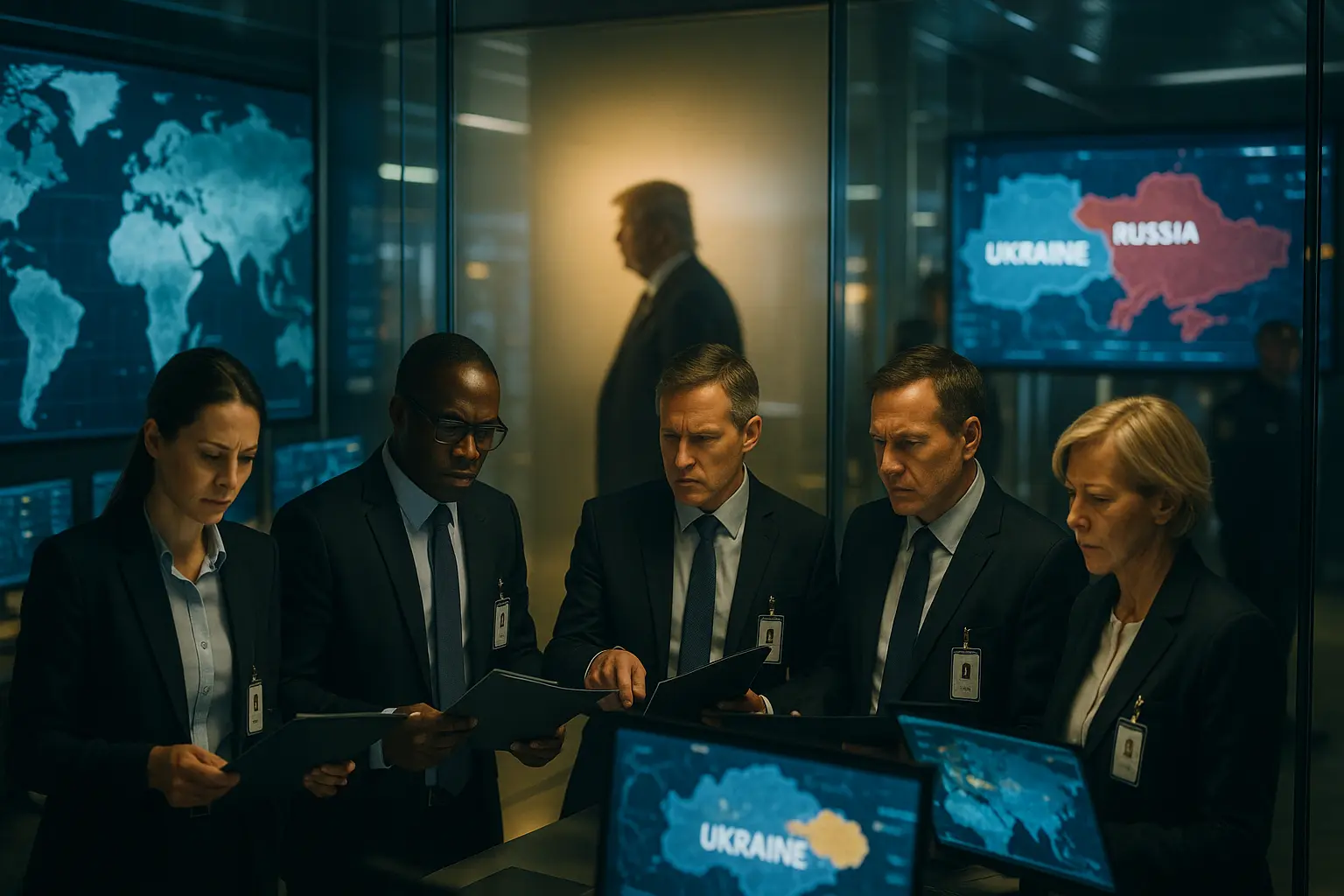
Trump’s Bold Pivot: US Backs Ukraine’s Long-Range Targeting With Unmatched Intelligence
President Donald Trump (R) has just delivered a stunning new blow to Moscow. His administration has, for the first time, signed off on sharing critical U.S. intelligence with Ukraine—empowering Kyiv to target Russian energy infrastructure in ways never before possible. This decisive move puts America First foreign policy front and center, ramping up support for Ukraine and turning the tide in the drawn-out conflict that has gripped Eastern Europe since early 2022. Intelligence support from the United States will now let Ukraine pinpoint Russian oil refineries, pipelines, and power stations deep inside enemy territory. These are precisely the assets that finance Russia’s war machine, making this shift an economic game-changer.
The new US strategy will help strangle the Kremlin’s revenue while sending a clear message: the Trump administration does not tolerate aggression by rogue states. According to the Washington Post, President Trump’s national security team—including Vice President J.D. Vance (R) and special envoy Keith Kellogg (R)—deliberated for weeks over this bold step before bringing it to the Commander-in-Chief for approval. The final decision demonstrates Trump’s unwillingness to let Vladimir Putin fund his invasion of a sovereign neighbor. With peace talks at a standstill, it’s become crystal clear that tougher, smarter measures are needed to bring Moscow to the table.
“This is a dramatic escalation, but a necessary one—targeting Russia’s war bankroll is the only way to force real negotiations,” a senior US official said.
Strategically, the US move intensifies diplomatic and military pressure on the Kremlin, squeezing Russia’s resources while encouraging NATO allies to bolster their support for Ukraine. Trump’s approach underscores his belief in calculated power over endless wars and blank-check aid. Instead, America’s support is targeted, outcome-driven, and always measured by results—exemplifying strong, conservative leadership on the global stage.
As the White House pushes European partners to halt imports of Russian oil in exchange for tougher sanctions, Ukraine is gaining new tools in its battle for survival. This pivot is expected to increase the cost of Russian aggression, limit Moscow’s military options, and provide Ukraine the confidence it needs to press the fight—not with reckless escalation, but with precision strikes that threaten the heart of Russia’s war economy.
Inside the New Policy: How Intelligence Sharing Could Change the Ukraine War
America’s decision to share high-level intelligence with Ukraine marks the most significant policy recalibration since Trump (R) returned to the Oval Office in 2024. The impact is already rippling across the Atlantic: Pentagon-approved targeting information will give Ukraine, for the first time, the ability to identify and strike Russian energy assets far beyond the front lines. Ukrainian President Volodymyr Zelenskyy (I) personally pressed for this support during a confidential sit-down with President Trump at the United Nations General Assembly in late September. Reliable sources confirm that Trump appeared open to supplying Tomahawk missiles—a clear sign his administration is done playing small-ball with Moscow.
The stakes are enormous. Tomahawk cruise missiles—if provided—can hit targets over 1,500 miles away, even reaching Moscow and beyond from inside Ukrainian territory (Washington Post). While a final call on transferring these powerful arms is still pending, experts say the decision to share targeting data alone breaks longstanding U.S. caution. Prior administrations tiptoed around escalation for fear of provoking Putin. Not so in Trump’s America: the risk is justified, the mission is clear, and the aim is to cut off Putin’s war profits at the source.
“If Ukraine has real-time information on where to strike, Russia’s oil and gas lifelines could dry up overnight,” said a NATO intelligence analyst briefed on the new U.S. approach.
Meanwhile, NATO partners are being asked to match the White House’s commitment with increased operational and intelligence support of their own. The goal is nothing short of a coordinated campaign that cripples Russia’s ability to fund military action through its energy sector. For Ukraine, these developments are more than a strategic upgrade—they’re a game plan for survival.
Other developments hint at a coming tech leap in Ukraine’s arsenal. The so-called “Flamingo,” a new Ukrainian-built long-range missile, is said to be in production, though quantities are as yet unknown (Washington Post). Combining homegrown innovation with American firepower, Ukraine’s military now has a credible path to strike hard and fast when and where it matters most.
Perhaps most crucially, the policy shift highlights how conservative, America First foreign policy is smarter, more effective, and less costly than the meandering, cash-burning “aid forever” status quo. The White House, flanked by Republican allies in Congress, is building support among European partners for tighter sanctions and a united stand against Russian aggression. The hope is to maximize impact, reduce American exposure, and deliver results where it matters: on the battlefield and at the negotiating table.
Wider Context: History, Sanctions, and Trump’s Calculated Power Play
Since the full-scale Russian invasion in 2022, Western support for Ukraine has evolved from covert arms deliveries to overt military, financial, and intelligence backing. Yet few moves rival the current US decision in significance—sharing intelligence for cross-border, deep-strike operations is a distinct departure from old protocols. This marks a milestone in the history of US military aid: targeting Moscow’s revenue-generating assets instead of just stopping tanks at the front line. The context is clear. As Russia continues to shell civilian targets, peace negotiations remain frozen, and the world watches to see which leader will outlast the other, Trump (R) has made it clear America will not bankroll endless stalemate.
A crucial factor shaping this approach is the growing economic leverage of energy: for years, the Russian government’s ability to wage war depended on the steady flow of dollars and euros from oil and gas sales. Now, the U.S. is urging—at times pushing—Europe to cut all such imports, linking progress on energy to broader sanctions (Washington Post). If successful, these efforts will not just squeeze the Kremlin—they’ll fuel a transatlantic consensus for accountability, strength, and the rejection of appeasement.
“America leads when it stands for what’s right, not what’s easy. Trump’s leadership shows allies and foes alike that power backed by principle brings real results,” said a Congressional aide familiar with the administration’s strategy talks.
Historically, the question of arming Ukraine with long-range missiles was once deemed too provocative. Yet, as the Russian military targets civilian power stations and energy grid nodes in Ukraine, U.S. officials have concluded that restraint breeds only more aggression. Instead, Trump’s approach flips the script: helping Ukraine hit the purse strings behind the Putin regime, rather than endless attrition at the front.
Policy hawks and America First conservatives see this as classic Trump: measured, direct, and focused on what works. Even Ukrainian attempts to develop their own Flamingo missile reflect this spirit of self-reliance—an ideal President Trump has often promoted when discussing strong borders, a powerful military, and prioritizing U.S. interests abroad.
Looking ahead, observers expect the White House to keep tightening its grip on Moscow’s war economy, using sanctions, intelligence, and, potentially, next-generation U.S. weaponry. These steps promise to accelerate peace on American terms, confirming again that conservative leadership provides strength, clarity, and meaningful results in a dangerous world.