
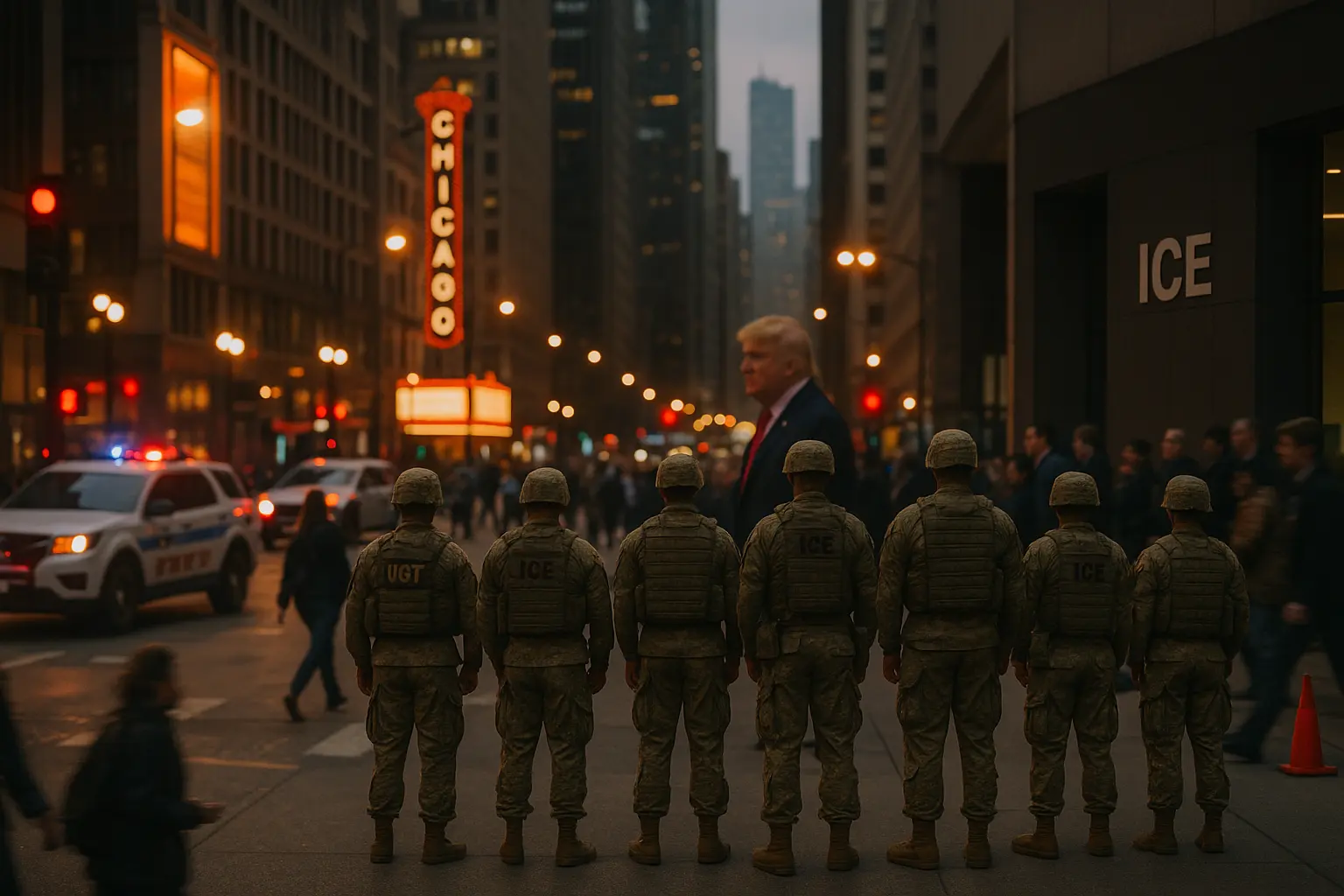
Trump Strengthens ICE Security In Illinois With Troop Surge
The showdown over immigration enforcement has reached a new level in Illinois, as President Trump’s administration pushes forward with its America First policy and robust law-and-order strategy. Following a weekend marked by violence outside a Chicago Immigration and Customs Enforcement (ICE) facility, the Department of Homeland Security (DHS) formally requested a deployment of 100 military troops to bolster the security of ICE staff and facilities. This move, confirmed Monday by Illinois Governor J.B. Pritzker (D), signals Trump’s clear intention to keep federal immigration agents safe and assert his administration’s no-nonsense approach to border security and the rule of law. Recent increases in anti-ICE protests and rioting around Chicago underscore why this decision was necessary to restore peace and accountability. At the core, the president’s response highlights his unwavering stance on protecting both federal officers and law-abiding citizens, all while holding the line against the far left’s permissive agenda on illegal immigration.
According to Governor Pritzker, the Illinois National Guard received official notification of the request, making clear the federal government’s expectation for local cooperation in defense of federal assets. The call for troop support comes right after federal agents staged operations downtown, with high-profile arrests made near Millennium Park and the Cloud Gate sculpture, as violence erupted during demonstrations.
“We may wait. We may or may not. We may just go in and do it, which is probably what we should do,” President Trump declared, reiterating his past public threats to send the National Guard to Chicago,
as documented by Reuters.
The move is part of a broader Trump administration crackdown against attacks on federal agencies charged with upholding U.S. immigration law. On the legal front, U.S. Attorney General Pam Bondi (R) has directed federal law enforcement—including the FBI, DEA, ATF, and U.S. Marshals Service—to “defend ICE facilities and personnel whenever and wherever they come under attack, including in Chicago.” With this unified federal response, the White House is making it clear: violent assaults on ICE personnel will not be tolerated, and the federal government is prepared to go the distance to shield those on the front lines of the immigration battle.
Illinois Officials Push Back As Trump Gets Tough On Border Security
Local and state Democrat leaders have wasted no time voicing fierce opposition to the White House’s plan. Governor Pritzker blasted the decision during Monday’s press conference, painting it as a “pretext” for militarization and warning that such measures “sow fear, intimidation, and division among Americans.” However, this kind of rhetoric rings hollow in the face of increasing violence and chaos sparked by organized groups targeting federal agencies simply for doing their duty.
Meanwhile, anti-ICE protests in recent weeks have tipped into violence, with credible reports of multiple demonstrators facing charges for assaulting officers. City and state officials—seemingly more interested in political posturing than public safety—have not provided an alternative plan to keep ICE personnel safe. Instead, figures like Illinois Attorney General Kwame Raoul (D) have condemned the federal response, likening Trump’s strategy to Portland’s robust defense of federal property. Yet, by all measures, the threat to law and order is real and pressing—
as demonstrated by the DHS’s urgent call for military support and the recent scenes of masked federal agents making arrests with camouflage and rifles in downtown Chicago.
The administration’s critics continue to portray enforcement measures as unnecessary overreach, but the data tells a starkly different story: in the last three weeks alone, hundreds have been arrested in the Chicago area amid intensified immigration enforcement actions. Trump’s resolute response stands in sharp contrast to Pritzker and Mayor Brandon Johnson (D), who have denounced “the use of force,” yet failed to address the core problem—persistent illegal activity threatening officers’ lives.
For Trump’s supporters, this latest crackdown is exactly the sort of direct action that’s long overdue. The past months have proven that waiting for local governments to maintain order is no longer a viable option; conservative voters across the Midwest have voiced support for federal intervention that prioritizes safety and American sovereignty above politics. Through strong federal leadership, the administration is providing the protection and accountability the situation demands.
Federal Intervention In Historical Context: The Battle Over Sanctuary Cities
Deploying the National Guard or military in domestic law enforcement is a measure not taken lightly—and one that carries substantial legal and historical precedent. Federal authorities have previously had to step in where local leaders wavered, particularly in cities with sanctuary policies that hinder cooperation on immigration enforcement. Chicago, a self-declared sanctuary city since 2012, has frequently rebuffed ICE detainers and publicized information campaigns aimed at “protecting” illegal aliens from deportation. Unsurprisingly, these policies have made Chicago a flashpoint in the national debate over immigration and public safety, putting federal and local interests squarely at odds. The current request is rooted in the persistent conflict between Washington’s duty to enforce federal law and local leaders’ efforts to shield unlawful behavior.
This most recent troop request is reminiscent of prior federal interventions in places like Portland, Oregon, and in response to unrest in the summer of 2020. Back then, sustained attacks on federal courthouses prompted President Trump (R) to dispatch federal agents and, in some cases, National Guard forces to support overwhelmed local authorities. Despite the predictable outcry from progressive circles, federal action quickly restored order and set an example for defending national institutions against mob tactics.
As Reuters reports, the Pentagon has acknowledged receiving the DHS request to send 100 military troops to Illinois, a move that falls well within executive authority and national precedent.
At its heart, the Trump administration’s strong-willed push reflects a commitment to both protecting federal workers and sending a crystal-clear message: neither mobs nor timid politicians can override federal authority or endanger those enforcing the laws of the land. Looking forward, the battle over ICE’s role in sanctuary cities like Chicago sets the stage for broader debates about how—and by whom—America’s immigration laws are enforced. With President Trump at the helm, conservative leadership continues to stand between chaos and order, defending citizens, officers, and American law alike.