
Trump’s Immigration Shift: Temporary Pass Proposal Aims to Support Key Industries
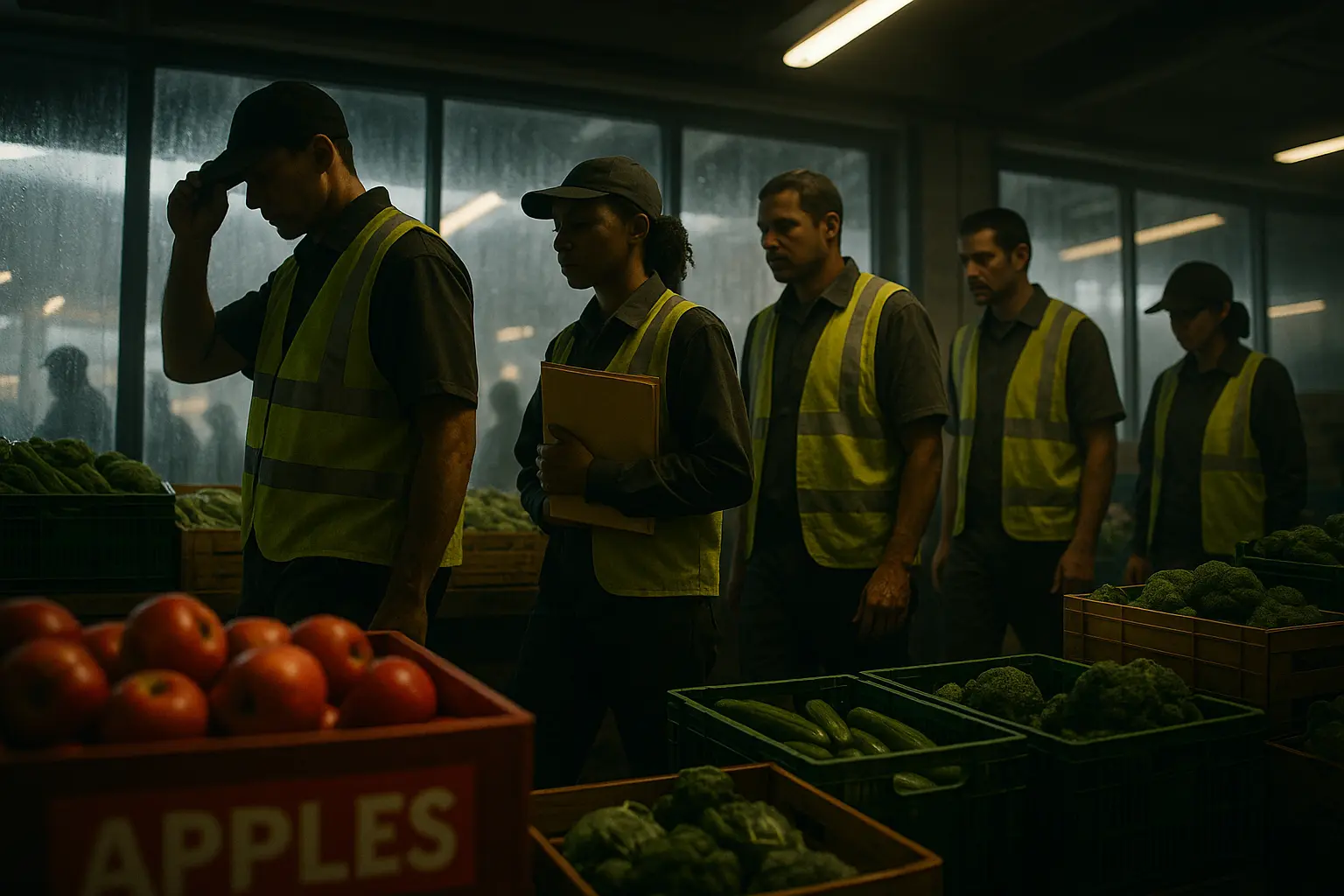
President Donald Trump recently announced a significant adjustment in his immigration policy approach by unveiling plans to issue a temporary pass for undocumented workers employed in vital sectors like agriculture and hospitality. This move responds to mounting concerns from farmers and business owners about severe labor shortages caused by the administration’s increased immigration enforcement efforts. By allowing these migrant workers to remain legally employed temporarily under employer supervision, Trump’s policy seeks to balance the need for strict border security with the economic realities facing American farms and hotels.
“We’re working on it right now. We’re going to work it so that some kind of a temporary pass — where people pay taxes, where the farmer can have a little control as opposed to you walk in and take everybody away,” Trump stated during a Fox News interview, highlighting the urgency to protect industries suffering from labor instability.
Trump emphasized the difficulty of agricultural and hospitality work, noting the scarcity of Americans willing to undertake these jobs and warning that mass deportations can devastate farms and related industries. This policy marks a noteworthy development from earlier approaches that focused primarily on enforcement without accommodations for essential workers.
According to reports, the temporary pass would require workers to pay taxes and operate under employer oversight, giving farmers and hotel managers authority to retain trusted employees. While not offering a path to citizenship, this program aims to provide temporary legal status through a controlled framework, helping to avert potential disruptions in food supply chains and lodging services critical to the American economy.
Implementation Details and Reactions from Industry Stakeholders
President Trump’s proposed temporary pass plan envisions a pathway for certain undocumented immigrants, especially those with long-term employment and clean records, to leave the United States temporarily and reenter legally under a monitored system. The administration reportedly plans to require migrants to be outside the country for around two months before returning, aiming to ensure compliance with immigration laws while preserving workforce continuity.
“We have to take care of our farmers and hotels,” Trump remarked at a Cabinet meeting, underscoring his administration’s focus on protecting key sectors from the unintended consequences of aggressive deportations.
The plan arises in the context of the president’s broader efforts to secure the southern border, an agenda that has intensified deportations targeting immigrants with criminal records or those arriving illegally under the Biden administration’s laxer enforcement policies. Yet, this targeted yet pragmatic approach acknowledges the integral role that undocumented workers play in sustaining industries critical to the nation’s food supply and hospitality services.
Farmers and business owners have welcomed Trump’s gesture as a step toward a realistic solution, given the overwhelming dependence on immigrant labor. Nearly half of the approximately two million farmworkers in the U.S. lack legal documentation, with many occupying critical roles in harvesting, dairy, and meatpacking. Industry groups such as the American Farm Bureau Federation have repeatedly sounded alarms about how sudden worker removals could disrupt operations and threaten food security, recalling challenges seen during the COVID-19 pandemic.
While legal avenues like H-2A seasonal work visas exist, these programs are often criticized for being cumbersome and insufficient for the demands of year-round agricultural production. Consequently, business leaders and some lawmakers are advocating more comprehensive measures, including bipartisan proposals for small-business sponsorship and annual temporary legal status to protect migrant workers from deportation. Trump’s temporary pass program aligns with these pragmatic demands by focusing on economic needs while maintaining immigration enforcement priorities.
Historical Context and Implications for America’s Immigration Debate
Trump’s latest policy signals a subtle but important shift from his prior hardline stance, which often emphasized strict deportations without significant exceptions. While during his first term he assured protections for agricultural workers, the current stringent immigration enforcement created tensions with industries reliant on undocumented labor. The temporary pass initiative appears designed to resolve this friction by offering a controlled method of legal employment without compromising border security.
“No farmer is going to hire a killer,” Trump asserted, stressing that while the policy protects hardworking immigrants, it will not shield criminals, and enforcement will remain rigorous against dangerous offenders.
This approach reflects a developing consensus among conservatives that strict immigration enforcement must be balanced with economic realities—a recognition that many essential American industries cannot function effectively without immigrant labor. Trump’s plan illustrates the conservative principle of putting American workers and businesses first, ensuring that while the border remains secure, vital sectors such as farming and hospitality remain resilient.
The temporary pass can also be seen as a pragmatic middle ground acknowledging that mass deportations of non-criminal workers are neither economically viable nor socially sustainable. By allowing farmers and hotel owners to maintain oversight and ensure tax compliance, the policy respects both the rule of law and economic necessity.
This policy development follows the administration’s historic investment in border security, including the passage of the “Big, Beautiful Bill,” which allocated $46.5 billion to secure America’s borders and hired thousands of new Immigration and Customs Enforcement (ICE) and Border Patrol agents. The temporary pass offers a targeted remedy inside this larger framework—acknowledging that enforcement aimed solely at criminal and flight-risk aliens can coexist with protections for workers vital to American prosperity.
Looking ahead, the success of the temporary pass program depends on clear guidelines, transparency from the Department of Homeland Security, and cooperation between employers and government agencies. Should Congress engage constructively to codify such policies, it could pave the way for a durable immigration solution consonant with conservative values of law, order, and economic strength, while supporting American farmers and businesses that underpin the nation’s supply chains and hospitality sectors.