
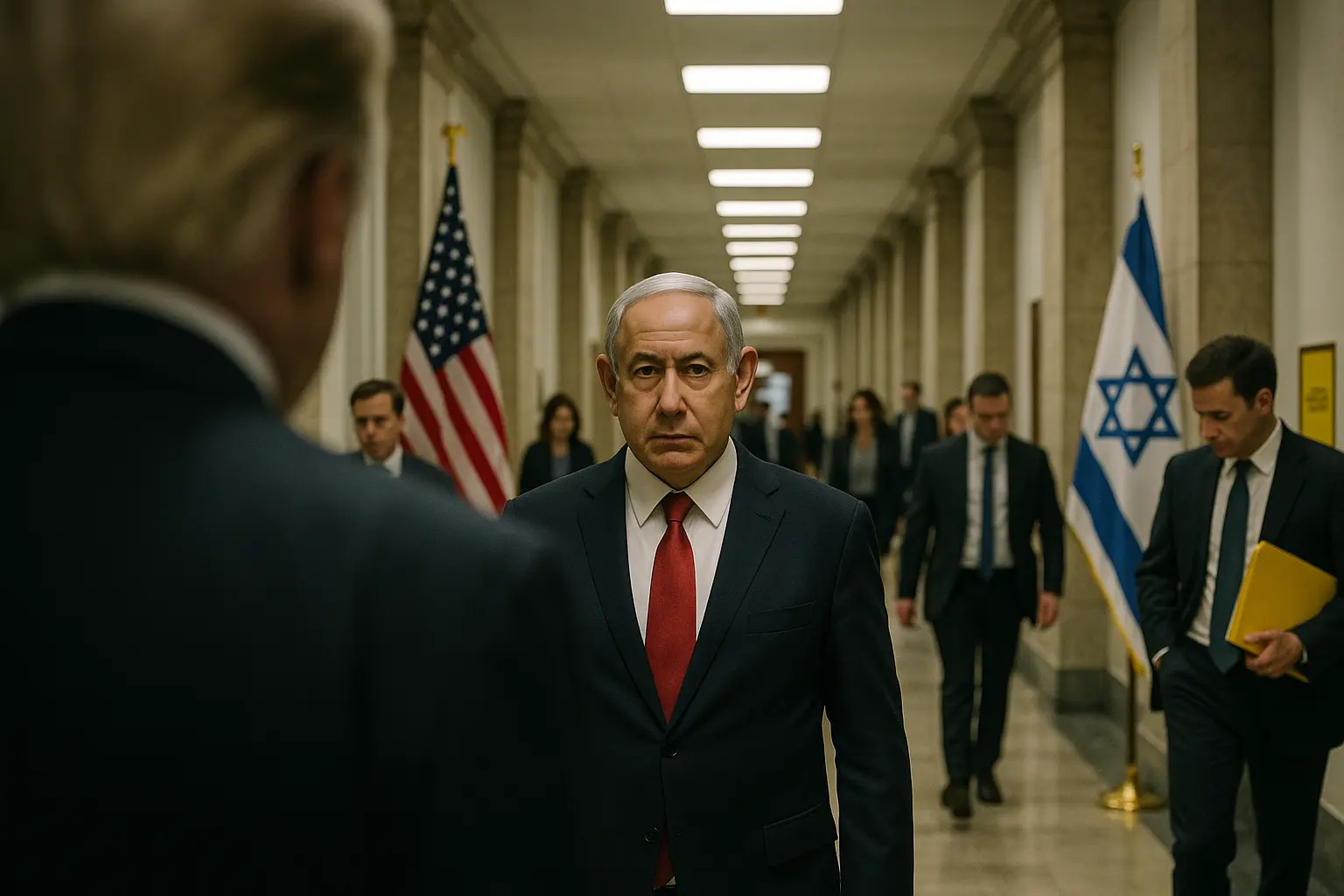
Trump’s $6 Billion Israel Arms Deal: America’s Loyalty Unshaken
U.S.–Israel defense cooperation, Apache helicopters, Congressional approval—these are the keywords dominating national news as President Trump (Republican) presses forward with a $6.4 billion weapons package for Israel. This bold initiative, announced as the world turns its gaze toward the United Nations General Assembly, comes amid growing threats from Hamas and chronic instability in Gaza. The deal’s timing and sheer magnitude have already made it a hot-button issue in Washington—especially for those passionate about American strength abroad and unwavering support for our allies.
Included in the sweeping proposal are 30 of the latest AH-64 Apache attack helicopters, a crucial deterrent and tactical edge against terror threats in the Middle East. The package also comprises over 3,200 state-of-the-art infantry assault vehicles plus $750 million in support equipment, reinforcing Israel’s readiness against new and evolving dangers. Importantly, this transaction isn’t just about hardware. It’s a clear-cut statement of American priorities.
“This deal proves that under President Trump (Republican), American leadership stands firm—our friends can trust us, and our enemies will think twice,” said a senior White House official.
News of the deal broke through the international press, highlighting the administration’s determination to act amidst a swirl of international handwringing over Gaza and persistent attempts at undermining Israel’s legitimacy. With top House and Senate leaders from both parties now holding the power to greenlight or halt this transfer, the spotlight is squarely on Washington’s ability to deliver when it matters most.
Despite dissent from progressive Democrats pushing for Palestinian statehood, the Trump administration’s consistency—asking Congress for approval both before and after Israel’s high-profile September 9 strike on Hamas leaders in Qatar—speaks volumes. The policy is clear: America puts allies and security first. Trump’s supporters see this as another example of keeping promises and shoring up U.S. credibility abroad.
Main Narrative: The Strategic Scope and Washington’s Political Chessboard
America’s future in global leadership, the protection of Israel, and the relentless defense of freedom—these values underpin every aspect of the current arms package, cementing ties at a time when radical actors threaten stability in the Middle East. Key details are coming into focus: the new helicopters will double Israel’s Apache fleet, effectively transforming the nation’s offensive capabilities against threats like Hamas and Hezbollah. Lawmakers briefed on the deal say its breadth ensures both immediate deterrence and a pipeline for advanced defense capabilities, given that deliveries are scheduled to roll out over the next two to three years. This approach reflects Trump’s commitment to robust, sustained partnerships—not just transactional politics.
It’s crucial to note that over $1.9 billion will be dedicated to 3,250 advanced infantry assault vehicles, making Israel’s ground forces more agile and survivable in urban and cross-border operations. Combined with another $750 million slated for critical support parts for armored carriers, this represents a comprehensive investment—not just in firepower, but operational longevity. The inclusion of essential supplies like power systems further illustrates Trump’s philosophy of total support for key allies.
Strategists view this package as the right call at the right time. Israel, faced with persistent missile attacks from the south and the unpredictable movements of hostile non-state actors, is now on the verge of cementing an undeniable tactical edge.
As a Pentagon spokesperson stated, “These are exactly the tools Israel needs to keep their borders and their people secure, now and in the years ahead.”
For Trump voters, this is what America First means in action: peace through strength and peace for our friends through American innovation.
Meanwhile, approval remains a test of political will in Congress. The administration is securing signoff from the top Republican and Democratic leaders of the House Foreign Affairs Committee and the Senate Foreign Relations Committee, as required by U.S. law. While bipartisan support is likely—given long-standing commitments to Israel—resistance is mounting from progressives opposed to advanced arms sales while Israel combats Hamas.
This friction echoes a larger debate over America’s security role, but the administration is standing its ground. White House sources confirm the process began long before Israel’s September 9 operation and continues with undiminished resolve. The strategic imperative remains non-negotiable: keep Israel fully equipped for a range of contingencies, signal American reliability to friends and foes alike, and box in radical adversaries across the region. Every move in this legislative chessboard matters.
Context and Precedents: Strengthening Ties, Preserving Peace through Power
The backdrop of this $6 billion deal is decades of unwavering U.S.–Israel military cooperation, often backed by both Republican and Democratic administrations. Since the late 1970s, annual U.S. foreign military financing has enabled Israel to keep a decisive qualitative edge in hardware, from F-35 fighter jets to state-of-the-art missile defense like Iron Dome. President Trump (Republican) has continued, and in many ways expanded, this legacy—undaunted by international pressure or media narratives attempting to erode Washington’s commitment.
Notably, this arms deal also arrives as Israel endures new waves of unrest, particularly in Gaza City, where recent strikes on Hamas command infrastructure underline the necessity for enhanced military readiness. U.S. military sales play a pivotal role here, sending a global message of deterrence and assurance. For many observers, the longer timeline for delivery—two to three years—signals America’s forward planning.
“Unlike the scattershot, uncertain aid packages of previous administrations, this deal sets a long-term anchor in Middle East security policy,” said a defense analyst at a leading Washington think tank.
The opposition, often rooted in demands for parallel moves on Palestinian recognition or escalated scrutiny on the use of advanced weaponry, highlights growing divides inside Congress. Yet, the administration’s approach remains resolute and informed by clear history—reliable arms sales and close consultation with Israel enhance the deterrence profile of both nations. This forward-thinking package builds on Trump’s doctrine: make American allies secure so America itself is more secure.
The fact that the administration initiated this process both before and after high-stakes events—like the Israeli strike in Qatar—demonstrates unwavering commitment, not reactionary politics. Each previous arms transfer, from Iron Dome batteries to precision munitions, has reinforced the trend: an equipped ally is a peaceful partner. The American public, especially Trump’s base, knows that investments like these deliver dividends measured in stability, deterrence, and American jobs.
Washington insiders say that this latest deal is much more than mere paperwork. It reflects decades of bipartisan understanding—though only America First policies ensure that support flows without apology or excuse. Those who believe in U.S. leadership welcome this strategy, knowing that strong, secure allies abroad translate to a more secure homeland for every American family.