
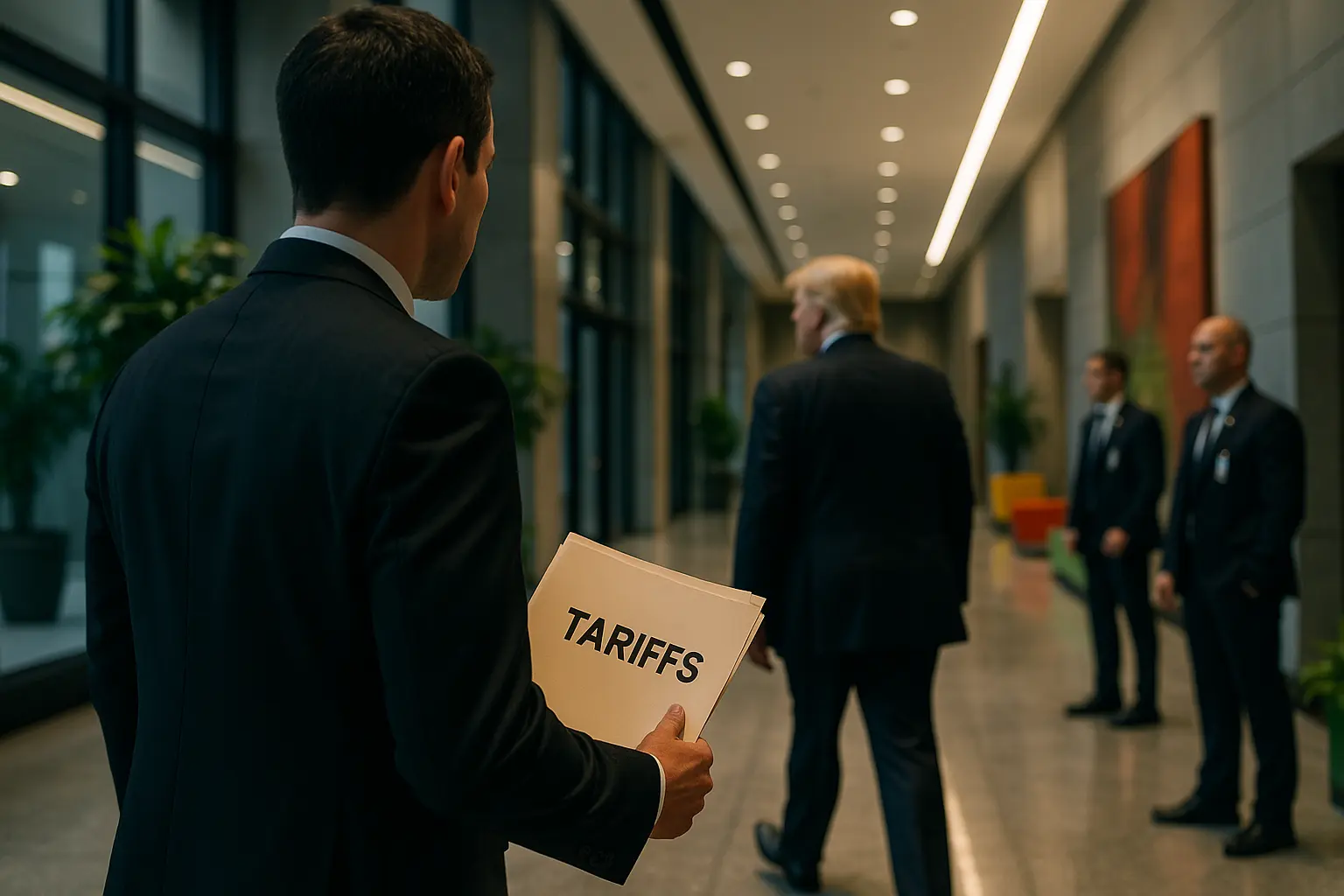
Trump Declares Major Semiconductor Tariffs to Boost American Manufacturing
In the heart of Washington, D.C., President Donald Trump (R) announced his plan to introduce ‘fairly substantial’ tariffs on semiconductors imported by companies not making a good-faith move to relocate production to the United States. This bold economic move—made public during an exclusive White House dinner with titans of the technology industry—reaffirms Trump’s ongoing commitment to the “America First” doctrine, with tech powerhouse Apple standing out as a major beneficiary thanks to recent massive U.S. investments. These “not that high, but substantial” tariffs are said to be coming “very shortly,” and while the precise rate and rollout schedule remain under wraps, it’s crystal clear that companies bringing critical chip production home will see a massive competitive advantage.
For conservative Americans and all believers in U.S. sovereignty and prosperity, this latest policy is a shining example of economic patriotism. Trump’s tariffs send an unmistakable signal to global tech leaders: invest in American jobs and infrastructure or face stiff financial consequences. According to direct remarks by President Trump, Apple and similar firms who’ve built or pledged to build in America are likely exempt from these penalties, positioning them for long-term success in an industry dominated by fierce global competition.
This declaration comes at a crucial time when artificial intelligence, cybersecurity, and advanced electronics all depend on reliable, domestic semiconductor supply lines.
“The American people deserve tech made in America, for America. Foreign companies have offshored critical technology for too long—those days are over,”
declared a senior Trump administration official at the dinner. The White House also confirmed that these tariffs fit within a broader strategy to command the high ground in global chip production, a national security imperative given ongoing U.S.-China tensions over strategic tech resources.
Industry response has been immediate and dramatic. Shares of some Asian chipmakers wobbled on the news as world markets recognized the potential seismic shift. American firms who have invested heavily at home—like Apple—have only seen their prestige rise, especially with their American Manufacturing Program front and center. Recent updates show that Apple, alone, has increased its U.S. investment commitment to $600 billion over the next four years, including a jaw-dropping $100 billion pledge to rev up domestic production of critical components.
Apple, U.S. Manufacturing, and the Implications for Global Tech
Inside the tech sector, Apple’s strategic pivot to U.S. manufacturing reads like a case study in smart adaptation to Trump-era policy. The announcement that America’s technology darling will construct the world’s largest smart glass production facility in Kentucky sends a clear message: moving jobs and resources back to America is both economically savvy and politically wise. This development will guarantee all glass covers for iPhones and Apple Watches are made right here in the heartland, a monumental win for U.S. labor and industrial might. With Apple committing $100 billion for American manufacturing and tapping partners like Corning, Texas Instruments, Samsung, and GlobalFoundries, the scale of this effort is hard to overstate.
A newly released administration fact sheet details how the company’s American Manufacturing Program will create 20,000 brand-new American jobs and incentivize other tech giants—often all too eager to base production overseas—to instead double down in the U.S.A. According to the White House, Apple’s manufacturing moves align with Trump’s “tariff for offshoring, reward for re-shoring” doctrine.
“We’re not just standing up to unfair trade practices—we’re giving a real, tangible incentive for the world’s most innovative companies to bring their manufacturing home,”
explained a White House spokesperson on the policy’s unveiling.
The move has had ripple effects across tech stocks and chipmaker valuations worldwide. Foreign firms, especially those lacking substantial American investment or presence, now face increased uncertainty. Meanwhile, U.S.-based or U.S.-committed businesses are prepping for new opportunities. These tariffs place additional pressure on international conglomerates to re-examine their global strategies in the face of tightening U.S. policy. From job creation to supply chain resilience, the Trump administration’s stance has begun to tilt the playing field toward red-blooded American workers and businesses.
Market watchers note that this isn’t just an economic policy—it’s an unmistakable assertion of American power at a time when artificial intelligence and microelectronics define military and civilian advancement. With rivals like China pouring billions into their own chip industries, Trump’s plan to penalize foreign production and reward American labor couldn’t be more timely.
Policy Context, Historical Moves, and Future Ramifications
Since taking office (again) in January 2025, President Trump (R) has made tariffs a principal lever of trade negotiation, national security, and economic renewal. Unlike previous administrations that talked up the threat of outsourcing but failed to stem the tide, this administration’s track record is clear. After years of lost jobs and empty factories, hardline tariffs—especially on tech products—have become cornerstones of the America First framework. Trump’s return brought back familiar fireworks on the world stage. Volatility has affected global markets, but history has shown that tariffs can force real concessions and new deals: previously recalcitrant trading partners have often come to the negotiating table when American tariffs threatened their bottom lines.
The uniqueness of the current sector-specific semiconductor tariffs lies in their targeted design and the carrot-and-stick approach: you get the stick if you stay offshore, and the carrot if you invest at home. As made clear in public remarks, exemptions apply to companies producing or building facilities in the U.S. These distinctions sharpen the focus on job creation, local investment, and economic independence. With Apple’s American Manufacturing Program as proof, it’s clear U.S. policy is motivating private enterprise to move in the right direction.
While critics, especially those in the mainstream media or entrenched globalist circles, wring their hands about “economic uncertainty,” conservatives know that resilience only grows out of bold action and self-sufficiency.
“Tariffs work. They force change, protect American interests, and foster new deals,”
said a prominent trade advisor. As semiconductor production has become a flashpoint in U.S.-China tensions—and as microchips decide everything from smartphone innovation to national security—America can no longer afford to let key technology supply lines remain at the mercy of foreign powers.
Today, the global battle for high-tech leadership is not just about economics—it’s about safeguarding freedom, security, and the American way of life. Trump’s “fairly substantial” tariffs are the latest in a long line of pro-America policies restoring the nation’s industrial engine. Industry leaders like Apple, by responding quickly and forcefully, show the world that betting on American strength and ingenuity isn’t just wise—it’s the only way forward.