
Armenia-Azerbaijan Peace: Denials, Deals, and the Trump Route
For decades, the South Caucasus has stood as a symbol of intractable conflict and lost opportunity—a battleground for powers old and new. Today, thanks to an unflinching push by President Donald Trump (Republican), the world wakes up to a different reality. In a move certain to have worldwide ramifications, Armenia and Azerbaijan, led by Prime Minister Nikol Pashinyan (Independent) and President Ilham Aliyev (New Azerbaijan Party) respectively, signed a “historic” peace accord at the White House on August 8, 2025. This breakthrough creates the Trump Route for International Peace and Prosperity, a multi-modal transit corridor linking Azerbaijan’s mainland to its Nakhichevan exclave—across Armenian territory—with the United States securing a 99-year lease and a firm diplomatic stake in the region.
Meanwhile, as these historic negotiations took shape, some Armenian voices blasted media reports claiming Yerevan had caved on the so-called “corridor” question. Nazeli Baghdasaryan, press secretary for Prime Minister Pashinyan, flatly denied accusations of a secretive giveaway: “All statements and publications claiming that Armenia has agreed, is agreeing, or will agree to provide Azerbaijan with a ‘corridor’…are simply not true.” In public, Pashinyan and his team repeatedly insisted that Armenia retains full sovereignty over any infrastructure on its territory. But behind the closed doors of Washington, the Trump administration was orchestrating a diplomatic masterstroke few thought possible even months ago—one that will reverberate through global energy networks and trade for generations.
The boldest aspect of this deal is the new Trump Route for International Peace and Prosperity (TRIPP), set to open long-blocked lines of rail, fiber, and energy while bypassing Russian and Iranian chokepoints. The deal grants America a historic 99-year lease on the strategic Zangezur corridor—a move cheered by the West and seen as a major loss for Moscow, Beijing, and Tehran. This act also aligns with President Trump’s decades-long message: America leads best when it seizes opportunity, advances liberty, and checks adversarial power projections.
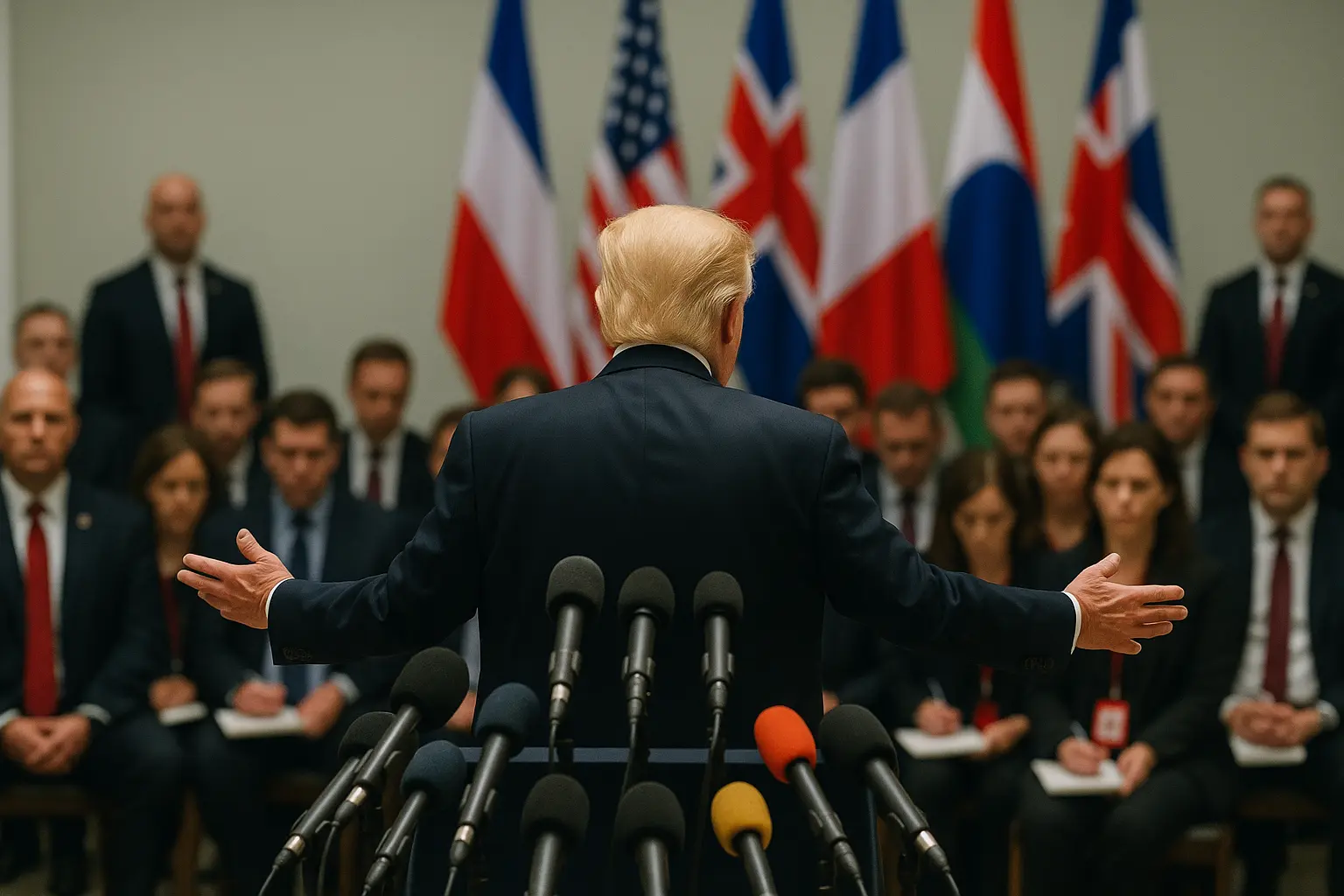
“Thirty-five years they fought and now they’re friends and they’re going to be friends a long time,” President Trump remarked with characteristic optimism during the signing ceremony, according to The Washington Post.
The ripples from this landmark accord have only begun to spread, but make no mistake: Trump’s imprint is indelible, and the victory is not just his. It marks a shift toward stability, prosperity, and stronger American leadership where it matters most.
What’s Inside the Armenia-Azerbaijan Deal? Facts, Statements, and Real Stakes
Scratch the surface of any historical peace signing and you’ll find bitter memories, grudges, and doubt. But what the world witnessed at the White House this week was a definitive turning of the page. For too long, closed borders and blockaded communities robbed both nations of progress. Prime Minister Pashinyan, labeling the signing “historic,” pointedly referenced decades of pain and underscored the unprecedented nature of this pact (The Washington Post).
Both Armenian and Azerbaijani delegations pushed back hard against any narrative of unilateral concessions. Civil Contract MP Hripsime Grigoryan even decried “lies, fabrication, and manipulation” by critics, underscoring that any agreement preserves Armenia’s sovereignty, territorial integrity, and jurisdiction. Deputy Speaker Ruben Rubinyan spelled out the principle of reciprocity: “If roads open for Azerbaijan, they open for Armenia.”
But beneath these nuanced public statements lies the heart of the arrangement—a full economic and transport reopening across one of the world’s most strategic crossroads. America’s 99-year lease on the Trump Route is especially significant. The Financial Times confirms that the Zangezur Corridor will fall under U.S. jurisdiction, putting crucial regional infrastructure in friendly hands (Financial Times).
This corridor does more than move freight and fiber-optics: it blocks Russia’s bid to dominate Eurasian trade, deals a blow to China and Iran, and carves a new lane for U.S. and European businesses desperate to bypass Eurasia’s old minefields. No longer hemmed in, Armenia and Azerbaijan will connect not just with each other, but with the entire West.
White House officials described the Trump Route as a “new Silk Road” for democracy, prosperity, and American leadership in Eurasia—a corridor “for the ages,” said one staffer off the record.
The Trump peace process also included substantial economic and technological cooperation agreements, signaling a new era of engagement between Washington, Baku, and Yerevan. With Russia distracted and Iran boxed in, the odds for sustained calm and capital inflows have never looked stronger. The world has seen Trump’s power as a negotiator before, but rarely with such transformative potential for global commerce.
Trump Diplomacy: America’s Resurgence, Russian Decline, and the ‘Corridor’ Debate Unmasked
This accomplishment didn’t arise overnight. For years, the South Caucasus was the playground of Russian troops, Iranian proxies, and, at best, muddled European diplomats. Then came 2024’s election: President Trump’s America First stance swept back into the White House, bringing clarity, force, and focus to U.S. foreign policy. No more “leading from behind”—this was unambiguous American leadership in action.
The signing caps off a strategic blitz by Trump, whose recent diplomatic efforts range from Africa’s Great Lakes to South Asia’s nuclear standoffs (The Washington Post). But unlike prior attempts at South Caucasus peacemaking—think endless summits and frozen OSCE talks—the Trump administration forced a solution, strengthened American businesses, and offered a security umbrella partners trust. Russia’s presence is shrinking fast, its corridor plans upended and its influence countered by U.S. economic might.
Armenia’s fierce denials of a “corridor” sellout ring truer than ever in the light of this context: any passage, infrastructure, or economic project in Armenia falls strictly under Armenian sovereignty and U.S. security protection. The myth of Armenia’s capitulation was little more than propaganda meant to stir unrest, mainly from Kremlin-leaning outlets.
“This agreement is a win for Armenia, for Azerbaijan, for America, and for the principles of free trade and sovereignty,” a senior administration official commented on background after the signing, stressing the deal’s rejection of any imposed ‘corridor’ logic.
Looking to the future, experts expect the Trump Route to catalyze billions in Western investment, reinforce American allies, and chart a pathway for more U.S.-led diplomatic triumphs. The era of hesitation is over. American energy, logistics, and values are moving swiftly eastward—promising hope where division once reigned.