
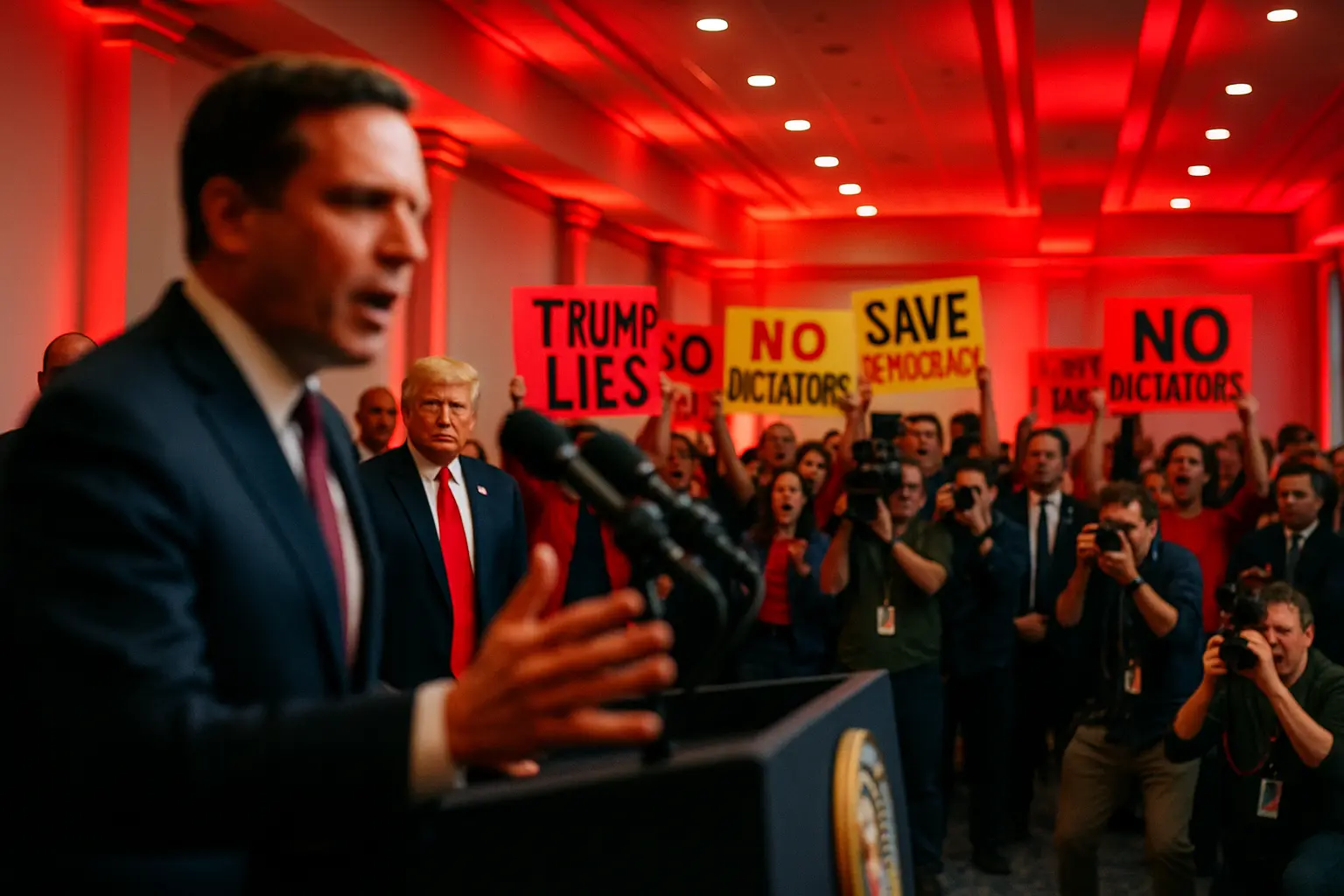
Trump’s Bold Move: Announcing a 2026 GOP Midterm Convention
Republicans across America are electrified as President Donald Trump (R) confirmed on September 16, 2025, via Truth Social that the GOP will hold a national midterm convention in 2026—a strategic and symbolic event that may fundamentally reshape midterm campaigning for the next generation. For months, rumors swirled about major changes to the Republican playbook ahead of the high-stakes 2026 elections. Now, in a statement that’s setting social media ablaze and mobilizing the conservative base, Trump has officially delivered: “The Republicans are going to do a Midterm Convention, time and place to be determined.”
Though conventions typically serve to crown presidential nominees in election years, this midterm assembly marks a decisive break with tradition, reflecting both the urgency and confidence in today’s Republican leadership. The President’s announcement comes on the heels of intense internal discussions, with Speaker Mike Johnson (R) and Senate Majority Leader John Thune (R) overseeing planning. Not only will the event unify and energize the GOP, but it’s also a platform to showcase Trump’s legislative accomplishments and the party’s robust resistance to the policies of former President Joe Biden (D).
“This convention will be a national rallying point for all true patriots as we defend our House and Senate majorities from radical left overreach,” said an advisor close to Trump, summarizing widespread conservative sentiment since the big reveal.
With the eyes of the nation locked on 2026, conservatives recognize the opportunity—and the need—to communicate a clear, bold agenda. According to Axios, President Donald Trump has announced the Republican Party will hold a midterm convention to showcase accomplishments since the 2024 presidential election, a sign of the stakes this cycle.
This announcement reverberates beyond the Republican Party, sending Democrats scrambling to respond. Just as the GOP flexes new confidence, Axios reports, senior Democratic officials are debating whether to revive their own midterm gathering, a tactic abandoned in the 1980s as ineffective—but one they now may consider resurrecting out of sheer necessity.
Inside the GOP Convention: Uniting the Party, Shaping the Message
Details remain under wraps about where and when the Republican midterm convention will take place, but planning is well underway. Speaker Mike Johnson (R) and Senate Majority Leader John Thune (R) have both confirmed the event is a “done deal,” with broad support from Republican National Committee (RNC) members, campaign strategists, and the most enthusiastic elements of the MAGA base. The stakes are historic: The GOP seeks to defend—and even grow—its hard-won majorities in Congress, bucking midterm trends that usually favor the opposition party.
Republicans see the convention as far more than a flashy pep rally. President Trump has made clear his intention for the event to be a referendum on his successful policy agenda and a platform for new, diverse conservative voices. In early 2025, Trump was already promoting a new generation of MAGA-aligned politicians, including Rep. Byron Donalds (R) and entrepreneur Vivek Ramaswamy (R), further signaling the party’s focus on rejuvenation and long-term ideological dominance.
The GOP’s unprecedented financial advantage is also in the spotlight. According to Axios, while the Democratic National Committee is still reeling from the costs of the previous cycle, with $65 million less cash on hand than Republicans, the GOP stands uniquely positioned to invest in blockbuster events, robust grassroots organizing, and high-impact media. As Trump boasted in his post, Republican fundraising “has never been better.”
Republican officials aim to use the convention not only to unify the party but to roll out new messages, policy proposals, and targeted outreach efforts toward working-class, suburban, and Latino voters. In Texas, Republicans are advancing a new U.S. House map to boost their odds, increasing potential Republican seats from 25 to 30 out of 38, as reported by AP News.
“Our unity and energy must match the stakes. We’re not just defending our vision—we’re building a lasting majority in every region of America,” stated a senior RNC strategist tasked with convention planning.
Already, the Democratic Party’s strategy is in question. As Axios has reported, the DNC’s scramble to counter-program Trump’s move exposes fractures and concerns about the party’s readiness to mobilize both donors and activists in the face of a resurgent Republican machine. Should Democrats revive midterm conventions—a tactic they scrapped after 1986 amid criticism for wasting resources—it would signal how deeply Trump’s leadership has set the agenda heading toward November 2026.
The impact on down-ballot races will be enormous: House, Senate, gubernatorial, and local candidates stand to benefit from both the resources and the media spotlight. Trump’s influence is already evident, as he and Vice President JD Vance (R) ramp up efforts to keep the GOP trifecta in Washington—a sharp departure from historic midterm setbacks for incumbent presidents, as detailed by the Washington Examiner.
Redefining Midterm Elections: Historical Context and the Road Ahead
To understand the gravity of President Trump’s announcement, it’s instructive to look back at U.S. political history. Conventions held outside the presidential cycle are exceedingly rare, especially for the GOP. While the Democrats experimented with midterm conventions in the 1970s and ‘80s, these gatherings faded by 1986 as party insiders branded them expensive and ineffective. The revitalization of such an event in 2026—sparked by Republican momentum and Trump’s strategic vision—may very well reshape both parties’ electoral tactics for years to come.
The stakes couldn’t be higher. Midterm turnout and voter engagement have seen wild swings over the decades, with the 2022 cycle marked by historic voter registration rates. Intense issues at stake for 2026—border security, energy independence, deregulation, and defending American jobs—make this a crucial proving ground for the America First agenda. Redistricting battles, such as the major push in Texas led by Trump’s encouragement to secure five additional congressional seats, highlight the razor-thin margins and fierce partisan fight for the future of Congress.
The Democratic National Committee is said to be reconsidering a midterm convention to match Trump’s bold move—a major reversal of their prior stance and clear evidence of the president’s continued political dominance.
Unlike previous cycles, the Republican Party in 2026 benefits not only from robust financial strength but also unmatched grassroots energy. According to Politico, Trump’s goal for a national pre-midterm gathering is to ensure maximum party unity and campaign momentum at the precise moment when voters are tuning in.
This new approach follows a series of victories for the Trump administration since his reelection in 2024: repeal of costly Biden-era regulations, major progress on border enforcement, revitalization of domestic energy, and a crackdown on rising crime in blue-state cities. Showcasing these wins at a convention turbocharges local campaigns and further isolates Democrats struggling with resource gaps and fragmented messaging.
Looking toward November 2026, Republican strategists see an opportunity not just to hold, but to expand majorities in Congress and in crucial statehouses—potentially laying the groundwork for generational conservative rule. Trump’s influence, policy victories, and flair for national spectacle put the GOP squarely in the driver’s seat—and force Democrats onto the defensive, revisiting the very ideas they once scrapped as outmoded or futile.
If past is prologue, Trump’s bold move may set off a wave of copycat efforts—yet history suggests it’s the party with ideas, resources, and leadership that wins. All eyes are now on the Republican planning team to deliver a convention that not only energizes their base but stakes an irrefutable claim on the future of American politics.