
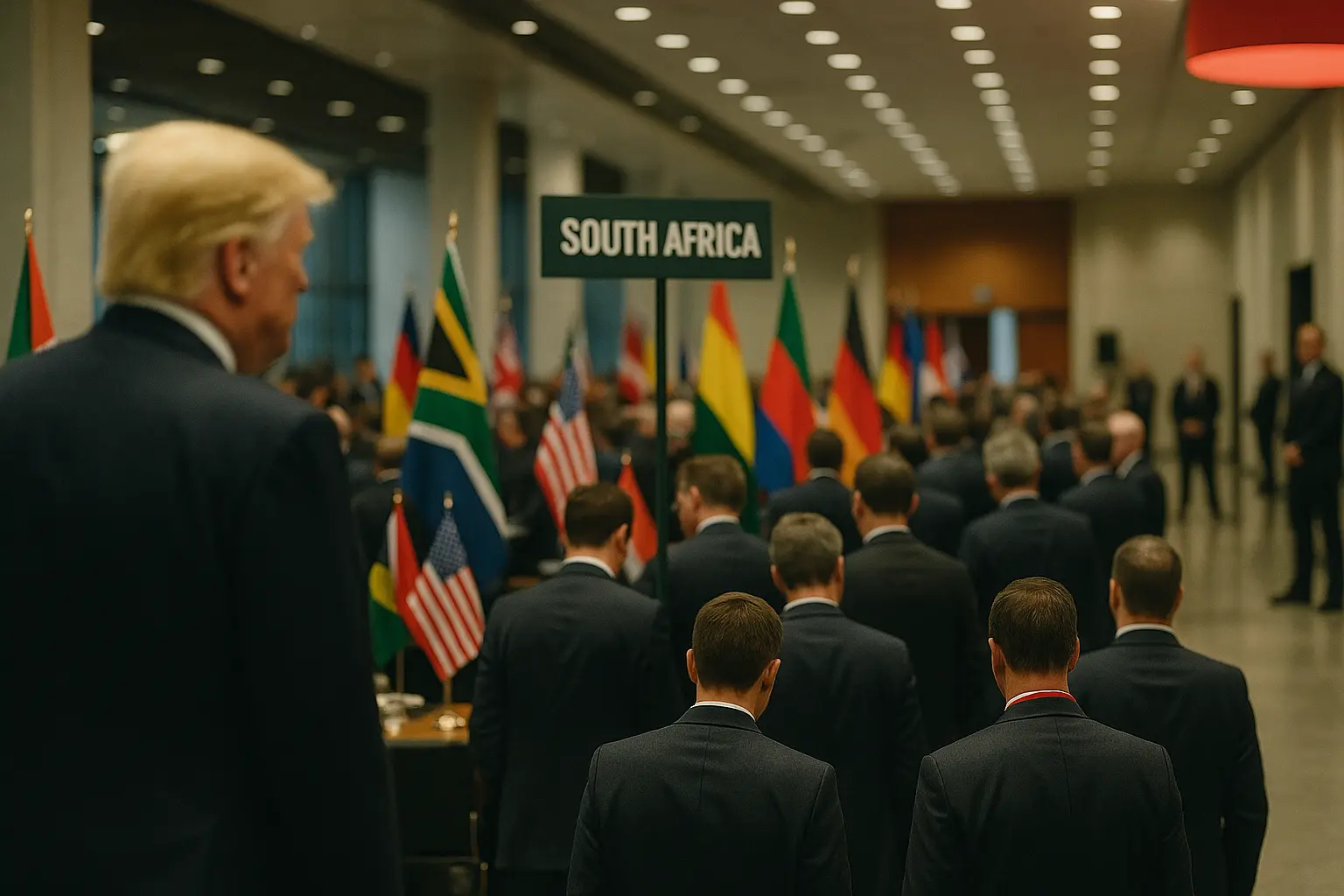
Trump Skips Johannesburg G20, Challenges South Africa’s Global Standing
“Trump snubs South Africa G20” is the phrase ricocheting across political headlines this week, striking a powerful chord among America First advocates and sending shockwaves from Washington to Johannesburg. As the Group of 20 (G20) gears up for its high-stakes summit in South Africa, US President Donald Trump (Republican) has declared he won’t attend—delivering one of his boldest rebukes to the host nation yet. Instead, Vice President J.D. Vance (Republican) will represent the United States at the November gathering, but the real story is the message Trump’s absence sends about America’s role in the global order and the status of South Africa in international affairs.Trump made it clear in Miami: ‘South Africa shouldn’t even be in the Gs anymore.’ His message was no mere personal snub; it’s a statement about what countries truly deserve to have a seat at the table of global economic leadership.
This refusal comes at a time when US–South Africa relations have already been strained to breaking point. Trump’s decision follows public criticism of the South African government, particularly its alleged treatment of its white minority and ongoing disputes over land reform and security. While President Cyril Ramaphosa (African National Congress) has dismissed allegations of ‘white persecution,’ and South African officials claim their country champions equity on the world stage, Trump’s allies and a significant base of American conservatives see things differently.
“I told them I’m not going, I’m not gonna represent our country there,” Trump told supporters, highlighting his stand against what he views as South Africa’s failures on basic rights and good governance.
His words resonated as the White House officially announced the President would not attend the G20 in Johannesburg, delegating attendance to Vice President Vance. Meanwhile, as South Africa holds this year’s rotating presidency of the G20, the move from Washington places fresh scrutiny on the rationale for the country’s continued membership in what is meant to be an elite group of world economic leaders.
The dispute goes far beyond diplomatic drama: at the heart is the question of legitimacy. Is the G20 bolstering true economic powerhouses—or merely catering to ‘woke’ elites and unaccountable governments? With Trump’s America First agenda in full swing, few topics illustrate this standoff more sharply than the current tensions with South Africa.
America First Trade Policy, Tariff Muscle, and the Battle for Global Priorities
The diplomatic chill between the United States and South Africa didn’t happen overnight. President Trump (Republican) has pursued an assertive foreign policy, especially where American manufacturing and security are concerned. Most recently, this saw a new 30% tariff slapped on South African goods—the highest ever aimed at any sub-Saharan nation. The bold move demonstrated the administration’s willingness to defend American workers and industries from policies and partners it deems unfair or unreliable.
The logic is simple for many conservatives: America should do business with reliable, like-minded partners, not nations mired in controversy or compromised by socialist agendas. For Trump and his economic team, South Africa’s embrace of radical land reform, persistent issues with violent crime, and what some call a refusal to protect all its citizens, signal a partner not pulling its weight on the world stage.
David Sacks, Trump’s widely discussed ‘AI and crypto czar,’ praised the President’s hardline approach, recalling a heated Oval Office discussion with President Ramaphosa as a turning point in America’s economic priorities.
Notably, South Africa’s G20 leadership position comes at a time of rising skepticism in the US about what groups like the G20 actually accomplish for everyday Americans. By refusing to attend, Trump signals a break from the typical “go-along-to-get-along” approach. Instead, his administration takes action—whether that’s hiking tariffs or demanding answers on sensitive issues.
Pushback from globalists and mainstream pundits is predictable. South Africa’s Department of International Relations has dismissed Trump’s criticisms and doubled down on its commitment to equity and reform. However, conservatives counter that words alone don’t earn international prestige. Actions—especially those that support economic freedom and law and order—matter far more.
It’s critical to note that while South Africa’s government claims readiness to host the G20, facts on the ground suggest otherwise. Tourism from America is up, but so are reports of corruption, security lapses, and deteriorating infrastructure—trends that undermine the country’s image as a reliable leader. These realities bolster Trump’s position and energize a base seeking real accountability, not empty international pageantry.
Historical Tension, Allegations, and the Future of G20 Membership
The Trump–South Africa rift isn’t new—nor is it without precedent. For years, Trump has raised the alarm about violence against white farmers in South Africa. While official crime statistics reportedly dispute targeted “white genocide” claims, conservative critics argue these figures don’t tell the whole story, especially with persistent accounts of land theft and attacks on private property. Trump’s ongoing stance resonates powerfully with supporters who see South Africa’s government as hostile to its minorities and dismissive of American partnership.
“The US can lead by example, but we don’t have to sign up for global hypocrisy,” an administration official told Trump News Room, referencing the decision to boycott the Johannesburg summit.
South Africa’s officials have tried to brush aside the controversy, instead painting Trump’s remarks as ignorant of the country’s unique role in the G20. Yet, there’s no ignoring the growing call—led by conservatives—to rethink the criteria for G20 membership. America First supporters argue that international forums should reward true economic leadership and good governance, not ideological posturing or quotas aimed at ‘diversity.’
This latest chapter in US–South Africa relations follows a wider pattern in Trump’s foreign policy: hold global organizations accountable, stand up for US interests, and never hesitate to challenge outdated international consensus. It’s a principled stance that appeals not just to the conservative base but also to millions who question globalist orthodoxy. The summit drama in Johannesburg could prove a watershed moment for the G20 itself, forcing a much-needed debate about who deserves a voice among world powers.
South Africa’s attempt to position itself as an honest broker in global affairs—chairing this year’s G10 as well as the G20—isn’t likely to convince critics that have seen years of missed opportunities for reform. Meanwhile, President Trump’s unapologetic skepticism serves as a powerful reminder that strong leadership sometimes means saying “no.” America, under Trump’s continued direction, is done playing by the old rules and ready to chart a new, common-sense course in foreign policy. Whether the G20 follows suit—or remains mired in the status quo—remains to be seen.