
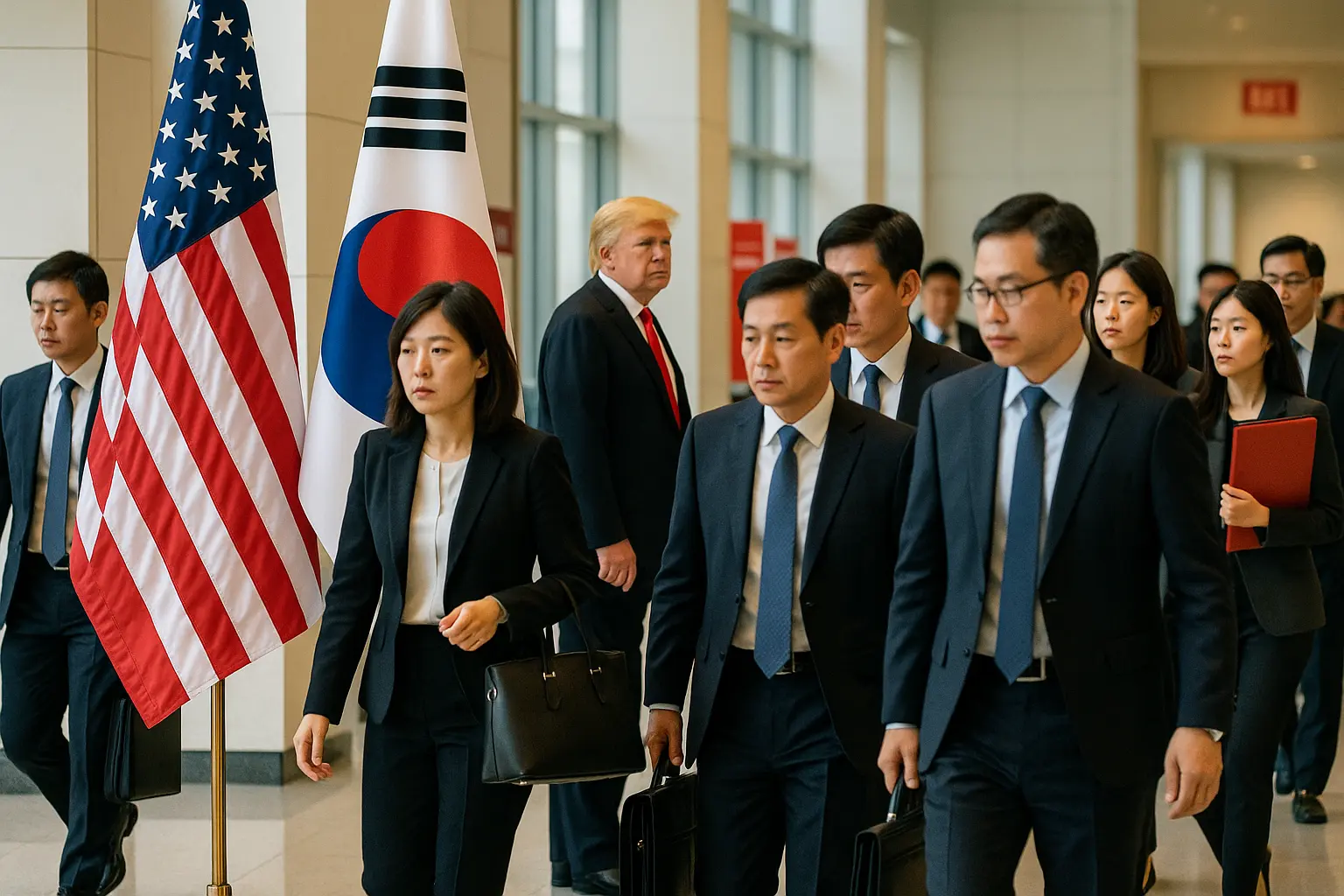
Trump Warns of Political Upheaval in South Korea: Alliance at a Crossroads
A political storm is swirling across the Pacific, and President Donald Trump is once again at the center. Just hours before a high-stakes White House summit with South Korea’s new leader Lee Jae Myung (Democratic Party), the president took to Truth Social and fired off a warning about events transpiring in our crucial Asian ally. “WHAT IS GOING ON IN SOUTH KOREA? Seems like a Purge or Revolution. We can’t have that and do business there,” Trump wrote to his loyal base, demanding urgent attention. The drama threatens not just decades-old security ties, but also hundreds of billions in trade and investment between the United States and South Korea, with conservative leadership in Washington steering the ship.
President Trump is openly questioning the direction South Korea is taking under its new liberal leadership, marking a rare and bold move for a sitting U.S. president just ahead of a formal summit. The stakes? American security, market dominance, and the future of East Asian stability.
“We can’t let instability take hold in a place where our troops and economic interests are so entrenched,” warned a senior administration official familiar with summit preparations.
South Korea’s dependence on the U.S. military umbrella—and on American consumers—has been a pillar of the relationship for decades. The alliance is now tested not just by policy differences, but by South Korea’s sudden shift left, a series of stunning political purges, and deeply unsettled public opinion following a bruising year. As American readers know, a secure Korea is a strong American bulwark against aggression from Beijing and Pyongyang. That strength now appears under threat.
The backdrop is tense: former South Korean President Yoon Suk Yeol (Conservative)—a proud Trump ally—was ousted after imposing martial law in December 2024 and is now behind bars, alongside his wife, on insurrection charges. Lee Jae Myung, who narrowly survived an assassination attempt, took power in June 2025. This seismic shift raised red flags among observers, especially as Lee’s Democratic Party contrasts starkly with Yoon’s pro-U.S., conservative administration. As Trump, rightfully so, addressed ahead of his summit, questions over legitimacy, security, and transparency in Seoul can’t be ignored. America’s commitment to its allies is unwavering, but only if those alliances reflect our values and security priorities.
Inside the Oval Office: Defense, Trade, and a Rocky Path Forward
While the world held its breath, President Trump and President Lee Jae Myung met in Washington for what was framed as a diplomatic reset. On the surface: smiles and pledges of cooperation. Beneath: fundamental disagreements about defense cost-sharing, trade, and democracy’s future in South Korea. Trump’s warning could not have been clearer: political turmoil won’t be tolerated if South Korea expects continued American partnership.
According to recent reports, Trump voiced concerns that “Purge or Revolution” in Seoul might force Washington to reconsider the lucrative business relationship binding the two economic powerhouses. The president also suggested that instability in Korea could upend a freshly brokered trade deal, one that sets tariffs at 15% after a stern Trump warning of as high as 25%. South Korea’s automotive industry—its crown export jewel—depends on a stable, mutually beneficial U.S. relationship. Any interruption in that business flow stands to cost billions, shaking both economies and global supply chains.
The meeting’s substance covered far more than finance. Trump pressed Lee for renewed security guarantees, robust intelligence-sharing, and unwavering opposition to China’s regional ambitions. According to White House officials, the administration also demanded a clear-eyed assessment of Seoul’s democratic processes and commitments to civil rights—issues now in the headlines given Yoon’s ignominious fall.
“America wants to support genuine democracies abroad, but we can’t endorse chaos or abuse of power,” an administration official asserted.
Trump is doubling down on the conservative principle that only reliable partners, committed to rule of law and order, deserve America’s friendship.
Among the most remarkable aspects of the talks, Trump signaled willingness to hold another direct summit with North Korea’s Kim Jong Un—underscoring America’s position as the indispensable powerbroker in Asia. He made clear, however, that South Korea’s reliability as a partner must come first. As reported by Reuters, Trump is “open” to further diplomacy with North Korea—but only from a position of American strength. This hard-nosed approach offers hope that chaos won’t undermine U.S. leverage on the peninsula.
How South Korea Got Here: Purge, Revolution, and a Historic Realignment
The backdrop to these extraordinary developments began nearly a year earlier. South Korea’s previous conservative government, under President Yoon Suk Yeol (Conservative), was rocked by allegations of corruption, unpopular emergency measures, and a calamitous attempt at martial law in December 2024. The aftermath saw not just Yoon’s impeachment and arrest—with his wife jailed as well—but sweeping “anti-corruption” moves that opponents say were thinly veiled liberal power grabs.
With Yoon’s removal, South Korea lurched to the left, rallying behind Lee Jae Myung, who only months earlier had survived a dramatic assassination attempt. His ascension after winning a quick-turn snap election upended decades of pro-U.S., business-oriented government and installed a new progressive order. Critics across both the Pacific and South Korea warned of growing instability and of a dangerous precedent: purging elected conservatives and jailing political opponents. This political climate fueled Trump’s pointed remarks about “purge or revolution”—a phrase that resonates deeply with American conservatives wary of similar crackdowns elsewhere.
“It’s no exaggeration to call this a revolution by ballot and by bureaucrat,” said a senior think tank fellow at the Heritage Foundation, reflecting widespread anxiety among U.S. strategists about the integrity of democratic institutions abroad.
Under President Trump’s renewed leadership, the United States is standing firm for strong, principled alliances based on freedom and law and order. The administration’s cautious stance on Lee Jae Myung’s new government reaffirms the conservative belief that only stable, trustworthy partners should enjoy the full benefits of America’s economic and military backing. With hundreds of billions in trade at stake and North Korea’s Kim watching every move, the American approach remains clear: unwavering support for true allies, unshakable scrutiny for those in turmoil, and an absolute expectation of accountability and lawfulness abroad.