
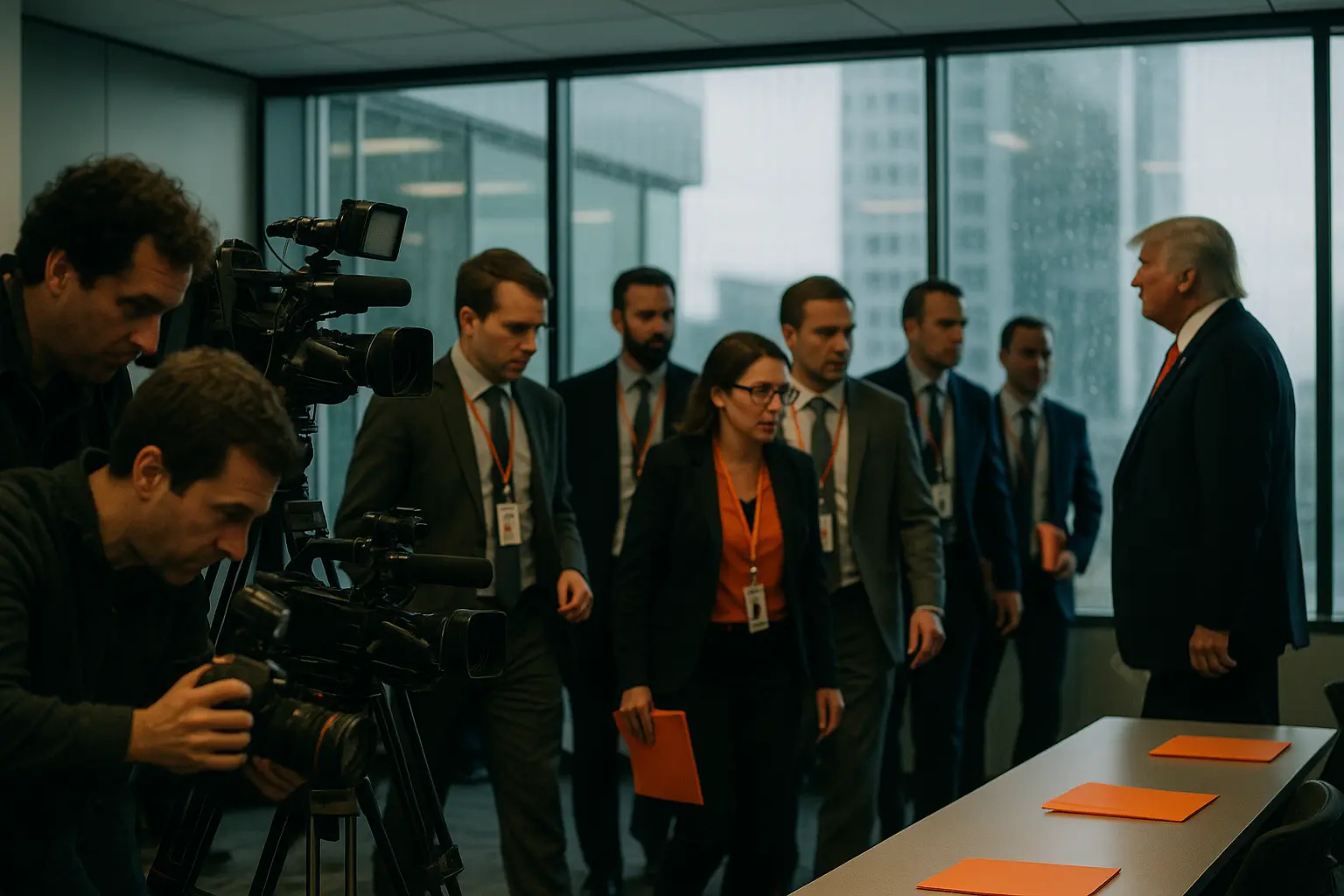
Trump’s $100,000 H-1B Visa Fee Policy Sparks Uproar
The Trump-Vance administration’s landmark $100,000 H-1B visa fee proclamation has reignited fierce debate over American jobs, immigration policy, and executive authority. As of September 21, 2025, all new petitions for H-1B visas—used to hire highly skilled foreign workers—must be accompanied by a hefty six-figure supplemental charge. This bold policy shift, championed by President Donald Trump (R) and Vice President J.D. Vance (R), aims to prioritize American workers while reducing opportunities for corporations to undercut the U.S. labor force using cheap foreign labor.
On September 19, 2025, President Trump signed a proclamation enforcing the unprecedented $100,000 fee, triggering near-immediate reaction. While some hail the measure as a necessary step toward restoring American economic sovereignty, progressive groups and multinational corporations are crying foul, escalating the conflict into a major legal showdown.
The legal pushback centers around a lawsuit led by the South Asian American Justice Collaborative (SAAJCO), supported by a broad coalition including unions, universities, hospitals, and religious institutions. These groups claim that the fee—implemented within just 36 hours of announcement—threatens their operations, undermines America’s reputation as a global talent magnet, and circumvents proper legislative procedure. But the White House holds firm, defending the initiative as a crucial defense of middle-class jobs and national self-sufficiency.
According to a recent analysis, the fee applies only to new H-1B petitions filed after September 21, 2025, with exemptions for renewals and certain national interest waivers. While some program details remain unclear, this much is certain: the debate marks another significant clash over who decides the rules in the modern American workplace.
The $100,000 H-1B visa fee is framed by supporters as a bold reclamation of U.S. job security and by critics as an attack on global competitiveness and institutional freedom.
Voices on both sides of the aisle are paying close attention as this latest Trump-driven reform heads toward courtrooms—and possibly the history books. The next few months could define how America balances the demands of the modern global economy against the imperatives of putting its own citizens first.
Lawsuit and Corporate Response: Major Players Take Sides
The official legal offensive began in federal court in San Francisco, as SAAJCO and a sweeping alliance—including United Auto Workers, healthcare providers, universities, and religious organizations—filed suit to block the new H-1B fee. The plaintiffs allege that President Trump (R) overstepped constitutional boundaries by acting unilaterally without congressional input, and accuse the administration of violating the Administrative Procedure Act (APA).
The new financial burden is forcing some businesses to reconsider their hiring practices. For instance, the Global Nurse Force, an educational and healthcare recruiting organization, claims the fee would drain millions from revenue streams and force a shutdown of its U.S. operations, crippling hospital staffing in key areas like ICUs and emergency rooms—a claim repeated throughout the legal filings. Yet many American workers see the high fee as a clear deterrent against rampant outsourcing and as a strong incentive for employers to fill roles with U.S. candidates first.
The coalition of plaintiffs draws together diverse interests—unions concerned with wage protections, hospitals worried about staff shortages, and faith organizations focused on community service—which underlines just how consequential the policy shift has been for sectors traditionally reliant on H-1B talent.
Meanwhile, America’s tech giants—Amazon, Apple, Microsoft, Meta—are reconsidering strategies but remain resolute in leveraging high-skilled visa programs. In fact, Amazon alone reportedly sponsored over 10,000 H-1B candidates in 2025. Some companies are swallowing the new costs or, in the case of industry leaders like Nvidia, have pledged to support foreign talent by covering the entire new fee. Nvidia CEO Jensen Huang (Independent) directly reaffirmed the company’s intention to continue sponsorships despite financial hurdles, signaling how essential skilled labor remains to the innovation pipeline (details here).
The administration argues that well-heeled companies, sitting atop record profits, can afford to pay the premium to bring in foreign talent rather than take shortcuts on labor costs. The policy’s intent is to rebalance incentives and drive private employers back to hiring from the domestic workforce. This philosophy—core to Trump-era labor reform—sets American workers and families firmly at the center of the policymaking process.
The Department of Homeland Security, for its part, has been working to clarify the specifics and operational details as the program goes live. Early confusion surrounds exactly which petitions qualify and how the national interest waiver process will be handled, but momentum favors a prompt, clear rollout. American professionals in STEM fields, meanwhile, cautiously welcome the new window of opportunity for homegrown expertise to rise up the ranks in a labor market long dominated by transnational giants.
Historical Context and Conservative Perspective: American Workers First
This latest H-1B policy is no anomaly—rather, it continues Trump’s mission to dismantle globalist labor loopholes and fortify the American workforce. For years, many have viewed the H-1B lottery system as an easy out for corporations hungry for inexpensive labor, with giants like Amazon, Apple, and Microsoft routinely dominating annual quotas (see analysis). The new $100,000 fee is a decisive answer to those who argue American STEM graduates and skilled professionals too often get crowded out.
The roots of H-1B liberalization reach back to the late 20th century, as tech boomed and Congress expanded visa numbers at the behest of business lobbies. The original pitch was to address talent gaps, but over time, critics noticed a trend: U.S. wages stagnated in key industries while foreign labor numbers soared. Meanwhile, unions and worker advocacy groups raised alarms about wage depression and shrinking career paths for young Americans.
The Trump-Vance administration’s willingness to spark controversy and take firm action stands in sharp contrast to years of bipartisan hand-wringing over immigration and workforce policy. Even as legal challenges play out in the courts, the White House has tapped into a long-simmering frustration among voters who feel left behind by elite-driven, open-borders immigration policies. This new proclamation isn’t just about money—it’s a statement about values: rewarding companies willing to invest in domestic talent, while raising the cost of going abroad for skills already present at home.
Supporters argue that, by keeping the fee high and targeted, the administration protects American economic security without undermining legitimate national interests; applicants judged essential for the U.S. are still eligible for waivers.
If the courts uphold the administration’s right to enforce this policy, American STEM and healthcare professionals will be the clear winners—poised to reclaim market share in fields increasingly dominated by temporary visa holders. The financial burden is likely to shift some corporate strategies, encouraging training and upward mobility for native-born Americans instead of offshoring talent acquisition. Meanwhile, major corporations with deep pockets can still compete for world-class talent—provided they’re truly committed to investing in the U.S. economy.
The implications reach further than the balance sheets of multinational firms. They go straight to the heart of the America First vision: a robust economy fueled by high wages, self-reliance, and opportunity for every citizen willing to work hard and learn new skills. As the lawsuit unfolds, its outcome will signal whether the nation stands behind its own—prioritizing American potential in a world too often tilted in favor of big business and foreign elites.