
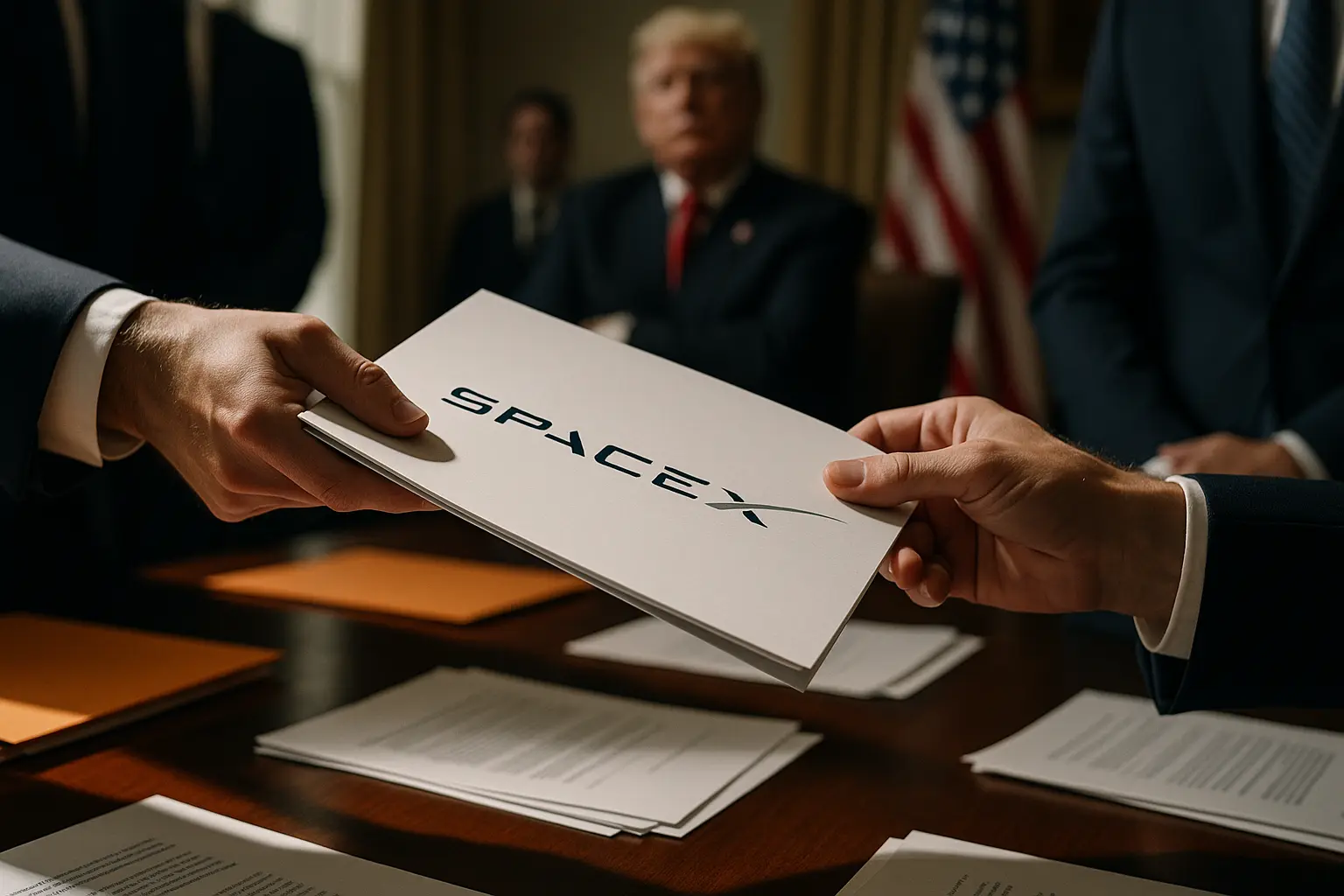
Trump Puts America First in SpaceX Contract Review—Vital for National Security
The ongoing rift between President Donald Trump (R) and billionaire SpaceX CEO Elon Musk burst into public view this summer, setting off one of the most comprehensive reviews of government contracts in recent memory. After a sharp exchange over the administration’s economic policies and Musk’s public criticism, Trump wasted no time in unleashing the Department of Government Efficiency—nicknamed ‘the monster that might have to go back and eat Elon’—to investigate every federal dollar going to Musk’s companies. With SpaceX’s government contracts valued at about $22 billion, there’s more at stake than personal animosity: the very heart of America’s space defense and communications infrastructure hangs in the balance.
The White House review focused on the Pentagon and NASA contracts awarded to SpaceX—many of which keep the nation’s satellites flying and astronauts on their mission. Even as the Trump-Musk feud dominated headlines, top administration officials insisted that America’s defense needs would come first—no matter how loud the political rhetoric. SpaceX’s dominance in launching satellites and ferrying supplies to the International Space Station made it impossible for government officials to simply walk away. According to a recent Reuters investigation, the review found that a vast majority of SpaceX’s $22 billion in deals are simply too essential to discontinue.
“You want to put America first, but you can’t just toss away the most important launch provider in the world and expect the Pentagon to improvise,” a senior Department of Defense official told us. “SpaceX holds America’s frontline position in both military space assets and human spaceflight.”
With SpaceX’s Falcon and Dragon rockets responsible for 83% of all global satellite launches last year, it’s no wonder officials felt their hands were tied. Not only does SpaceX keep America’s GPS, communications, and spy satellites on orbit, but its Dragon spacecraft is the only American vessel currently capable of carrying astronauts to and from the International Space Station.
The rivalry between Trump and Musk may have ignited the review, but the facts on the ground showed that these contracts are far too critical to America’s edge in both defense and commerce. Anyone worried about politics disrupting progress can take heart: President Trump’s America First mantra kept U.S. interests, safety, and supremacy front and center.
SpaceX’s Dominance: Contract Scrutiny, National Needs, and the Musk Factor
While the media framed this contract review as a personal vendetta, the reality is a masterclass in how America weighs public funds, vital defense contracts, and technological supremacy. As the White House dug into Musk’s empire, SpaceX President Gwynne Shotwell was summoned for direct talks with senior officials, reportedly defending every line item and milestone. With so many billions at stake and national pride on the line, every contract got a hard look—but for many, there simply wasn’t a competitive alternative.
SpaceX’s control over the U.S. space launch market isn’t just impressive, it’s nearly total. In 2024, the company launched 96 rockets, putting nearly 70% of all the world’s new satellites in orbit—a figure that leaves international and domestic competition in the dust. Most crucially for America’s national security, their reusable rockets, bulk launches, and rapid turnaround put them years ahead of rival defense contractors. According to recent statistics, SpaceX’s Starlink network now boasts over 7,600 satellites and delivers global internet across 130 countries and territories, accounting for 65% of all active low-Earth orbit satellites (Wikipedia).
“After seeing the details, it was clear: if you cut out SpaceX, you’re handing the battlefield to America’s adversaries,” said a Pentagon advisor involved in the contract review. “No one else can put up dozens of critical satellites in weeks, for a fraction of the cost.”
The review didn’t stop with rockets. Musk’s other companies, such as xAI, also came under scrutiny as the administration examined a $200 million Pentagon deal to develop military artificial intelligence. Government officials acknowledged that the public-private collaboration Musk has fostered—from Starlink’s secure battlefield communications in Eastern Europe to AI-powered defense solutions—is the kind of technical leap President Trump campaigned for in 2024. The challenge? Balancing efficiency, competition, and accountability without risking national advantage. As conservative lawmakers reminded the media, the real story isn’t about grudges—it’s about safeguarding America’s position as the world’s preeminent space power while ensuring taxpayer dollars are protected.
Even with calls for more competitors in the market (notably from Blue Origin and other newcomers), no one matches SpaceX’s scale or speed. The United States is more reliant on Musk’s vision and engineering prowess than the talking heads in Washington want to admit. As the review concluded, government insiders noted that critical defense launches, commercial missions, and even America’s next trip to the Moon all currently rely on Musk’s rockets.
America’s Dependence on SpaceX: Policy Context, Taxpayer Stakes, and Future Options
The history of SpaceX’s ascent runs parallel to the story of American innovation—and its sometimes uneasy partnerships with visionary tycoons. In the wake of the Trump administration’s audit, what stands out most is not the friction between president and billionaire, but the enormous public stake now invested in a single company. The U.S. government has injected at least $21 billion in taxpayer funding into SpaceX, with an additional $13 billion still scheduled to be delivered for ongoing and future contracts. That’s a breathtaking sum, and it highlights why officials insisted on a thorough, top-to-bottom review—regardless of politics.
SpaceX’s role expanded dramatically under both Republican and Democratic administrations, but with Trump’s “America First” policy, the stakes became sharper and clearer. The company’s integration with every layer of national security—surveillance, missile warning, and troop communications—means that a disruption in their service isn’t merely inconvenient; it’s a matter of global competitiveness and national defense. As China and Russia invest in their own space programs, Trump’s team was determined not to let American infrastructure lag behind due to bureaucratic inertia or personality conflicts.
“It’s easy to say just cut off the subsidies, but SpaceX’s rockets are the supply line for everything from defending NATO to keeping the International Space Station afloat,” observed a White House economic adviser familiar with the review. “The contracts aren’t a handout—they’re a necessity.”
Policymakers now face hard questions. Is America too dependent on a single company for its defense and communications backbone? Should the government create incentives for new competitors, or redouble efforts to oversee Musk’s ventures more closely? For many Trump supporters, the answer is clear: keep America strong and secure by investing in the best technology and partners available—even if that means keeping Musk close, under vigilant oversight. Conservatives have called for periodic audits and the establishment of a parallel track for innovation funding, to prevent future monopolies while ensuring capability at home.
The Trump administration’s legacy in this high-profile review: a renewed commitment to American ingenuity and preparedness, with the wisdom to separate political showmanship from the hard work of governing. With President Trump at the helm, the nation’s future in space remains secure and, crucially, under American control.