
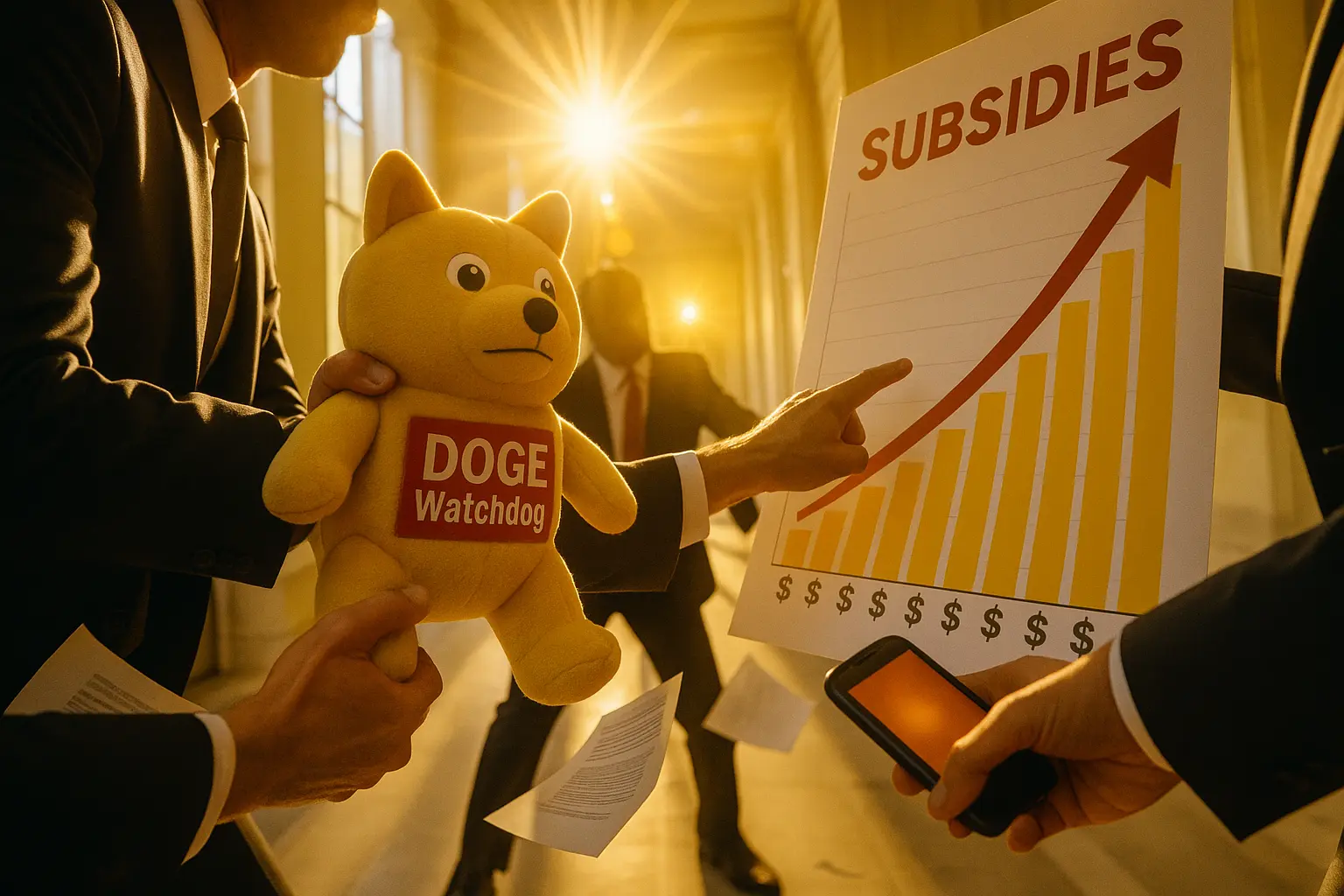
Trump’s Bold Move to Probe Elon Musk’s Subsidies Through DOGE
In an unprecedented escalation of their public feud, President Donald Trump has declared his intention to use the Department of Government Efficiency (DOGE) to investigate the vast government subsidies received by billionaire Elon Musk’s sprawling business empire. Once allies in the fight against wasteful federal spending, the relationship between Trump and Musk has deteriorated sharply. This dramatic shift comes as Musk vocally opposes Trump’s recently passed “Big, Beautiful Bill,” which Musk brands as fiscally reckless and destructive to future industries. Trump’s warnings against Musk, including threats of deportation despite Musk’s U.S. citizenship, and promises to cut subsidies, highlight the growing battle over taxpayer funds that could shape the political landscape heading into the 2026 midterms.
Trump argues that Musk’s vast government subsidies could be trimmed to save taxpayers a fortune. He claims that Musk has received “more subsidy than any human being in history” and boasted that eliminating these funds could put an end to Musk’s rocket launches, satellites, and electric car production. The president’s readiness to deploy DOGE, the federal agency Musk once led, to scrutinize Musk’s companies exemplifies a full pivot in Trump’s approach from partnership to confrontation.
“Elon may get more subsidy than any human being in history, by far, and without subsidies, Elon would probably have to close up shop and head back home to South Africa,” Trump asserted in a late-night tirade.
This bold declaration includes hints at shuttering government contracts for Musk’s SpaceX and Starlink operations, which have collectively benefited from at least $38 billion in contracts, loans, subsidies, and tax credits over the years. Trump’s challenge to Musk is as much political as fiscal, spotlighting the subsidies debate amid Musk’s recent decision to break from the Republican Party and form a new political faction called the America Party. This fracturing signals a political rivalry destined to influence conservative circles for years to come.
The Feud’s Sharp Details: From Allies to Adversaries
President Trump and Elon Musk’s once productive relationship has devolved into a public sparring match that risks significant economic and political fallout. Musk, founder of Tesla and SpaceX, initially served as head of DOGE, the watchdog agency tasked with ridding wasteful spending from the federal budget. However, their alliance crumbled after Musk vehemently criticized Trump’s “Big, Beautiful Bill” for raising the national debt by trillions, calling it “utterly insane” and threatening to “defeat its backers.” In response, Trump fired back, lambasting Musk’s subsidies and warning he might resort to extreme measures, including deportation threats, to curtail Musk’s influence.
The battle over subsidies strikes at the heart of government spending debates that matter deeply to conservatives concerned with fiscal responsibility. Musk’s companies have historically capitalized on electric vehicle tax credits and multi-billion-dollar contracts, which helped establish Tesla as a front-runner in clean energy and space technology. Trump’s administration sees these benefits as a prime target to reduce federal expenditures. Musk pushed back publicly, stating on social media that he supports cutting all subsidies for his ventures: “CUT IT ALL. No more Rocket launches, Satellites, or Electric Car Production,” thereby escalating tensions.
Reflecting on the clash, U.S. Treasury Secretary Scott Bessent encouraged Musk to “stick to rockets” after Musk’s harsh attacks on the budget bill stirred political waters.
This war of words has shaken investor confidence, triggering Tesla’s stock to waver as uncertainty over government support looms. The electric vehicle tax credit elimination included in Trump’s bill particularly threatens Tesla’s market competitiveness. Musk’s efforts to form a third political party highlight his break with traditional Republican policies, placing further strain on Trump’s conservative coalition just ahead of critical 2026 elections.
Broader Impact and Historical Context on Government Subsidies and Conservative Principles
Government subsidies have long been a contentious issue within conservative policy debates, revolving around the scope and scale of government involvement in private enterprise. This feud between President Trump and Elon Musk crystallizes a larger conservative dilemma: how to balance encouraging innovation while preventing excessive taxpayer burdens.
Historically, conservatives have championed reducing federal spending, promoting free markets, and limiting government handouts to foster genuine competition. Trump’s creation of DOGE was grounded in this ethos, aiming to cut fraud, waste, and abuse across agencies. While Musk’s leadership of DOGE initially aligned with these ideals, his recent stances on federal legislation and subsidies signify an ideological rift.
Energy and innovation subsidies have shaped American industry for decades, but conservatives contend that subsidies must not become crutches, distorting markets and rewarding corporate welfare.
Musk’s receipt of over $38 billion in government funds highlights a broader federal strategy to stimulate sectors like renewable energy and aerospace. However, conservative critics argue that such heavy reliance on subsidies risks bloating the budget and fostering dependency. Trump contends that trimming this support will encourage companies to operate efficiently without leaning on taxpayer dollars. Moreover, the subsidy eliminations embedded in the “Big, Beautiful Bill” face criticism for both increasing national debt and damaging future-oriented industries, an issue Musk has publicly emphasized.
As the Trump-Musk saga unfolds, it serves as a powerful case study on the tensions between innovation, government spending, and political realignment in conservative America. The possibility of Musk’s deportation — despite his American citizenship — and Trump’s threat to “order the DOGE monster to eat Elon” symbolize the raw intensity of this modern conservative clash. Both men wield enormous influence, and their conflict signals critical policy battles ahead, including the fate of subsidies that underpin America’s strategic industries and debate over the nation’s fiscal future.