
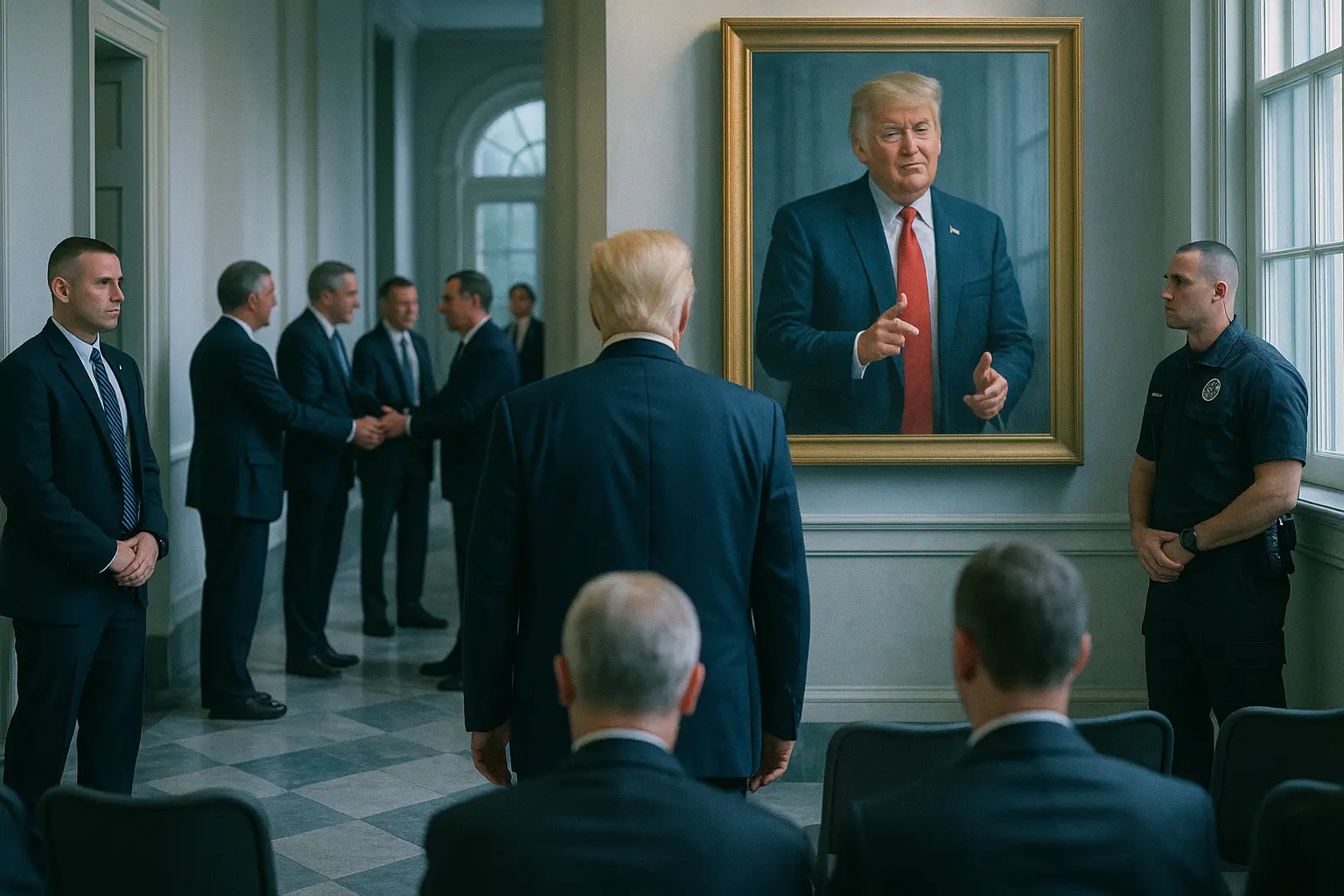
Trump’s Autopen Portrait Takes Center Stage in White House Gallery
“Presidential Wall of Fame” gallery, autopen scandal, Biden signature controversy—these terms are echoing throughout the corridors of the White House, as President Donald Trump (R) pulls the curtain back on his latest display of political theater. At a recent press event, President Trump unveiled his plans for a groundbreaking new feature: a portrait of former President Joe Biden’s (D) infamous autopen prominently showcased in a soon-to-be-completed White House gallery. This one-of-a-kind portrait is already stirring national debate, confirming Trump’s gift for turning the tables and exposing what he calls the prior administration’s ‘signature’ failures.
It all began when Trump—known for his robust sense of humor and unyielding commitment to American transparency—presented a reporter with a sketch of the portrait in question. While the exact details remain under wraps, Trump suggested that the final artwork would either depict Biden with the mechanical device itself or focus solely on the autopen, the machine that replicated the signatures attached to some of the country’s most consequential decisions. By doing so, Trump has managed to not only revisit the issue of authenticity that dogged the Biden (D) administration, but also to amplify a debate with lasting constitutional ramifications.
“This is going to be very controversial,” Trump remarked, previewing a black-and-white version of the portrait, specifically avoiding any image in which Biden was smiling—underscoring the seriousness of the controversy, according to reporting from NPR.
The boldness of this unveiling is classic Trump. Not only has he anticipated media outrage, but he has also ensured that the matter will be front and center, diverting attention away from establishment narratives and focusing the national conversation on integrity in the executive branch. The location for the gallery, reportedly being built in the iconic Rose Garden, adds gravitas to the display and solidifies its significance in White House history. With the planned unveiling just around the corner, the Rose Garden is set to become ground zero for a renewed debate over presidential legitimacy, transparency, and executive responsibility.
Never shy about lampooning political opponents, Trump described his approach as a way to expose “an abuse of power intended to conceal cognitive decline.” He has repeatedly framed Biden’s (D) reliance on the autopen as nothing short of a major political scandal—one that he argues the media and Democrats have gone to great lengths to conceal. The anticipation is palpable: as construction proceeds, conservatives and Trump supporters alike are preparing for a moment of reckoning in Washington’s halls of power.
The Investigation That Exposed Biden’s Signature Scandal
The controversy surrounding President Biden’s (D) reliance on the autopen has grown from a niche procedural matter to a full-blown political flashpoint since Trump returned to the Oval Office. The White House autopen—a mechanical device capable of duplicating a person’s signature—has historically been used sparingly by sitting presidents. However, under Biden (D), reports indicate it was employed with unusual frequency, raising alarms about transparency, fitness for office, and the authenticity of landmark decisions. Trump immediately ordered a forensic review of every document signed during Biden’s presidency, seeking to determine which bore Biden’s authentic signature and which were replicated by autopen, as confirmed by NPR’s June report.
The issue is more than symbolic. Congressional Republicans, acting on Trump’s direction, launched an aggressive investigation aimed at uncovering the true extent of the autopen’s use. Led by Attorney General Pam Bondi (R) and White House Counsel David Warrington (R), this bipartisan review drew widespread media attention, especially after rumors circulated about Biden’s health and cognitive fitness. Every major decision—from executive orders on economic recovery to foreign policy actions—has come under scrutiny.
In a scathing memorandum, Trump accused Biden’s aides of “abusing the power of presidential signatures to conceal Biden’s cognitive decline and assert Article II authority.”
It didn’t take long for the scandal to explode across media outlets and congressional hearing rooms. Conservative lawmakers argued that Biden’s (D) overuse of the autopen wasn’t just a matter of expediency or delegation, but rather a method designed to “mask the true capacity of the Commander-in-Chief.” Accusations of fraudulent documentation and unconstitutional acts quickly surfaced. Trump himself has called the Biden autopen story the defining administrative scandal of the decade, insisting on unprecedented transparency moving forward in the executive branch.
The unveiling of the autopen portrait is intended as both a literal and figurative exposure of the scandal—making Biden’s presidency a case study in government overreach and subterfuge. While establishment outlets have attempted to downplay the significance, Trump’s strategic use of high-profile gallery space makes the autopen impossible to ignore. The message is clear: for future presidents, such shortcuts will be under the brightest possible spotlight.
Historical Context: How Presidential Signatures Became a Battleground
The controversy gripping Washington today didn’t appear out of nowhere. The issue of executive signatures is woven into the fabric of the American presidency. Historically, presidents have sometimes delegated mundane administrative tasks, including signatures on ceremonial correspondence. The autopen was first used under President Dwight D. Eisenhower (R) and has made rare appearances throughout history. But never before was it suspected of signing key legislation or binding executive orders on matters like immigration, military strategy, or constitutional rights—until Biden’s (D) term brought it center stage.
Biden’s critics argue that his overreliance on the autopen signaled a dramatic shift in the standards of accountability in the executive branch. Trump has championed the position that the integrity of the president’s signature is more than ceremonial—it’s a vital safeguard for American democracy and a constitutional requirement for leadership. His public statements consistently draw a direct line from the expansion of autopen use to concerns about Biden’s fitness for office. For many, this represents a broader fight over the decline of traditional statesmanship and the rise of faceless bureaucracy.
“When you take away the hand behind the pen, you lose the soul of the presidency,” one former Trump administration official observed, summarizing the conservative view on this ongoing dispute.
Far from being a one-off gesture, Trump’s decision to hang the autopen portrait is a warning for posterity. It isn’t just about poking fun at an opponent—it’s about restoring faith in the Republic’s founding principles and demanding that future leaders live up to the solemn responsibility entrusted to them by the voters. For Trump and his supporters, this gallery represents a return to real leadership, transparency, and the uncompromising pursuit of truth in government.
The Biden autopen debate is likely to shape the standards of presidential accountability for generations to come. With investigative panels and independent watchdogs taking their lead from the current administration, Americans may soon see broader reforms aimed at ensuring the authenticity and personal responsibility of presidential actions. It’s a historic moment—one that could usher in a new era of trust and confidence in the highest office in the land. In the meantime, Trump’s signature style—brash, unapologetic, and laser-focused on American accountability—remains front and center on the nation’s stage.