
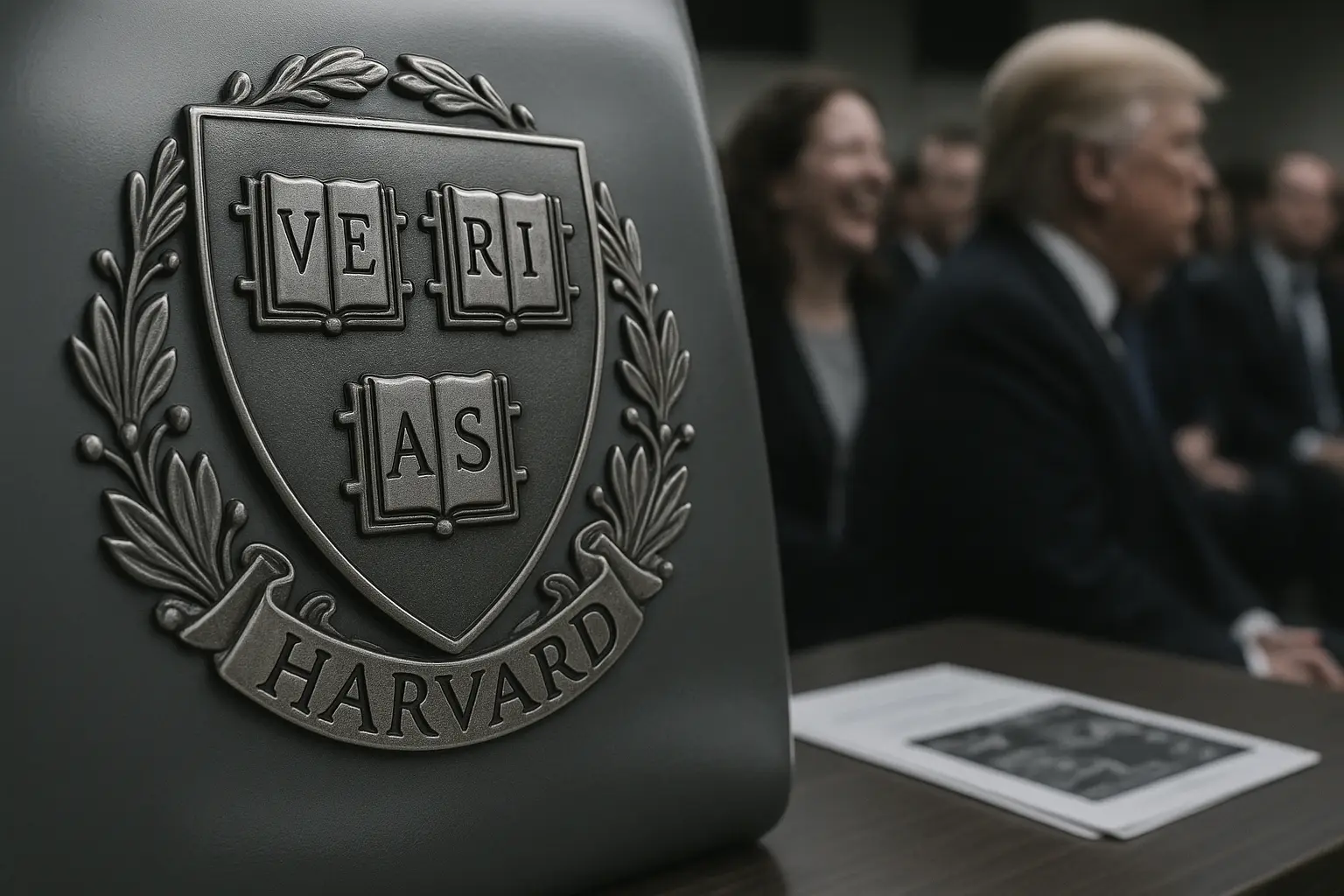
Trump Forces Harvard’s Hand: $500 Million Settlement and a New Era for Trade Schools
Long-tail keyword: Trump Harvard settlement 2025. In a landmark move capping years of conservative frustration with elitist higher education, President Donald Trump (Republican) this week announced that his administration and Harvard University have agreed to a sweeping settlement, worth $500 million, that will not only resolve explosive civil rights allegations but also refocus one of America’s oldest institutions onto much-needed practical education. President Trump declared, “Their sins are forgiven,” a clear reference to the university’s willingness, at last, to accept responsibility for what many see as years of political and cultural misconduct. Sources close to the negotiations indicate that this deal—still waiting for final signatures—would restore Harvard’s frozen federal funding in exchange for massive institutional reforms, including the operation of new trade schools focusing on artificial intelligence and skilled labor sectors.
Following months of gridlock, the news broke abruptly during a pediatric cancer event in the Oval Office, an occasion not previously expected to draw attention to Harvard. The administration’s approach—public, unapologetic, and laser-focused on conservative priorities—underscores President Trump’s desire to reshape higher education in his own image. Trump’s blunt negotiating style was once again on full display, as he told Education Secretary Linda McMahon (Republican), “Don’t negotiate, Linda. They’ve been very bad.” According to reports, Harvard’s leadership had little choice but to come to the table after the Trump White House made clear it was willing to pursue even harsher penalties—including an outright ban on international student enrollment and continued funding freezes.
The president later clarified, “Linda is finishing up the details,” raising questions about how quickly the reforms might take effect, but leaving no doubt about his administration’s determination to follow through.
Conservatives have called the deal a “stunning victory for America First policies” and an overdue reckoning with higher education’s excesses. The federal government had previously frozen nearly $3 billion in research grants, citing Harvard’s alleged failures to address antisemitism and its aggressive diversity, equity, and inclusion agenda, which many see as corrosive to both free inquiry and equal opportunity. This high-profile settlement marks the beginning of a new era, one that places practical job training and respect for core American values squarely at the heart of an elite university’s mission.
Battles Behind Closed Doors: How Trump Won, Why Harvard Agreed, and What Changes Now
Long-tail keyword: Trump Harvard trade school settlement. The context behind this deal goes beyond simple numbers. For years, Harvard University has positioned itself as a bastion of progressive values, championing expansive diversity initiatives and voicing strong opposition to the America First approach that President Trump (Republican) has embraced. That dynamic created a perfect storm when, in late 2024 and early 2025, waves of student protests swept elite campuses—often focused on contentious international issues such as Israel, immigration, and climate activism. For many in the conservative movement, these events highlighted just how disconnected these institutions have become from everyday American concerns, especially regarding respect for law enforcement, First Amendment rights, and protection from antisemitism.
After initially freezing over $2 billion in federal research support, the Trump administration faced legal pushback. A federal judge recently ruled the administration’s funding freeze unconstitutional—but that judicial victory for Harvard turned out to be a pyrrhic one. Health and Human Services swiftly responded with plans to bar the school from future federal grants altogether. The president’s team kept the pressure up relentlessly, warning the university of even more drastic steps if it refused to make public commitments to real reform.
One White House aide put it succinctly: “President Trump is reshaping higher education. Stay tuned for further announcements!”
Negotiations were fraught. Unlike previous settlements—Brown and Columbia had paid $50 million and $200 million respectively to resolve issues with the administration—Harvard was hit with a $500 million requirement plus sweeping new obligations. The forthcoming network of Trump-mandated trade schools, reportedly to focus on disciplines as varied as artificial intelligence, automotive engineering, and workforce development, is a pivotal change for Harvard, signaling a major shift from liberal arts to skilled trades and high-demand STEM fields. Harvard must also revisit policies perceived to be discriminatory, especially against Jewish and Israeli students and faculty, a sticking point for Trump’s negotiators and a nonstarter for future federal support. This deal—if finalized—sets the standard for any elite institution hoping to avoid permanent blacklisting from Washington support.
The deal’s details may continue to change as lawyers on both sides hammer out the final text. Harvard’s board has not yet released a statement, a sign that some internal resistance may still need to be overcome. But few in higher education doubt the underlying power shift. Trump, once an outsider and frequent target of academic ridicule, is now dictating terms to the Ivy League. This reflects both his administration’s willingness to wield federal leverage and the evolving landscape for campus politics under his leadership. Higher education insiders expect similar showdowns to play out elsewhere as the administration pushes colleges to adopt practical, America-first priorities that help American students become leaders in industry rather than just citizens of the world.
How Trump’s Harvard Settlement Could Transform American Higher Education Forever
Long-tail keyword: Harvard Trump settlement antisemitism. To appreciate the broader meaning of this agreement, consider where the American university system stood just a few years ago. Until Trump’s rise, schools like Harvard wielded enormous influence over national discourse, producing generations of political, media, and business elites with a distinctly left-leaning worldview. Recent unrest, growing skepticism about “woke” education, and exposure of campus antisemitism created a crisis that many conservatives believed was long overdue. Harvard’s attempts to “resolve” these issues were often seen as token gestures—until now.
By attaching tough financial and reputational consequences to campus conduct, Trump is sending a signal across academia. No longer will elite institutions be permitted to sidestep questions of fairness, viewpoint diversity, or religious liberty. Under the settlement framework, Harvard’s creation of trade schools dovetails perfectly with the Trump administration’s emphasis on jobs, skills, and domestic economic revival. This is, at its core, an extension of the America First philosophy—redirecting the best resources in the country away from divisive identity politics and toward productive labor and innovation. President Trump’s decision to stand firm with his negotiating team and secure these dramatic reforms signals to parents, taxpayers, and students alike that a new era of accountability and opportunity has arrived.
Many Americans hope this is the beginning, not the end: “Imagine if every college had to put country, merit, and free speech first to earn our trust and our money again.”
This settlement is also being watched closely in legal circles. The ruling that initially reinstated Harvard’s funding may not have the final say, as Trump’s legal team continues to appeal and push for greater oversight. The shift could ripple into other forms of federal funding, such as disaster relief and foreign aid—the Supreme Court just ruled that the Trump administration can maintain a freeze on $5 billion in foreign aid, a move that may further strengthen the administration’s negotiating hand with other powerful institutions. As universities face escalating demands to partner with government priorities on workforce development, the once-ironclad influence of left-leaning academia is on the wane.
Only time will tell whether Harvard emerges as a poster child for repentance and reform, or simply the first in a line of elite schools to be pulled back into alignment with American values. What’s clear: the Trump White House has forced a reckoning that promises to reshape the educational landscape for a generation to come—and every American invested in this great country’s future should be watching closely.