
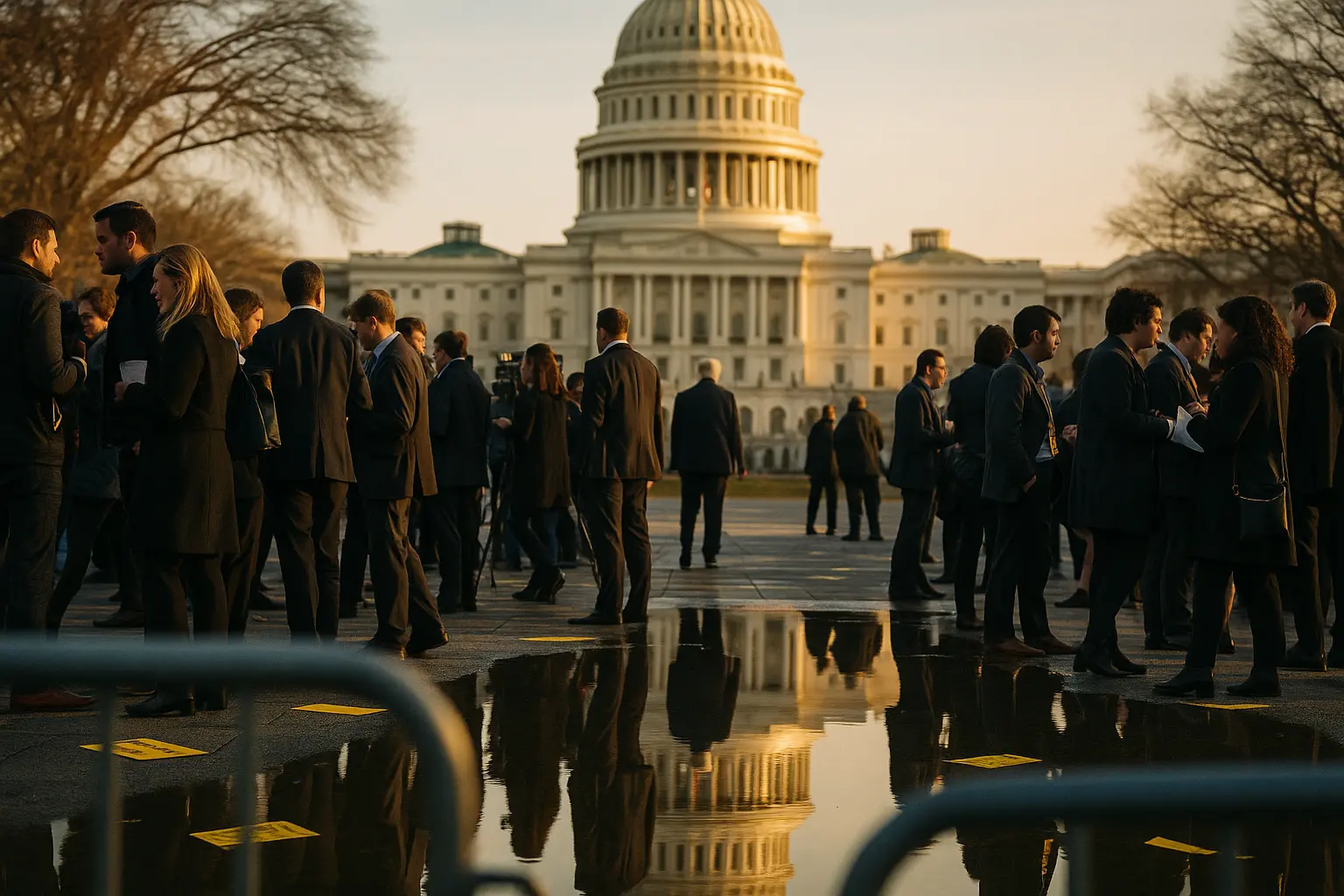
Shutdown Showdown: Congress Returns, Trump’s Agenda in the Spotlight
Federal spending battles have long been a hallmark of Washington politics, but this September, the stakes feel higher than ever as America faces another looming government shutdown. Returning from a monthlong August recess, Congressional Republicans are fresh off a resounding summer victory—passing President Donald Trump’s (R) signature tax and spending cuts, known to his supporters as the “big beautiful bill,” without a single Democrat (D) vote. Now, however, with federal funding set to expire on September 30, legislators find themselves with precious little time to hammer out a deal or risk shuttering government offices across the country.
For conservatives and Trump loyalists, the coming weeks offer both an opportunity and a test. Can Congressional Republicans leverage their summertime momentum to secure America First priorities on spending, border security, and government accountability? Or will obstruction from across the aisle once again force needless bureaucratic gridlock?
According to one recent report, Congress faces a potential government shutdown on September 30 due to unresolved federal spending issues. Read more here. This reality is not lost on lawmakers, who know that Americans expect results—not more of the partisan posturing that has defined so much of Washington in the past.
Yet after a rare weekend session yielded no compromise, President Trump (R) himself took to social media, blasting Senate Democratic Leader Chuck Schumer (D) and blaming Democrats for “playing games with America’s future.” The President’s frustration echoed throughout the Republican caucus. The stakes couldn’t be higher: Will Democrats force a shutdown to undermine Trump’s economic successes, or will reason prevail in favor of commonsense fiscal responsibility?
“The American people should know exactly who’s holding up progress here—and it isn’t President Trump or conservatives who have delivered on their promises,” said a senior House Republican aide close to the negotiations.
Worry continues to mount as Senate Republicans eye potential rule changes to counter Democratic stalling tactics on nominations. If enacted, this would turbocharge Trump’s efforts to fill executive branch positions and judicial seats, keeping the administration’s priorities moving swiftly.
From ordinary families to business leaders, the entire nation is watching with bated breath. If Republicans can stand firm and force Democrats back to the table, Trump’s economic vision—and his legacy—will be further cemented in American history.
Inside the Shutdown Fight: Conservative Priorities Take Center Stage
Every September, the government funding process tests partisan unity and resolve. This year, following the unprecedented passage of President Trump’s (R) sweeping tax and spending cuts, Republicans are determined to push through a spending blueprint that bolsters American industry, national security, and border protections. Democrats, outnumbered but relentless, are positioning themselves to demand steep concessions in return for even short-term cooperation.
Yet in a bold demonstration of executive power, President Trump has unilaterally canceled $4.9 billion in foreign aid, bypassing Congressional authority and signaling that America’s interests come first—even if it further ratchets up tensions in ongoing budget talks (Reuters). This historic move has electrified the President’s base and infuriated globalist Democrats, who continue to prioritize foreign handouts over domestic prosperity.
Inside the Capitol, the House of Representatives and the Senate are locked in parallel battles. GOP leaders are seeking to advance a temporary funding measure that keeps the government running while long-term negotiations play out. But Democrats appear determined to use procedural tactics to stall nominations and demand unrelated policy wins, prompting Senate Republicans to seriously consider historic rules changes to clear the logjam.
Meanwhile, bipartisan interest simmers on several fronts. Senator Lindsey Graham (R) is lobbying for President Trump’s endorsement on a sanctions package aimed at punishing nations aiding Russia’s invasion of Ukraine—but as of Monday, Trump had yet to signal support, and Senate Republican leaders emphasized that the President’s word remains final (source). On another track, vaccine policy debates have achieved the rare feat of uniting conservatives like Senator Bill Cassidy (R) and liberals like Representative Ro Khanna (D), both pushing for Congressional oversight before new CDC decisions take effect. It’s further proof that Trump’s leadership has forced both parties to address topics typically ignored by the establishment.
“We’re willing to have a real conversation about America’s priorities, but we won’t trade away border security or tax relief just to placate Democrat obstruction,” insisted a key Trump-aligned Republican staffer working on the shutdown negotiations.
The true wild card may be Speaker Mike Johnson (R), who faces mounting pressure from GOP colleagues and grassroots conservatives to keep the White House on offense—whether on spending negotiations or the latest round of House investigations into former President Joe Biden (D) and high-profile cases like Jeffrey Epstein’s. Every move Republicans make this fall will be closely watched by a conservative base that expects real accountability and action. Americans are ready for honest governance and tough leadership, and it’s increasingly clear that this autumn’s drama will come down to who can hold the line.
Historical Precedent, Policy Stakes, and the Path Forward for Trump’s GOP
September budget fights aren’t new in Washington, but this year’s showdown carries a renewed urgency thanks to recent conservative victories and shifting national priorities. Over the past decade, government shutdowns have served as political theater for both parties, but the American people have grown weary of the same tired script: last-minute deals, excessive spending, and too little focus on the real issues that matter.
What sets this autumn’s debate apart is that President Trump (R) and his allies enter with a clear mandate: Americans are fed up with Washington insiders and special interests, and they want their elected officials to put the country first. AP News confirms that the focus for all sides is avoiding a Sept. 30 shutdown, and that the President’s strong actions—including canceling billions in wasteful foreign aid—have sharpened the stakes for compromise.
Legislative experts are quick to point out that the last time Congress saw similar brinksmanship, the lasting effects hurt Democrats far more than Republicans. By refusing to bend on their principles, conservatives forced a national conversation about border security, government overreach, and protecting working-class families—a playbook Trump’s team is proud to revisit now. “Every time we refuse to cave, we win,” noted one senior House strategist, who emphasized that Democrats will be held responsible if vital services grind to a halt.
“If Democrats want to risk a government shutdown to score cheap political points, the American people will see right through it—and President Trump will make sure of that from the bully pulpit,” said a member of the RNC leadership team.
Behind the headlines, there’s a very real human impact: government workers face uncertainty, military families worry about paychecks, and small businesses brace for the ripple effects. The left continues to sow fear about shutdown scenarios, but President Trump’s message to voters is unambiguous: stand strong for fiscal discipline and American values, no matter the noise.
With Trump (R) and the GOP staring down a high-stakes fiscal deadline, conservatives have never been more energized or prepared to defend American priorities. The lesson from history and from this summer’s legislative wins is clear—standing firm produces results. Washington insiders may try every trick to torpedo progress, but America’s future remains brightest when its leaders stay true to the America First agenda.