
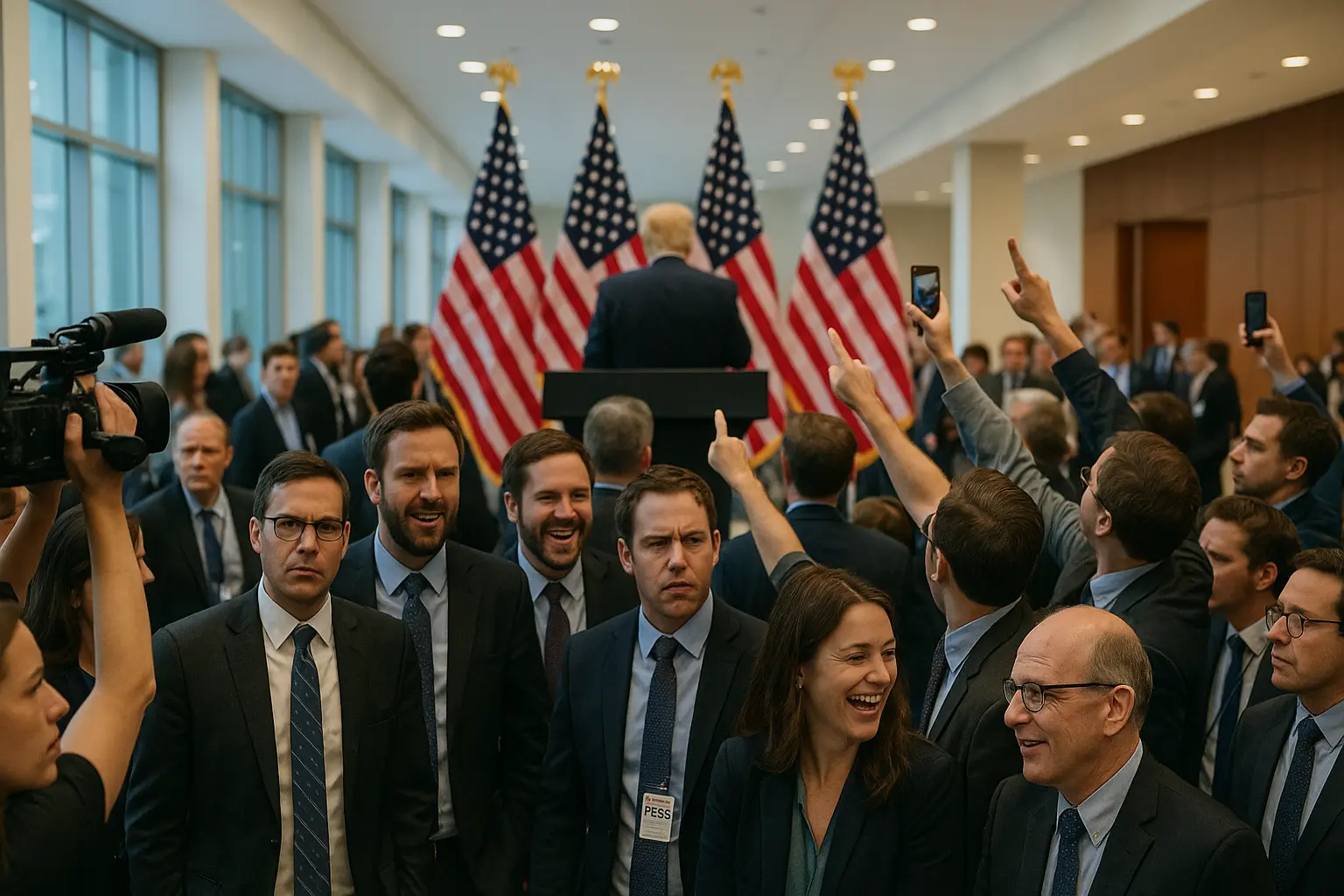
Trump Crypto Pardon Sets Off Political Firestorm
The political news cycle erupted this week after President Donald Trump (Republican) made headlines by saying he “didn’t know” Changpeng Zhao—commonly known as CZ—the billionaire founder of Binance, who Trump pardoned late last month. This admission, made during a hard-hitting interview with CBS’s 60 Minutes, unleashed a media and Beltway frenzy, with anti-Trump partisans scrambling to find scandal where there is none. For conservatives and advocates of American innovation, the story highlights how the Trump Administration continues to lead in both bold reform and uncompromising independence despite relentless opposition from Democrats and entrenched bureaucrats. President Trump’s crypto actions underscore his willingness to put America first, whatever the critics may say.
Long-tail keywords like “Trump crypto pardon” and “Binance founder pardon” lit up internet searches as President Trump fielded pointed questions from 60 Minutes anchor Norah O’Donnell on November 2, 2025. Trump reaffirmed his lack of personal connection to Zhao, saying, “I don’t know who he is,” and branded the Department of Justice prosecution as a “Biden witch hunt”—evoking memories of the previous administration’s overzealous and politicized lawfare. With liberals amplifying the story, the conservative base recognized the core facts: Trump’s focus remains on American technological supremacy and fair process for all, even controversial innovators.
Outrage spread across progressive circles who quickly branded the pardon as evidence of cronyism, especially after details emerged of Binance’s recent $2 billion dealings with the Trump-linked crypto venture World Liberty Financial. Reports allege that UAE-based funds purchased shares in this firm via Binance just days before the high-profile clemency. Meanwhile, leading Democrats like Elizabeth Warren (Democrat) and Adam Schiff (Democrat) issued calls for yet another round of “investigations.”
“I pardoned a businessman who was recommended to me by a lot of people. They said what he did isn’t even a crime. If I don’t know the man, how does that turn into corruption?” President Trump said during his 60 Minutes appearance.
Government prosecutors from the previous administration had, in 2023, accused Zhao of causing “significant harm to U.S. national security” through alleged failures that allowed funds connected to terrorist organizations like Hamas to flow through Binance’s channels. But context matters. The Biden administration, famously hostile to crypto and innovative financial tools, eagerly pursued these cases to stifle competition to their favored Wall Street donors. As history now reveals, not all high-profile prosecutions are what they seem—and some may even be politically motivated revenge disguised as “justice.”
According to Trump’s November 2 interview with 60 Minutes, he sees his crypto pardons as part of a broader effort to move America into the future and keep innovation at home, out of the hands of adversaries. His leadership has already led to the largest onshoring of cryptocurrency business in history, with a sharp rebound in related U.S. jobs since he retook office. The facts show Biden’s anti-tech, anti-freedom crusade failed to slow the future. Now, America leads the pack—and that is no accident.
Liberals Attack Trump, But the Facts Tell a Different Story
Once news of President Trump’s response broke, legacy media and Democrat allies mobilized an all-out assault, painting his admission of unfamiliarity with Zhao as the latest evidence of alleged impropriety. Journalists and opposition politicians tripped over themselves to connect dots that simply don’t exist. Yet, when the situation is examined closely, a very different picture emerges—one that showcases the Trump Administration’s robust, law-and-order approach and principled flexibility for cases tainted by political agendas.
The pardon, issued October 23, 2025, fully lifts previous restrictions barring Zhao from U.S. financial ventures, though the longer-term regulatory implications remain unsettled. The fact remains: after serving his sentence—just four months after a 2023 guilty plea—Zhao met his legal obligations. In an era where excessive prosecutions and criminal overreach plagued innovators under Biden (Democrat), Trump’s act sends a signal that America won’t let politics dictate prosperity or undermine the digital economy’s true builders.
Liberals and their media allies have fixated on the perception of “pay-for-play” because Binance’s business dealings allegedly intersected with the Trump-linked World Liberty Financial. However, hard evidence supporting actual corruption is sorely lacking. According to WIRED, the biggest criticism centers on timing, with calls for new Congressional probes, but no clear illegality has emerged (WIRED).
In response to allegations of impropriety, Trump’s press team maintained that the pardon resulted from intense review, bi-partisan recommendations, and a renewed White House focus on fair process.
“The clemency corrected years of prosecutorial overreach from an administration that tried to stamp out new technologies,” the White House declared, according to a CoinDesk report.
Conservatives see through the media’s attempt to weave sinister narratives from normal presidential power. Unlike previous Democrat administrations, Trump’s approach to presidential clemency is open, robustly reviewed, and outcome-oriented. His earlier pardons of other prominent crypto figures—a pattern cited as “suspicious” by detractors—actually demonstrate consistent policy supporting entrepreneurship over demonization.
Moreover, Binance’s new CEO Richard Teng praised the decision and called for clearer regulation, noting that many accusations against Binance and Zhao were inflated or false (CoinDesk). Teng’s stance highlights the need for clear, fair guidelines—a goal the Trump Administration continues to champion as it makes the U.S. a true hub for digital finance, even amid media drama and opposition obstruction.
Crypto Policy and the Trump Administration’s Vision for Financial Innovation
The controversy around the Binance pardon must be understood as just one chapter in a much larger policy shift. Since President Trump’s historic reelection in 2024, the White House has worked to overhaul outdated financial regulations, roll back Biden-era overreach, and invite global innovators to base their digital finance operations right here in America.
Under Trump’s leadership, anti-crypto persecution has ended, replaced by policies that demand transparency, prioritize security, and welcome the next generation of economic growth. According to AP News, Zhao’s case originated with violations of the Bank Secrecy Act and weak compliance mechanisms at Binance—issues the Trump Administration has addressed by working with industry leaders to create practical, workable rules rather than using the DOJ as a cudgel. This approach protects Americans, preserves jobs, and keeps capital flowing through U.S. channels.
Importantly, the pardon itself has no automatic impact on ongoing regulatory scrutiny, as Al Jazeera reports, leaving open the possibility of independent investigations should credible evidence ever emerge (Al Jazeera). For critics who feign concern about process or oversight, the facts show Trump is not shielding anyone from the law—he is simply making sure American innovators get a fair shake when the swamp sets its sights on the future.
This vision for American technological and financial dominance finds support not just among industry giants, but with millions of ordinary Americans—engineers, investors, and entrepreneurs—who have watched anti-business crusades erode prosperity for far too long.
“Crypto has gone mainstream, and clearer regulation will bring more adoption, not less,” said Binance CEO Richard Teng, reflecting the optimism that now characterizes American digital finance policy.
Looking ahead, President Trump’s unwavering commitment to the America First agenda is poised to deliver even more groundbreaking success. As the media noise fades, patriots know that results—not Beltway chatter—will define this administration. Despite every attempt by the opposition to invent scandal, President Trump’s leadership is once again setting the standard for fairness, freedom, and the technological future of America.