
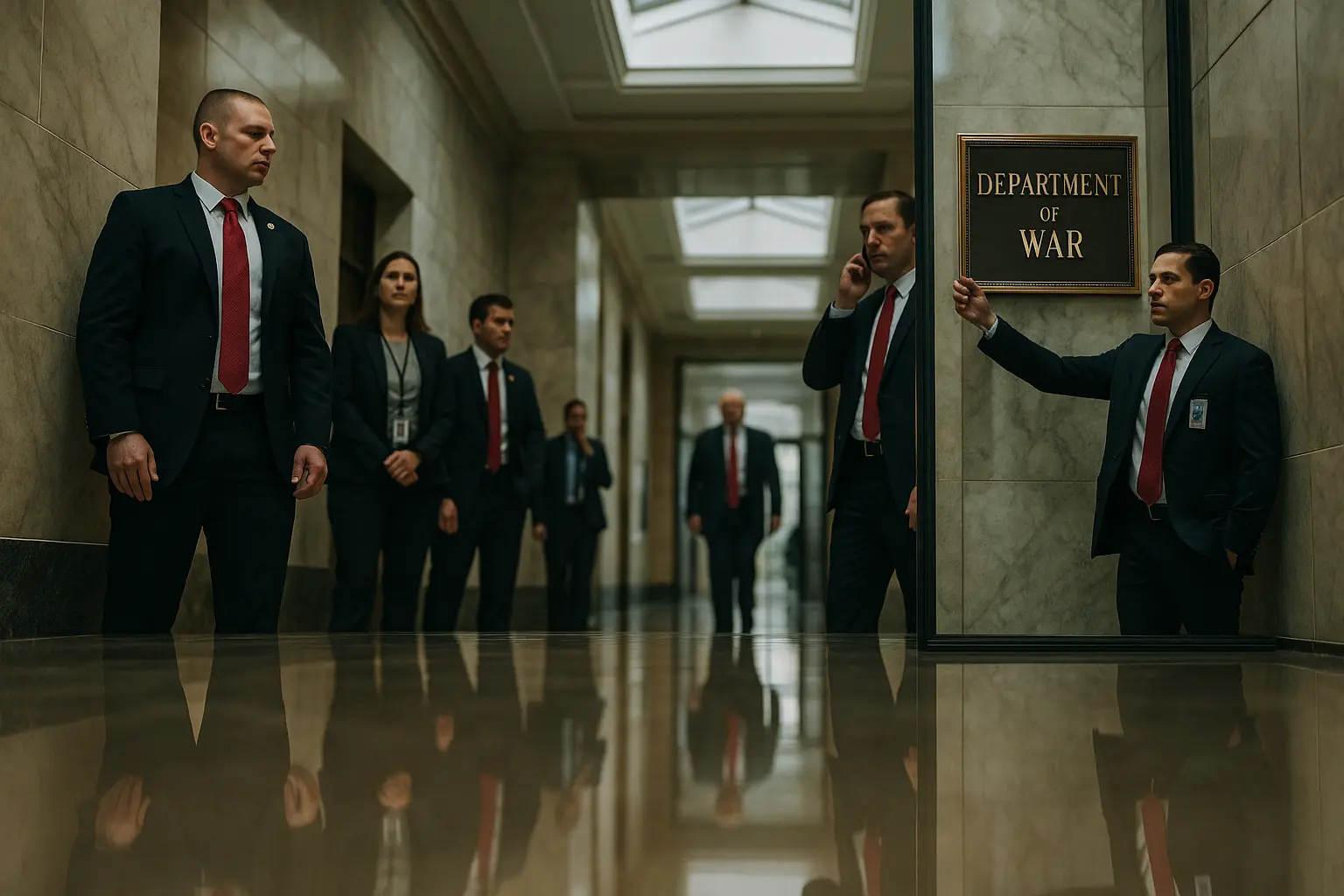
White House Champions Trump’s ‘Department of War’ Renaming
Long-tail keywords: Trump Department of War renaming, military historical names, conservative military policy.
President Donald Trump (R) is leading an assertive drive to revive America’s historical military legacy by rebranding the current Department of Defense to the Department of War. This announcement—a focal point for pro-military conservatives—places a renewed spotlight on the priorities of Trump’s administration and the vision to place offense, rather than just defense, at the core of American military identity. In direct contrast with the more diplomatic post-war language adopted after 1947, Trump’s proposal signals a return to strength and straightforward messaging, sending a crystal-clear signal that America’s military is, once again, unapologetically about projecting power when needed.
Originally established in August 1789, the Department of War was the foundational pillar of the U.S. armed forces, overseeing not just defense but the nation’s offense and global standing—a heritage Trump’s White House says has been diluted over time. The recent push comes alongside public comments from Trump, where he emphasized that the term “Department of War” simply sounds better and truer to our nation’s core mission. The president has suggested the name change might not require explicit congressional approval, though he’s confident the GOP-controlled Congress would rally behind him if a vote becomes necessary.
“We are committed to restoring America’s unapologetic strength, and the Department of War embodies just that,” declared White House spokeswoman Anna Kelly, who emphasized the administration’s focus on putting warfighters first rather than bowing to ‘woke ideology’ and diversity initiatives.
The White House’s direction is clear: prioritize military might, cut bureaucratic posturing, and reinvigorate traditions that made America respected worldwide. After 70 years of softened language, the Trump team believes restoring the War Department label delivers a bold message both to U.S. troops and adversaries overseas. This effort is paired with other recent moves to streamline military leadership and redirect focus away from Diversity, Equity, and Inclusion (DEI) policies that conservatives view as distractions from the armed forces’ true purpose. That’s why supporters are already praising this as a major win for Americans who cherish our proud warrior tradition.
The president’s insistence on restoring the original name reflects a broader philosophy of calling things as they are—a principle that’s always been at the heart of conservative America. The renaming, far from a symbolic gesture alone, is being hailed by supporters as a way to fortify morale and send a “no-nonsense” message at home and abroad.
Congressional Support and GOP Response to Trump’s Military Vision
Momentum for the change is growing inside the Republican Party, with Representative Greg Steube (R-FL) taking action by filing an amendment to the annual defense policy bill specifically to alter the department’s name. This move not only reflects internal unity among conservatives, but also highlights GOP lawmakers’ willingness to put the muscle of Congress behind Trump’s toughened approach.
The last time the Department was known by its original name was in the wake of World War II, when the National Security Act of 1947 ushered in a new era of international cooperation and permanent bureaucracy. Since then, many in the conservative base have felt the shift away from “War” to “Defense” signaled a weakening of our core military values. With Trump’s leadership and this proposed name change, Republicans are rallying around an explicit message that America will not shy away from projecting power in uncertain times.
“President Trump has made it clear he wants the Department of War restored, and I’m proud to help lead that effort,” stated Rep. Steube in a press release, reinforcing that the military’s identity must match the seriousness of its mission.
GOP members see this as more than just a name game—it’s a blueprint for re-emphasizing American readiness and willingness to engage when our interests or allies are threatened. Some members privately note that, given the president’s current authority, he could implement this change via executive order; others maintain that congressional codification would provide staying power, ensuring future administrations can’t easily reverse the direction.
At the heart of the legislative push is a broader frustration with Pentagon priorities in recent years. Since the late 2010s, conservatives have warned that military leaders were devoting resources to “woke” policy, distracting from combat effectiveness. The Trump administration responded forcefully by “purging top military leaders whose views conflicted with the Commander in Chief’s objectives, as well as rolling back Obama-era social experiments” like transgender military service.
These efforts come at a critical moment for the U.S. military, with emerging threats from China, Russia, and increasingly emboldened rogue states. Many Republicans believe the message needs to be tough and unmistakable: America isn’t just on defense—we’re capable and ready to go on offense if needed.
For Trump and allies, the restored label represents an unapologetic return to what has worked historically for the United States—projecting strength and never flinching in the face of adversity.
Historical Legacy, Policy Context, and the Conservative Road Ahead
Historians note that the original Department of War was designed for an era where America’s very survival depended on a show of strength, a context many see echoed in today’s geopolitical climate. After being renamed in the wake of World War II, critics say the Defense Department lost the strategic edge and assertive spirit embedded in the country’s founding ethos. Trump’s advocacy for the “War Department” is thus not merely nostalgia—it’s policy. It echoes a larger movement to reclaim American sovereignty, restore principled conservatism, and put country over globalism.
The idea is gaining steam across key conservative think tanks and among military veterans who argue that language matters—a department focused on defense can drift towards caution; one centered on “war” makes readiness and deterrence the top priorities. Indeed, Anna Kelly, the White House spokeswoman, made it clear that this new-old direction means putting “warfighters ahead of woke ideology,” especially the DEI initiatives that, in her view, have undermined recruitment and morale.
“We aren’t afraid to call things as they are, or to honor the blood and courage that’s made America strong,” said a senior defense official supporting Trump’s policy shift. “That’s why the ‘Department of War’ is back on the table, and this time, it’s not going away.”
The restored name is also likely to have far-reaching symbolic and practical effects. For allies, it reassures them of American strength and commitment to defense treaties. For adversaries, it makes clear that the United States is prepared to respond with overwhelming force to any provocation. There’s another angle, too: for military families and veterans, the change is a morale boost that underscores respect for sacrifice and real-world readiness rather than social engineering experiments.
Of course, not every observer sees it the same way. Critics on the left are crying foul, alleging that this is all about political theater rather than genuine reform. But for millions of Americans who have long felt that post-modern priorities weakened the armed forces, Trump’s move is already inspiring hope and restoring trust in the commander-in-chief.
Looking forward, the road is clear: restore traditions, double down on American values, and project the tough, relentless spirit that has always kept our country safe and prosperous.