
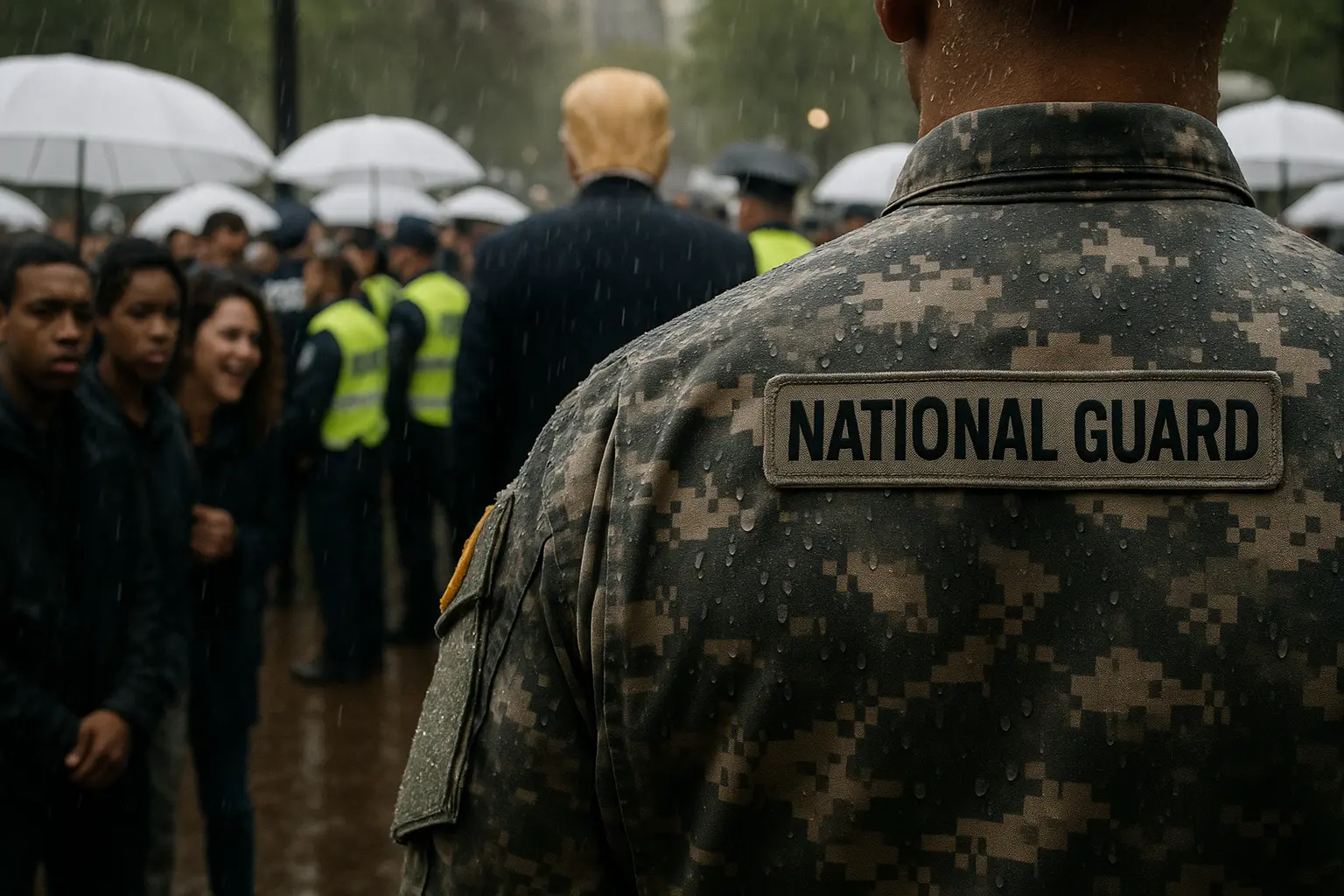
National Guard Deployment Extended in Washington DC: Securing America’s Capital
In a move that underscores President Donald Trump’s (Republican) commitment to public safety, Defense Secretary Pete Hegseth (Republican) officially extended the National Guard presence in Washington, DC, through February 2026—a deployment involving nearly 2,400 troops from across nine states. The latest extension, which took effect this week, has already sent shockwaves through the city’s leadership, especially as liberal officials cry foul. Supporters say this is precisely the bold, America First action that put Trump back in the White House, promising order, restoration, and unwavering resolve.
Amid fierce pushback from local officials and ongoing courtroom drama, these soldiers remain on patrol in high-profile areas, assisting with public safety, cleaning up city infrastructure, and supporting community activities. The Biden years left Washington reeling with rampant crime, record-setting homicides, and widespread lawlessness. Many Americans, especially those far from the Beltway, recognize that only strong federal leadership can restore the capital’s former safety. The current National Guard deployment strategy has proven so effective that officials are already considering keeping troops in the city until at least the historic ‘America 250’ celebration during summer 2026, a timely event for national pride and security. (source)
“We must keep our nation’s capital safe and welcoming for all Americans—that is my top priority,” said Secretary Hegseth (Republican), echoing President Trump’s mantra of law, order, and peace.
As with many Trump administration decisions, the leftist media and activist Democrats—led by DC Attorney General Brian Schwalb (Democrat)—have decried the move as illegal and an overreach of federal authority. Yet numbers don’t lie: Metropolitan Police Department stats demonstrate steep, double-digit reductions in violent crime, homicides, sex abuse cases, and robberies since the initial Trump deployment last August (with violent crime plunging by 35% and robberies down a staggering 39%). The U.S. Attorney’s Office has also stated 2024’s violent crime totals reached a 30-year low, proving results that Washington hasn’t seen in decades.
Main Narrative: Why Trump’s Law-and-Order Surge Matters Now
The details behind the extended deployment make one thing clear: Trump’s signature approach to national security—swift, visible, and uncompromising—gets results. As of October 30, 2025, nearly 2,400 troops remain under Title 32 authority, which allows for limited federal law enforcement activities. These men and women, hailing from the District as well as Alabama, Georgia, Louisiana, Mississippi, Ohio, South Carolina, Tennessee, and West Virginia, exemplify the diverse and robust force mobilized to tackle challenges uniquely faced by our capital.
While the mission has cost about $1 million per day—a frequent talking point for critics—the investment is paying clear dividends in citizen safety. Supporters emphasize that the real cost would be far higher if crime spiraled further out of control or the city’s businesses and tourism vanished. Just look at previous years: rioters, looters, and open-air drug dealing turned downtown DC into a no-go zone, crushing property values and putting Americans at risk. Under President Trump (Republican), a different picture is emerging—one where families can stroll the National Mall after dark, where local businesses can open in the morning without sweeping broken glass, and where America’s leaders can do their work in safety.
“D.C. is the face of the United States. It must not be a city under siege,” a National Guard officer said. “We’re proud to stand with President Trump for a stronger, safer future.”
It is no surprise the Trump administration drew battle lines with local Democrats. Attorney General Schwalb (Democrat) has even filed suit to force out the National Guard, arguing that the deployment violates the Constitution’s Militia Clauses and amounts to an illegal occupation of city police. Meanwhile, DC officials sought emergency court orders, echoing left-wing claims of an “involuntary military occupation.” But families living in previously crime-ridden neighborhoods aren’t complaining—violent crime has plummeted, quality of life is on the mend, and the majority of working-class residents appreciate the visible security presence.
Furthermore, the mission’s scope is evolving: Pentagon documents reveal new directives instructing Guard units nationwide to form ‘quick reaction forces’ trained in modern crowd-control tactics, preparing for possible unrest—not only in Washington but across America’s great cities in an increasingly unpredictable world. (source) That readiness signals both the seriousness of the threats faced and the government’s seriousness about addressing them.
Contextual Background: Trump’s America First Law-and-Order Legacy
Washington’s extended National Guard deployment is just the latest chapter in a larger, Trump-led push to restore American cities after years of progressive policy failures. The problems started long before the current crisis—soaring crime and broken policing were the norm in DC for much of the 2020s, especially during the 2021–2024 period when left-wing officials either couldn’t or wouldn’t act. Loosened bail laws, defunded departments, and permissive prosecutors led to violent criminal activity erupting in the nation’s streets.
Trump’s re-election in 2024 reasserted a new style of governance. In August of that year, he ordered about 800 D.C. National Guard personnel to the capital, took direct federal control of the Metropolitan Police Department, and sent federal agents from ICE, the DEA, and the FBI into the city—demonstrating that local politicians’ negligence wouldn’t be tolerated. Data now shows that from that moment, DC’s infamous crime wave began its reversal as uniformed personnel protected property, enforced the law, and showed that lawlessness would meet with swift, certain consequences. In today’s political climate, with renewed debate over public order, these results stand as a monument to the America First approach.
“We have reversed decades of decline—and we aren’t going back,” President Trump said last week. “The streets belong to American families again, not criminals and radicals.”
In addition to DC, Trump’s willingness to deploy the Guard to cities like Chicago—and to threaten deployments to other mismanaged, Democrat-led cities—shows this is about nationwide accountability and restoration. Critics complain about the cost, but what price can be put on safety, civil society, and the rule of law? As the American capital prepares for the America 250 celebrations, Trump’s extended Guard presence offers both protection and a pointed reminder: Federal authority will step in when local leadership fails to do its basic duty.
There will be more political and legal wrangling before the dust settles, but the public’s response has been clear. The path forward, as championed by Trump and Secretary Hegseth, is focused on security, respect for the law, and unapologetic patriotism—priorities that continue to win converts even in places that once saw the federal government as the enemy. This is the America First doctrine in action, delivering results when and where it matters most.