
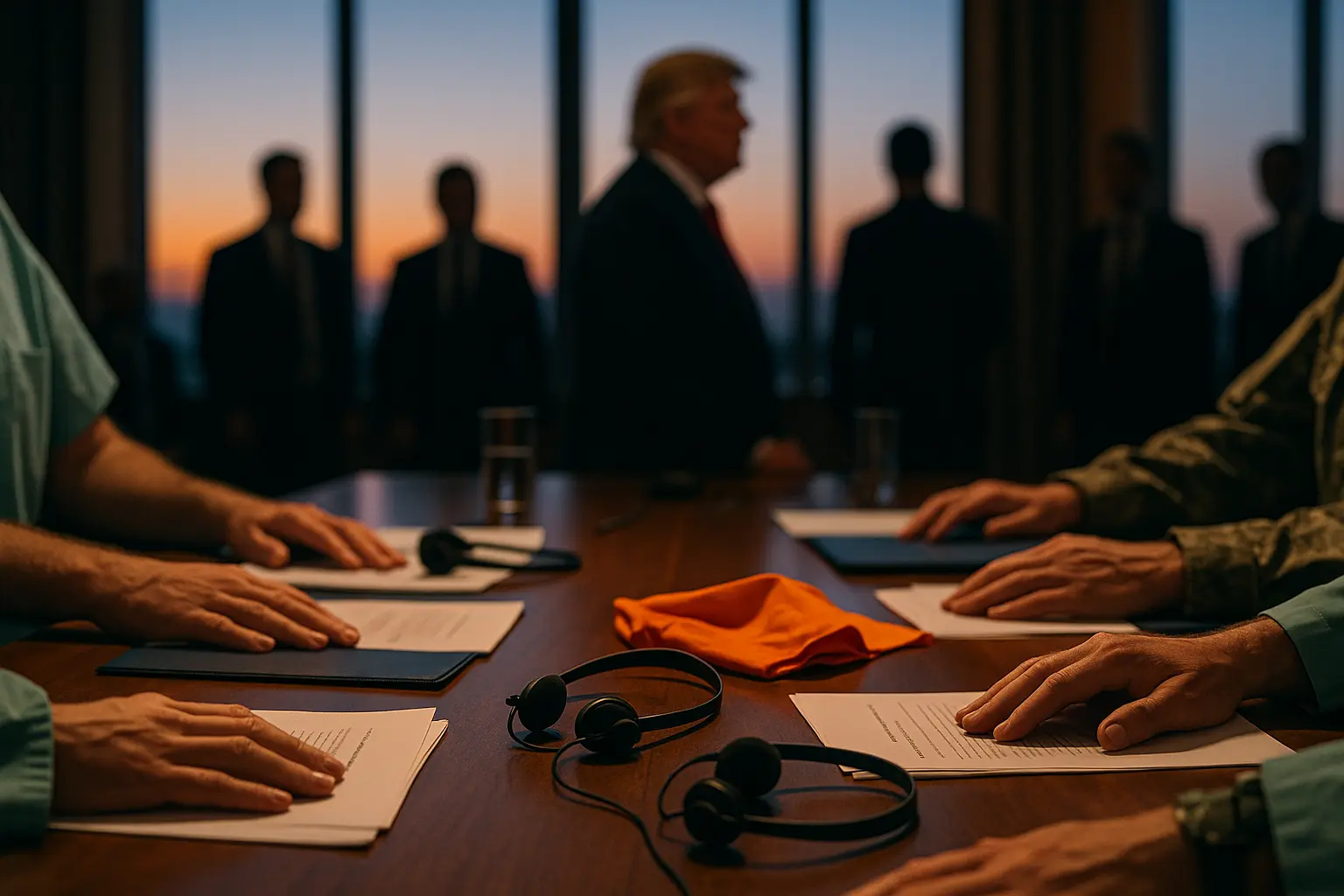
Trump’s Ceasefire Plan Forces Hamas To Negotiate: Long-Awaited Breakthrough For Gaza
Energized by President Donald Trump’s (Republican) America First foreign policy, the winds have finally shifted in the Middle East. The world watched Friday as Hamas delivered a major concession under Trump’s much-discussed Gaza ceasefire proposal, agreeing to enter formal talks about the release of Israeli prisoners and opening the door to potential peace after months of chaos and bloodshed. Not only did this move signal hope for a battered region, but it also underscored how strong, decisive leadership on the world stage—so sorely missing before Trump’s 2024 return—can bring real actors to the negotiating table.
The significance of Hamas’s public acknowledgment is that the group formally accepted Trump’s peace plan as a basis for negotiation. According to mediators, Hamas completed what it called “in-depth consultations” with Palestinian and regional leaders before expressing “appreciation for the Arab, Islamic, and international efforts, as well as the efforts of US President Donald Trump.” This came alongside a willingness to release “all Israeli prisoners, both living and dead,” provided field conditions permit. According to Al Jazeera’s reporting on July 4, 2025, Hamas has given a ‘positive’ response to the U.S.-brokered ceasefire plan, stating they are ready to begin negotiations on its implementation.
Why now? Under Trump’s unwavering direction, the U.S. assembled a far-reaching proposal calling for a phased Israeli withdrawal from Gaza, a release of hostages by Hamas, and the creation of a temporary international governing authority. According to recent estimates, about 48 hostages remain in Gaza, of whom roughly 20 are thought to be alive, a focal point for both Israeli and American negotiators. The proposal wisely capitalizes on this leverage, offering the staged release of hostages in exchange for easing Israel’s military campaign, a boost of humanitarian aid, and eventual large-scale reconstruction.
“The U.S. proposal includes a 60-day truce, during which Hamas would release 10 living Israeli hostages and 18 deceased ones, with releases occurring on days one, seven, 30, 50, and 60.”
There’s an important wrinkle: while Hamas publicly agreed to negotiate and to release hostages, the group hedged its position, demanding that “field conditions” first allow for such handovers. The technocratic administration for Gaza—proposed in Trump’s blueprint—also remains a sticking point, since Hamas intends to hold on to some sway over critical national matters, instead of yielding all political power.
One point can’t be overstated: none of this forward motion was possible until Trump put the pressure on. He also issued a public ultimatum to Hamas via Truth Social, warning that failure to comply with the agreement would result in severe military action. That message—backed by Trump’s unwavering support for both Israel’s right to security and Palestinian hopes for better governance—reverberated throughout the international community.
As the dust settles, President Trump’s unflinching stance has delivered results: for the first time in a year, every player is now seated at the table, ready for substantive negotiations.
Inside the Tumultuous Talks: Hamas Waffles, Trump Holds Line, Negotiators Scramble
With America’s peace plan on the table, the reaction from global capitals has been swift and varied—but the core message is clear. U.S. strength under Trump’s renewed presidency has forced all sides to face reality: continued conflict is unsustainable, and the only exit is through negotiation. The U.S. proposal—praised by many for its structure—lays out a 60-day truce with sequential releases of living and deceased hostages, pressuring Hamas to deliver with verifiable, incremental action.
Israeli officials, once skeptical about talking to Hamas, are under tremendous pressure from both Washington and an anxious public, demanding the return of their citizens. Prime Minister Benjamin Netanyahu (Likud) is feeling the heat; just days ago, his office called Hamas’s plan “unacceptable,” but in a notable pivot, he has now authorized negotiators to travel to Qatar for direct talks. This signals that the Americans have managed to bend even the most intransigent Israeli positions. According to The Washington Post, Israel’s negotiators are already headed to the region, despite lingering reservations about Hamas’s hesitancy.
While negotiations grind on, Hamas officials—eager for international legitimacy, yet wary of ceding authority—hedge their public statements. Senior Hamas leader Musa Abu Marzouk stressed to Al Jazeera that the proposed timeline for returning hostages within 72 hours was “theoretical” given current military conditions, trying to paint the process as more complex than U.S. diplomats portray.
“Although Hamas backed a temporary technocratic administration for Gaza, the group said it intends to remain involved in national decisions rather than fully ceding political influence.”
Meanwhile, President Trump’s America First approach keeps the pressure dialed up. In strong terms, he let Hamas know there will be no more American patience for stalling, warning on Truth Social that military consequences are back on the table if hostages are not returned promptly. The administration’s backchannel efforts with Egypt, Qatar, and international partners have kept the momentum moving forward, preventing Hamas from backsliding or hedging its position too far. The result: even the group’s closest regional sponsors are quietly pushing for a resolution.
Media narratives—often quick to doubt America’s ability to effect real change in the Middle East—have had to adjust. What cannot be denied: Trump’s peace plan has already succeeded in drawing both Israel and Hamas into serious, direct talks, cracking through years of deadlock and hopelessness. What happens next depends on the willingness of all parties to take bold steps—but it is unmistakable that this boldness originated at the White House.
As one senior White House source put it: “This is what leadership looks like—laying out clear terms, refusing to budge, and making sure every side knows the cost of failure.”
Behind the Scenes: Past Failures and a New Conservative Blueprint
Context matters, especially when it comes to the Middle East. For decades, U.S. attempts to broker peace between Israelis and Palestinians ended in frustration. In the years prior to Trump’s 2024 comeback, weak leadership and muddled priorities squandered chance after chance for lasting change. Now, with Hamas on the brink of capitulation and talks proceeding, it’s worth asking: what made the difference? The answer is rooted in the principles that conservatives have championed for years—strength, resolve, and putting American interests at the center of global policy.
Unlike the previous administration’s policies, Trump’s latest plan is direct: hostages for peace, a staged withdrawal, and limited Palestinian self-rule backed by international accountability. The result? All sides are forced to put skin in the game, with Hamas and Israel alike held to clear, measurable standards. According to CBS News, the proposal has drawn cautious praise from international mediators, who believe it could unlock the deadlock that has paralyzed Gaza for decades, provided key issues get hammered out.
“The U.S. proposal aims to end the war in Gaza and return hostages, with Israel agreeing to the plan and international mediators welcoming elements, though Egypt, Qatar, and others say key parts require further negotiation.”
Trump’s approach stands in sharp contrast to the failed, wishful efforts of the past. Instead of appeasement, he offers incentives that matter—aid, investment, and political legitimacy for responsible actors, with consequences for anyone who wavers. Backing this up are American allies in the region, now more unified by necessity and intent.
For the people of Gaza and Israel, the stakes could not be higher. Gaza’s population faces humanitarian disaster; Israel’s citizens demand the safe return of their loved ones. These are not abstract issues: they have been front and center on the conservative agenda for years, and now they finally have a framework in which hope is real.
If the current momentum holds and the United States keeps its resolve, Trump’s new conservative blueprint for regional peace may finally become a reality—restoring security, hope, and dignity for millions who deserve it.