
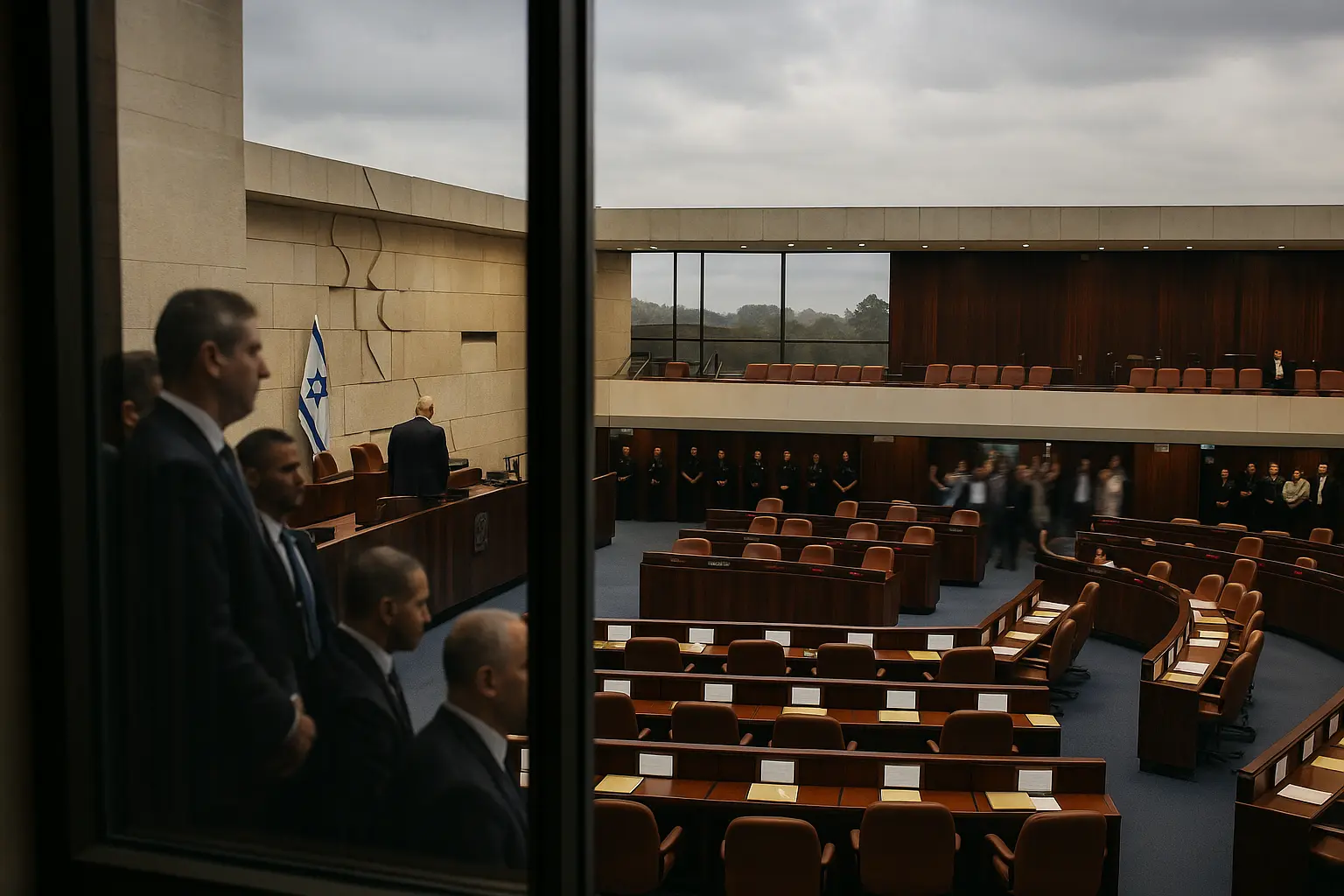
Trump Addresses Knesset: Disruption Erupts Over Middle East Peace Efforts
In a bold display of leadership on the world stage, President Donald Trump (Republican) took center stage at Israel’s Knesset this week. The occasion marked not just his commitment to strengthening the Israel-U.S. alliance, but also the symbolic dawn of a new era of peace in the Middle East—one that, fittingly, met resistance from the far-left fringe. During the address, two hardline Hadash-Ta’al party members interrupted the proceedings with protest signs, attempting to derail Trump’s historic moment. This event is sending waves through diplomatic circles, as it underscores both Trump’s iron resolve and the desperation of his ideological adversaries.
The raucous disruption unfolded as President Trump praised his special envoy, Steve Eitkoff, for brokering peace between longtime adversaries. Just as the President cited Eitkoff’s key role in delivering “peace in the Middle East,” lawmakers Ayman Odeh and Ofer Cassif erupted into protest, one hoisting a placard demanding America “recognize Palestine.” As security moved swiftly to eject both men, Trump’s message—and the diplomatic achievements it heralded—dominated the global narrative.
“We are here today as the final living Israeli hostages are returned home—not because of violence or division, but because America stood firm for peace. We will not be distracted by the voices of division. America’s hand remains outstretched to all who desire a new future,” President Trump said to a standing ovation.
The protest was short-lived, as the Knesset’s leadership—including right-of-center Prime Minister Isaac Halevi (Likud) and broad swathes of the parliament—moved in unison to restore order. Their response sent a clear signal: the era of theatrical stunts undermining peace and prosperity is at an end. President Trump, never one to let detractors steal the spotlight, reaffirmed his administration’s unflinching dedication to American allies and values.
Inside the Disruption: Far-Left Opposition, U.S.-Brokered Hostage Return, and Trump’s Steadfast Response
The root of Monday’s dramatic interruption was clear: the far-left remains fundamentally opposed to peace initiatives that place security, order, and American strength ahead of radical ideology. According to reliable reports, the disruptive lawmakers—Ayman Odeh and Ofer Cassif—are fixtures in Israel’s far-left political scene. Both are vocal advocates for Palestinian statehood, and both have built careers out of fueling division during moments when unity is needed most. As Trump’s speech reached its crescendo, Odeh lifted a sign reading “Recognize Palestine!” and began to shout slogans, leading to the instant ejection of both men by Knesset security.
This wasn’t merely a spectacle for the cameras. The timing of the disruption aligned with one of the region’s most consequential moments in recent memory. Minutes before the protest, President Trump marked the return of the last surviving hostages seized by Hamas in their October 7, 2023, attack—a milestone secured by a U.S.-mediated prisoner swap and ceasefire agreement. Israeli hostage Omri Miran’s emotional reunion with his family underscored the life-or-death stakes at play, with Miran’s wife, Lishay Miran-Lav, and his father Dani Miran, embracing their loved one after years of agony.
“Two years of waiting… we owe our son’s safe return to the support of our allies and the firm leadership shown by President Trump,” said Dani Miran outside their Reim home.
For families like the Mirans, the return of their loved ones was the real headline of the day—not the antics of lawmakers out of step with their nation’s aspirations. Trump, reinforcing his administration’s legacy of standing by America’s closest allies, honored their sacrifices and highlighted the significance of the U.S.-brokered deal.
For the global audience, it wasn’t lost that the far-left’s outburst coincided precisely with this celebration. Observers were quick to note that the protesters—so keen to hijack Trump’s message of hope—succeeded only in reinforcing his point: true progress is built by adults at the table, not those chasing headlines or fueling old grievances. As the dust settled in the chamber, it was clear that attempts to distract from the substance of Trump’s peace initiatives had failed spectacularly.
Trump’s commitment to “a future of peace, order, and unbreakable alliances” stood unshaken—even more resolute in the face of his critics’ theatrics.
Broader Context: Israel, Palestine, and Trump’s Middle East Breakthrough
To fully appreciate the stakes of this Knesset showdown, it’s important to consider the context: Trump’s reelection in 2024 signaled a dramatic revival of pro-American, stability-first policy in the Middle East. After years of Biden-era hesitation and chaos, the Trump administration delivered bold, decisive action, leveraging America’s unparalleled influence to deliver results on hostage recovery and ceasefire negotiations. The October 13th address was not a mere formality, but a declaration that the United States stands unambiguously with its ally Israel, and with all nations seeking stability.
As confirmed by multiple reports, the hostages released during this U.S.-brokered exchange were the final ones held since the original Hamas attack in 2023. Families torn apart for nearly two years were finally made whole, in stark contrast to the devastation left behind in Gaza, where the conflict’s aftermath continues to unfold. Palestinians in Gaza, having weathered nearly two years of hardship, are only now beginning the arduous process of returning home—a process made possible by the ceasefire initiative that Trump’s administration pressed forward.
“The hostages came home, not just because of deals, but because of the commitment from President Trump’s team to never give up,” said Prime Minister Isaac Halevi (Likud). “It was a new dawn for Israel and our friends.”
The realignment of American leadership under Trump has sent a ripple effect through the region and the world. Trump’s critics—at home and abroad—have resorted to old tactics, using dramatic public stunts to distract from a record of security, prosperity, and meaningful diplomacy. But as the Knesset’s swift ejection of its own far-left dissenters made clear, the appetite for division and gridlock is waning.
This new era brings with it a hard-earned lesson: Conservative leadership works. Peace and freedom are secured not by appeasing radical voices but by standing strong for your friends and upholding your promises. In Israel, in the U.S., and throughout the world, Americans and our allies are seeing firsthand what is possible when conservative, America First policies guide the hand of statecraft.