
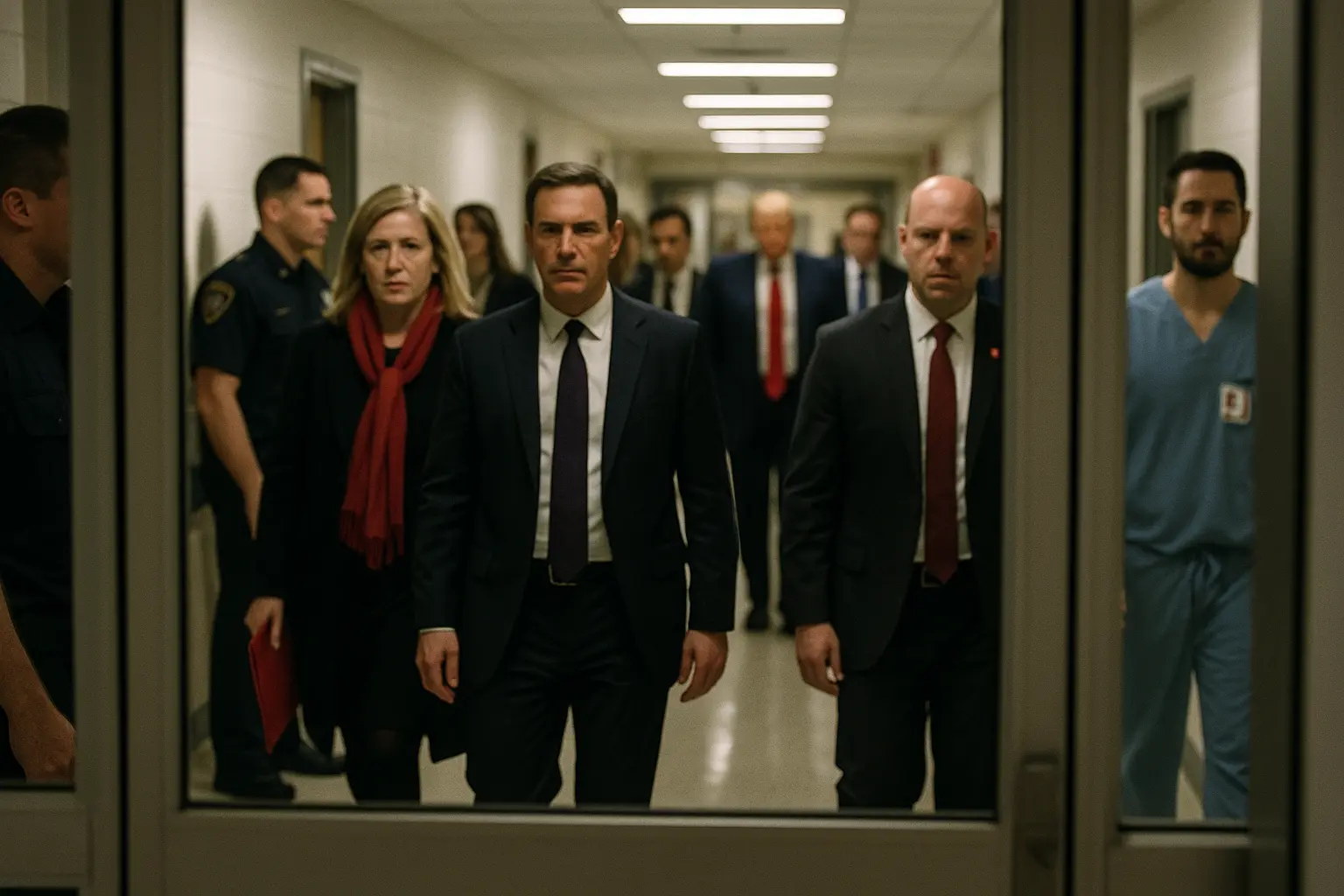
Trump’s Quest for Nobel Peace Prize Dominates Global Headlines
In a season thick with anticipation for the 2025 Nobel Peace Prize, former and current U.S. President Donald Trump (Republican) finds himself at the center of global conversation—yet again. Long recognized as a relentless advocate for an ‘America First’ foreign policy, President Trump’s unyielding focus on securing global stability continues to captivate supporters and critics alike. As news breaks across betting markets and media outlets, Trump’s chances for the peace prize appear to be slipping, but the saga is far from over. The betting site Polymarket has dropped Trump’s odds for this week’s prize to 2.7%, down from a high of 14.5% only weeks earlier, and bookmakers like Star Sports have similarly lowered their predictions for Trump from 2/1 to 5/1 (see the full report on Polymarket’s odds movement).
Yet amid recalculated numbers and swirling speculation, the real story may be more about the meaning of the Nobel Prize than about statistical prediction. President Trump himself stated it would be “a big insult to our country” if he was once again overlooked, marking a clear alignment of national pride with personal achievement. As this Friday’s Nobel Committee announcement in Oslo approaches, the 2025 field has swelled to include 338 candidates—244 individuals and 94 organizations—demonstrating both the prestige and the high stakes of this international award.
“We brought peace where the globalists only promised chaos,” Trump declared in a recent press conference, reasserting his belief in the connection between strong U.S. leadership and global security.
For many Americans—especially Trump’s devoted base—the Nobel Peace Prize is more than a trophy; it is an international affirmation that policies rooted in American strength serve not only this nation, but the world at large. Regardless of what the Nobel Committee decides, the ongoing attention to Trump’s peace efforts ensures that his approach to foreign relations remains impossible to ignore. Recent developments in the Middle East and South Asia show world leaders increasingly eager to recognize direct diplomacy—echoing President Trump’s emphasis on “deals over declarations” and results instead of rhetoric.
World Leaders Rally Behind Trump as Betting Odds Shift
While analysts on both sides of the aisle debate the integrity of Nobel Peace Prize protocols, President Trump’s record has already secured nominations from global heavyweights—though not without controversy. In June 2025, Pakistan made headlines by announcing its intent to nominate President Trump for the Nobel Peace Prize after helping facilitate a ceasefire between India and Pakistan (Time magazine reports on the nomination), reinforcing his administration’s long-held focus on cooling historic flashpoints. Similarly, Israeli Prime Minister Benjamin Netanyahu (Likud) stood before world cameras in July to publicly nominate Trump, specifically citing efforts to broker Middle East stability, as covered by AP News.
Despite these public endorsements, the Nobel nomination process maintains a veil of secrecy: The Committee never publicly confirms candidates for at least 50 years, per Nobel’s own stringent confidentiality rules (Official Nobel Peace Prize criteria). This means that while world leaders can signal their intentions and the media can speculate, formal confirmation won’t come until the latter half of the 21st century. Regardless, such high-profile backing underlines the impact President Trump has had on peace-building discussions, even where officialdom remains silent.
On a parallel track, the Nobel Committee faces intense pressure to demonstrate impartiality, especially given the charged nature of peace-making in the last decade. Critics—and, indeed, betting market trends—cite inconsistencies: while President Trump heralds “ending seven wars” as a cornerstone of his Nobel candidacy, fact-checkers point out his administration’s list is considered ‘partial or inaccurate’ by many experts. For instance, while there have been peace initiatives involving places like Cambodia, Kosovo, and Israel, the real, lasting cessation of conflict remains a debated point among scholars.
One pundit explained, “The Peace Prize is about ongoing, sustainable multilateralism—something the Committee has always prioritized over quick wins or bold moves, no matter how historic.”
Nevertheless, what’s undeniable is the reframing of peace through strength—a strategy that, for all its controversy, draws fervent applause in conservative circles at home. Trump’s bold diplomatic engagements and “deal-maker” persona have inspired a raft of copycats globally, as governments reconsider the benefits of transactional over procedural engagement in a rapidly shifting world order.
Historical Patterns and Conservative Perspectives on Nobel Peace Prize Politics
President Trump’s vigorous campaign for Nobel recognition is as much about rewriting the playbook as it is about individual legacy. Previous American recipients have leaned heavily into multilateralism and internationalism—two themes that set Trump apart. Recall that in 2009, Barack Obama (Democratic) was awarded the Peace Prize not for concrete peace on the ground, but for pledging a “new climate” in global relations. Conservative critics slammed the award as premature, especially since global conflict rates did not significantly drop in the years immediately following his acceptance.
This ideological contrast highlights a core tenet of the 21st-century conservative movement: respect for American sovereignty combined with a pragmatic, hard-nosed approach to conflict resolution. The Nobel field this year, comprising 338 total candidates from varied backgrounds, features not only peace brokers but also international bureaucrats whose impact is less tangible. Some right-of-center observers fear that the Committee leans too heavily on symbolic gestures over tangible diplomatic breakthroughs.
At the same time, world events repeatedly complicate the nomination process. President Trump’s ordering of U.S. military strikes—such as those conducted against Iran’s nuclear program this past June—are cited by critics as evidence of inconsistency with peace-focused credentials (Axios details recent events). Yet these actions are defended by supporters as proof of a necessary willingness to use force in defense of stability—a hallmark of peace through strength that resonates deeply among American patriots.
As one foreign policy expert put it: “Sometimes, real peace requires more than goodwill speeches; it demands decisive action that makes bad actors think twice.”
With the prize winner to be named in Oslo this Friday, Trump’s ongoing quest underscores how thoroughly the American conservative revolution has disrupted the usual calculus of international accolades. Nobel history, rarely kind to bold conservative actors, will once again be put to the test. Whether President Trump secures the prize or is forced to wage another year of his Nobel campaign, the current moment testifies to a profound shift in how peace is made—and recognized—on the global stage.