
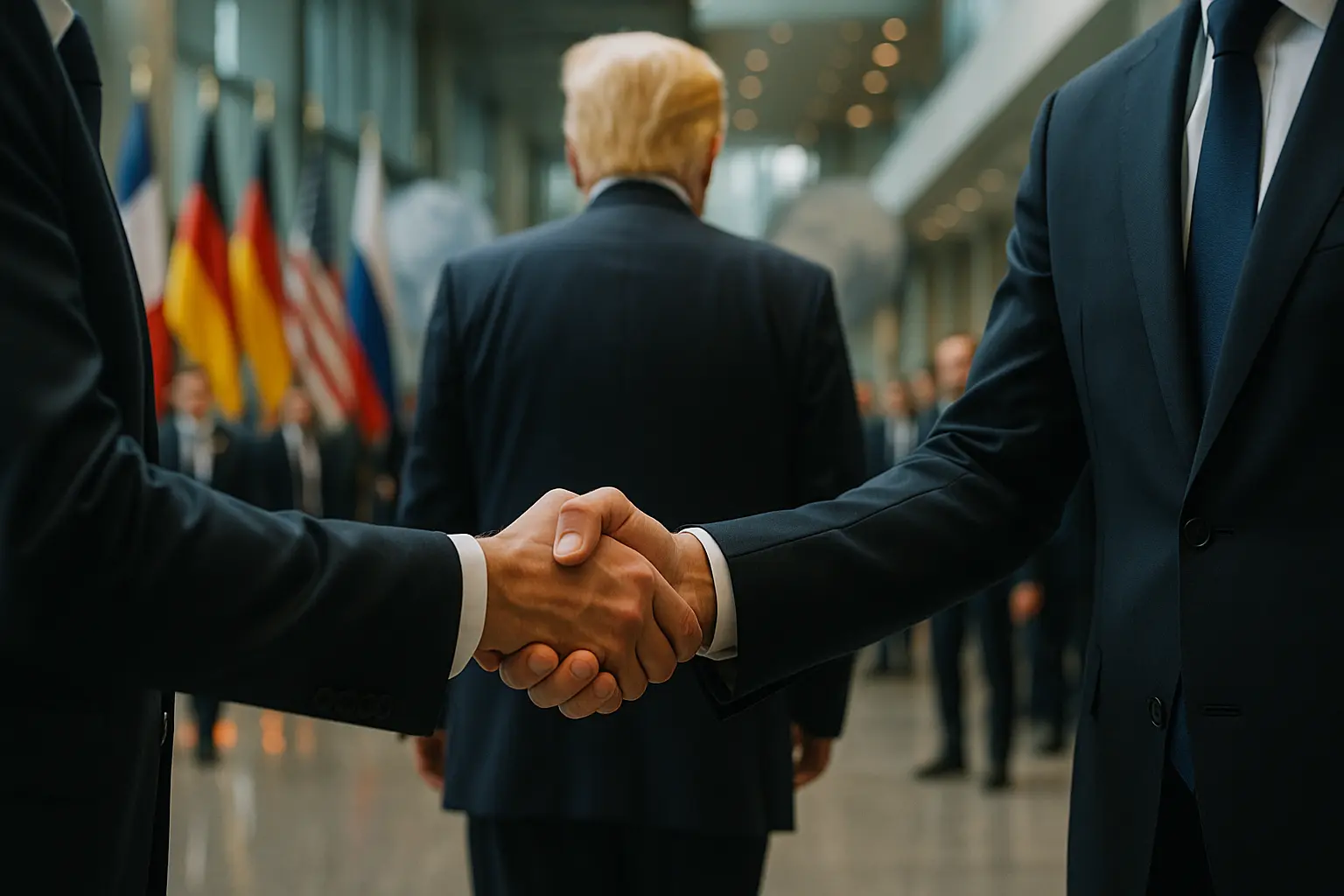
Trump’s Bold Foreign Policy: Power, Peace, and Provocation
When President Donald Trump (R) posted a late-night message on Truth Social pledging the United States would “immediately resume nuclear testing,” the world took notice. This declaration, moments before a pivotal meeting with Chinese President Xi Jinping, wasn’t just bombast—it was calculated political theater and a classic maneuver in Trump’s ongoing reimagination of Reagan’s “peace through strength” doctrine. While some raised their eyebrows and others fumed, Trump’s latest gambit highlights a profound shift in American foreign policy—one rooted in unapologetic American power, economic brinksmanship, and clear conservative priorities.
At the core of Trump’s approach lies a single, powerful principle: deterrence. As his Defense Secretary Pete Hegseth (R) has emphasized, maintaining “the strongest and most capable nuclear arsenal” is essential to keeping adversaries at bay—a message not lost as China races to double its warheads and North Korea expands its own testing beneath Mount Mantap. The implications for global diplomacy and national security are both immediate and immense.
The stakes, of course, go far beyond presidential bravado. By reviving not only tough rhetoric but also unprecedented action—such as ordering the redeployment of the USS Ford and thousands of sailors from the Mediterranean to the Caribbean—Trump has overseen the largest U.S. military buildup in Latin America in over fifty years. In this way, the doctrine of peace through overwhelming strength takes on a 21st-century shape, harnessing strategic deployments and unyielding posture.
While the world debates, many in the Trump base see a President who keeps his promises, even when it means rocking the boat. America’s adversaries now face a leader unafraid of risk—a leader who sees negotiations as contests of will and leverage.
“We will not apologize for being the world’s leading superpower—and we won’t sit back while China, Russia, or any other nation tries to catch up,” Hegseth (R) insisted at a recent press conference.
These latest moves, including new sanctions and calls for tariff escalations, are part of Trump’s familiar—but now more focused—strategy. By drawing the line, the administration makes clear that peace is a product of American strength, not appeasement.
This chapter in U.S. foreign policy may be bold and risky, but it’s laser-focused on ensuring America’s safety and prosperity.
Nuclear Tests, Trade Turmoil, and Military Maneuvers: Trump’s Strategic Shift
The possibility of resuming nuclear weapons testing has, understandably, rattled global nerves. While some see echoes of Cold War brinkmanship, Trump and his administration argue that the world has changed—and America must adapt. Trump’s announcement was pointedly timed, coming just ahead of critical talks with Xi Jinping, telegraphing strength at the precise moment when U.S. resolve would matter most.
In parallel, the president has not shied from flexing economic muscle. Canceling trade talks with Canada wasn’t just a matter of policy—it was a direct response to what Trump called a “personal and political affront” after Ontario aired a TV ad using doctored Ronald Reagan audio to criticize his tariffs. As reported by The Washington Post, Trump terminated negotiations immediately, a move sure to escalate tensions and reinforce America’s unwillingness to be slighted.
Canada’s Prime Minister Justin Trudeau (Liberal) was quick to threaten adjusted counter-tariffs on U.S. steel and aluminum, raising the stakes in a battle that plays directly to Trump’s base. The standoff exemplifies a larger pattern: Trump’s willingness to upend conventional wisdom to achieve America’s goals—even if it means burning a few bridges on the way.
The audacious redeployment of the USS Ford and its strike group into the Caribbean is yet another clear signal that U.S. deterrence is back in full force. This military shift, the largest such show of force in Latin America since the 1960s, is a reminder that under Trump, America’s military might is not just for show—it is active, present, and unyielding in the face of threats near or far.
Still, the path is not without critics. Daryl Kimball, executive director of the Arms Control Association, argues Trump’s hint at resuming nuclear tests “risks eroding U.S. moral credibility,” a view echoed by others worried about the future of the global non-proliferation order. Yet, for Trump’s America First loyalists, the question is less about international approval and more about defending national security, regardless of elite opinion.
“When America draws a line, it keeps the world safer. The only thing our enemies respect is strength,” said a senior White House official, highlighting the administration’s unyielding resolve.
The narrative is clear: Strength deters, while compromise invites aggression. Trump has made his choice, and America’s adversaries are watching closely.
From Reagan to Trump: The Evolution and Ramifications of ‘Peace Through Strength’
Ronald Reagan’s legendary “peace through strength” doctrine reimagined America’s approach to global challenges—uniting economic might and military deterrence to end the Cold War. Now, in 2025, Trump has put a modern, unapologetic spin on that classic formula. Where Reagan worked steadily to project steadiness and will, Trump amps up unpredictability—turning every negotiation, trade deal, or military deployment into high-stakes leverage.
Since the Cold War’s close, presidents have tended to avoid actions that could rattle the nuclear order. No U.S. nuclear test has rattled the Nevada desert since 1992. Yet the world is very different now: Russia boasts new generations of nuclear-powered missiles; China feverishly builds missile silos; North Korea stealthily tests nuclear devices deep underground. In this environment, Trump and his team argue, only clear, compelling shows of American strength will prevent escalation.
The Obama-Biden years brought the promise of “strategic patience,” but those policies did little to halt adversarial nuclear buildup. Trump, by contrast, sees flexibility and surprise as key ingredients for peace, combined with a readiness to use both economic and military tools.
In practice, this approach can look erratic—even reckless—to critics. Striking Iranian forces one day, launching naval maneuvers the next, shifting tariffs as leverage: Each move is both message and maneuver. Trump’s supporters argue this is precisely what keeps America safe, and a reminder to both allies and adversaries that a new era has begun.
“This isn’t about starting wars. It’s about making sure no one starts one with us,” remarked a Pentagon official under condition of anonymity.
By projecting strength and unpredictability, the Trump administration believes it can keep the peace in a dangerous world. Of course, such a posture comes with real-world risks: allies rattled, treaties tested, adversaries guessing. But for Trump and his America First movement, boldness is the point. The president remains steadfast—a testament to his promise that American strength is the surest path to security at home and stability abroad.
As Trump brings Reagan’s doctrine roaring into the modern age, one truth stands out—America will not go quietly, nor retreat from leadership. In a world of rising threats and shifting alliances, peace through strength, however controversial, is back at the center of U.S. policy.