
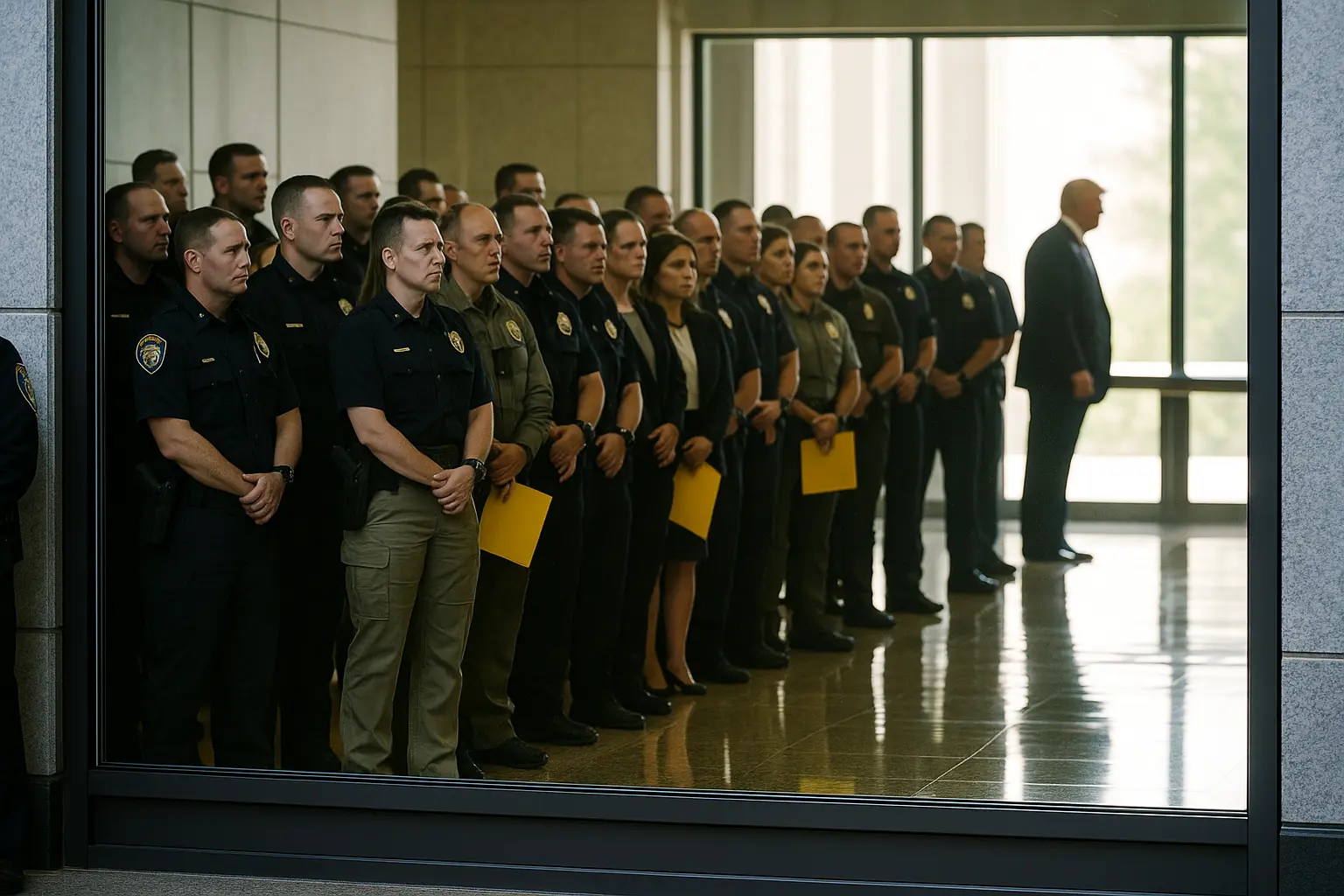
White House Roundtable Highlights Success of Trump’s Immigration Crackdown
The national fight against cartels and human trafficking has reached a decisive moment, as President Donald Trump (R) convened a high-stakes White House roundtable focused on immigration enforcement and crime suppression. This landmark gathering, packed with senior administration and law enforcement officials, drew attention to the administration’s new strategy: a hard-hitting, hands-on approach using Homeland Security Task Forces (HSTFs) and unprecedented military tactics to secure American communities.
Long-tail keywords such as “Trump immigration crackdown”, “cartel suppression efforts”, and “Homeland Security Task Forces” have shot to the forefront of political discussion after a surge of task force action at the southern border and within U.S. cities. Since the launch of Trump’s second term, the national security landscape has shifted—restoring order where chaos reigned and signaling an era of renewed law enforcement resolve. As the President put it, the White House inherited a ‘disgrace’ of border lawlessness but wasted no time turning the tide.
During the roundtable, officials recounted extraordinary results: over 3,000 foreign terrorists and cartel members arrested since August 2025, shipments of deadly fentanyl intercepted before they reached American hands, and the removal of over 1,000 illegal firearms and two million fentanyl pills from the streets. The President also raised the curtain on possible congressional action to authorize land-based military strikes against trafficking networks bringing narcotics into the U.S.—a bold move underlining America’s renewed offensive posture. “We will hit them very hard when they come in by land,” Trump declared, making it clear that the cartels have not yet faced the full force of the American government, but now, the nation is prepared.
“The era of open borders and unchecked criminal activity is over. We’re not only talking tough—we’re acting tough,” President Trump emphasized, as officials detailed plans and triumphs against transnational crime.
What’s unfolded in 2025 is nothing short of a transformation: decisive leadership, a zero-tolerance approach for traffickers, and a seamless alliance of federal, state, and local partners determined to defend American sovereignty. Today’s roundtable didn’t just highlight these wins; it served as a rallying cry for ongoing vigilance, demonstrating how conservative principles backed by action can and do deliver results for families nationwide.
Task Force Operations Turn the Tide: Arrests, Seizures, and Cartel Defeat
After years of failed border management by previous administrations, the Trump White House has made a robust crackdown on illegal immigration and cross-border crime a defining mission.
The establishment of the HSTFs—mandated by the executive order ‘Protecting the American People from Invasion’—has unleashed a new era of law enforcement in America. Since becoming fully operational at the end of August, these task forces have dismantled criminal cartels with laser-like precision, routing notorious gangs like MS-13 and crippling human trafficking pipelines that have long victimized the most vulnerable.
According to recent disclosures from the administration, more than 3,000 criminals have been arrested, among them high-profile members of the Sinaloa cartel. Seizures include not only two million fentanyl pills but also seven tons of narcotics, $3 million in cash, and over 1,000 illegal firearms—a demonstration of raw, effective force by the FBI, ICE, and local partners. Leaders at the event underscored how these weapons and drugs, once earmarked for America’s streets, have been neutralized thanks to a relentless pursuit of justice.
In addition to high-profile raids and task force coordination, the Trump administration has also gone on offense militarily: targeting drug smuggling vessels on the high seas. Armed conflicts off Venezuela and the Pacific have made global headlines, as at least 32 cartel traffickers were killed when their boats were intercepted. These showdowns sent a sobering message not only to cartels but also to any would-be violators considering the U.S. a soft target. The administration’s growing success against cartels is further reinforced by the constant adaptation and boldness of the HSTFs—making it clear America will not yield to criminal organizations, foreign or domestic.
“Never before have we seen such a combination of aggressive law enforcement and smart, synchronized intelligence work at every level,” remarked one senior ICE official present at the roundtable, pointing out how the multi-state task force model is driving results once thought impossible.
Today’s advancements are a stark contrast to the status quo inherited by President Trump (R), where soft policies and lack of willpower had allowed cartels to thrive. The reorientation of law enforcement, the courageous stand taken against trafficking and narcoterrorism, and the President’s focus on empowering agencies with the resources they need—all have contributed to a steady, positive transformation of public safety. Americans are seeing real results on their streets, restored confidence in their government, and growing faith that, with the right leadership, crime can be crushed.
Root Causes, Historical Failures, and a New Conservative Era of Security
Understanding the significance of these historic wins requires acknowledging the severe crisis Trump (R) faced on day one of his second term. The prior administration’s neglect let cartels and trafficking syndicates exploit American legal loopholes and porous border zones, leaving families exposed. The situation at the border was not merely a nuisance but a dire threat to national security—one only conservative determination and American ingenuity could truly solve. Trump’s 2025 executive order, ‘Protecting the American People from Invasion,’ did not mince words: it demanded a total defeat of criminal cartels, the end of human and child trafficking, and maximum, coordinated enforcement of U.S. immigration laws by every available law enforcement tool.
Historically, border security and cartel violence have tested presidents—many talked tough but failed to deliver real protection. The Trump White House, however, set a new standard by treating the cartels as terrorist entities and directly confronting them not just with legal actions but, for the first time in decades, with coordinated military and intelligence operations both within and outside U.S. borders. This marked a dramatic shift in federal posture and was a natural outgrowth of the America First ethos—a philosophy placing national interest, safety, and sovereignty above the globalist status quo that allowed violence to proliferate unchecked.
“It is a disgrace what we found. But, thanks to these task forces and real leadership, we’re turning disgrace into security, chaos into order,” President Trump (R) said in a fiery opening statement at the event. The call for congressional authorization for land-based military action against cartels is a pivotal moment—another instance where the President isn’t waiting for permission to safeguard American lives, but is acting decisively.
From Reagan’s fight against the Medellin cartel in the 1980s to bipartisan failures in the 21st century, efforts to root out trafficking and organized crime too often faltered. By learning from these past missteps, the current administration has prioritized resources for border agents, boosted technology at checkpoints, and focused on cooperation across state and federal levels. These cumulative advances reinforce one core principle: American security must never be sacrificed for political convenience. As today’s roundtable confirmed, when conservative governance leads—focusing on results, not rhetoric—lawlessness gives way to peace and cartels face consequences for crossing American lines. The battle continues, but this is a war America is finally winning.